Cable Half-Kneeling Lift (Chest Focus): Form, Muscles Worked, Sets & Reps + Tips
Learn the Cable Half-Kneeling Lift (low-to-high) to train the upper chest, serratus, and core stability. Step-by-step form cues, sets by goal, mistakes to avoid, FAQs, and recommended cable accessories.
Cable Half-Kneeling Lift
This exercise is best performed with steady tension and a controlled arc. You should feel the work in the upper chest and front-of-shoulder/serratus with the core bracing to prevent excessive rotation. If you feel it mostly in the lower back or you’re twisting hard, reduce the load, shorten the range slightly, and slow down.
Quick Overview
| Body Part | Chest |
|---|---|
| Primary Muscle | Upper chest (clavicular pectoralis major) |
| Secondary Muscle | Serratus anterior, anterior deltoid, obliques (anti-rotation) |
| Equipment | Cable machine (low pulley) + single D-handle (or rope) |
| Difficulty | Intermediate (coordination + core control under diagonal load) |
Sets & Reps (By Goal)
- Hypertrophy (upper chest/serratus): 3–4 sets × 10–15 reps/side (60–90 sec rest)
- Strength-focused control: 3–5 sets × 6–10 reps/side (90–120 sec rest, heavier but smooth)
- Core stability & posture: 2–4 sets × 8–12 reps/side (1–2 sec pause at top, 45–75 sec rest)
- Warm-up / activation: 2–3 sets × 10–12 reps/side (light load, crisp form)
Progression rule: Add reps or slow the tempo before adding weight. Increase load only if you can keep the pelvis stable, ribs down, and the cable path clean.
Setup / Starting Position
- Set the cable low: Attach a D-handle to a low pulley. Stand sideways to the machine.
- Half-kneel for stability: Kneel on the knee closest to the cable; the opposite foot is forward (90/90-ish).
- Square your hips: Front foot flat, glute on the kneeling side lightly engaged. Keep the pelvis level.
- Grip and stack: Hold the handle with both hands (or one hand over the other). Shoulders down, chest tall, ribs stacked.
- Start low and centered: Hands begin near the low hip/upper-thigh area, cable pulling you toward the machine.
Tip: Use a pad under the kneeling knee for comfort and to keep the stance stable during higher-rep sets.
Execution (Step-by-Step)
- Brace first: Inhale gently and tighten your core like you’re preparing for a light push—no rib flare.
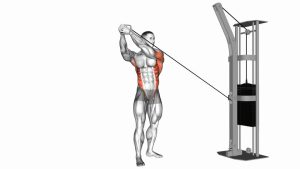
- Lift diagonally: Drive the handle up and across your body (low-to-high), keeping arms strong and path smooth.
- Resist rotation: Let the torso rotate only slightly if needed—avoid spinning the hips or leaning back.
- Finish strong: End above shoulder height on the far side, with shoulders down and chest proud. Optional 1-second pause.
- Return with control: Lower along the same diagonal path slowly, keeping tension—don’t let the cable yank you back.
Pro Tips & Common Mistakes
- Keep ribs stacked: Avoid flaring the ribcage or leaning back to “cheat” the top position.
- Hips stay square: Don’t spin the front knee outward or rotate the pelvis to chase range.
- Control the arc: Lift in a smooth diagonal line—no jerking or swinging the handle.
- Shoulders down: Shrugging steals tension from the chest/serratus and irritates the neck.
- Use the pause: A 1–2 second pause at the top increases serratus/core demand without extra weight.
- Don’t go too high: If your shoulder feels pinched, stop slightly lower and keep the scapula moving naturally.
FAQ
Where should I feel the Cable Half-Kneeling Lift?
Most people feel it in the upper chest and serratus (side of the ribs), with the core working to resist rotation. If you feel mainly lower back, lighten the load and brace harder.
Is this a chest exercise or a core exercise?
It’s both. The diagonal lift heavily involves the upper chest and front shoulder, while the half-kneeling stance increases anti-rotation core stability.
Should my torso rotate during the lift?
A small, natural rotation is fine, but your goal is control—don’t spin the hips or twist aggressively. Keep the pelvis stable and let the upper body move smoothly.
What if I don’t have a cable machine?
You can mimic the pattern with a resistance band anchored low. The cable is smoother, but bands work well if you keep tension and move slowly.
How heavy should I go?
Choose a load that lets you keep the lift smooth with no leaning back or hip rotation. If you can’t pause briefly at the top, you’re probably too heavy.
Recommended Equipment (Optional)
- Single D-Handle Cable Attachment — clean grip for low-to-high diagonal lifts and single-arm cable work
- Rope Cable Attachment — comfortable option for two-hand grips and smoother wrist positioning
- Cable Attachment Set (Handles + Bars) — versatile kit for cable pressing, flys, rows, and diagonal lift variations
- Thick Exercise Knee Pad — improves comfort and stability during half-kneeling sets
- Resistance Bands + Door Anchor — a simple alternative if you want to replicate the diagonal lift at home
Tip: Keep accessories simple—better control beats heavier weight. If any attachment causes wrist/shoulder discomfort, switch grips and reduce load.