Band Standing Alternate Chest Press: Form, Sets, Tips & FAQ
Learn how to do the Band Standing Alternate Chest Press with perfect form for chest strength and shoulder-friendly pressing. Step-by-step technique, sets & reps by goal, common mistakes, FAQs, and recommended equipment.
Band Standing Alternate Chest Press
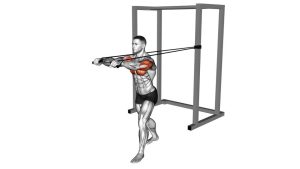
This exercise is all about control and alignment. You’ll get the best chest activation when your torso stays quiet, your shoulder blade moves smoothly, and the band stays under consistent tension. Alternate sides with a steady tempo, and prioritize clean reps over speed.
Quick Overview
| Body Part | Chest |
|---|---|
| Primary Muscle | Pectoralis major |
| Secondary Muscle | Anterior deltoid, triceps, serratus anterior, core stabilizers (obliques) |
| Equipment | Resistance band + anchor point (door anchor or sturdy post) |
| Difficulty | Beginner → Intermediate (easy to scale by band tension and stance) |
Sets & Reps (By Goal)
- Strength focus: 4–6 sets × 6–10 reps/side (60–90 sec rest)
- Hypertrophy (muscle growth): 3–5 sets × 10–15 reps/side (45–75 sec rest)
- Endurance / conditioning: 2–4 sets × 15–25 reps/side (30–60 sec rest)
- Warm-up / activation: 2–3 sets × 8–12 reps/side (easy tension, crisp form)
Progression rule: First add reps (or slow the eccentric), then increase band tension or step farther from the anchor. If your torso starts twisting, you progressed too fast.
Setup / Starting Position
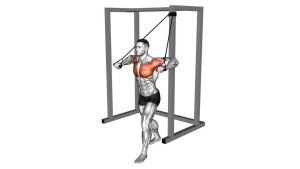
- Anchor the band: Set it behind you at about mid-chest height (door anchor or sturdy post).
- Grip and step out: Hold handles (or the band) and walk forward until you feel light tension at the start.
- Stance: Stand tall with feet hip-width, or use a slight staggered stance for extra stability.
- Upper-body position: Elbows bent ~45–75° from the torso, wrists neutral, shoulders down and back.
- Brace: Exhale gently, ribs stacked over hips, glutes lightly engaged—your torso should feel “locked in.”
Tip: If the band pulls you into rotation, widen your stance or stagger your feet (opposite foot slightly forward from the pressing arm).
Execution (Step-by-Step)
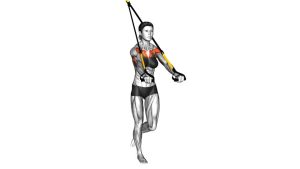
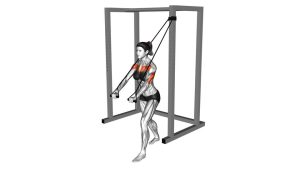
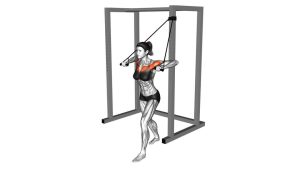
- Set tension: Start with both hands near your chest, elbows bent, posture tall and stable.
- Press one arm: Drive the hand forward to chest level, extending the elbow without shrugging the shoulder.
- Resist rotation: Keep hips and ribs facing forward—do not twist toward the pressing side.
- Brief pause: Hold 1 second at full extension with a controlled, steady breath.
- Slow return: Bring the hand back smoothly until the elbow is bent again (don’t let the band snap you back).
- Alternate sides: Press with the other arm and continue alternating for the set.
Pro Tips & Common Mistakes
Pro Tips
- Press in a straight line: Think “punch forward,” not up or across your body.
- Control the return: A 2–3 second eccentric (return) builds more chest tension and protects the shoulder.
- Use a staggered stance: Great for stability and reduces torso twisting.
- Exhale on the press: Helps stack ribs and improve core control.
- Stop just short of discomfort: Keep the elbow slightly in front of the torso at the bottom if shoulders feel cranky.
Common Mistakes
- Twisting to press: Turning the torso makes it easier—but it steals chest work and reduces core benefit.
- Shrugging: Shoulders creeping toward ears overloads traps and irritates shoulders.
- Rib flare / low-back arch: Often caused by too much band tension or rushing reps.
- Snapping back: Letting the band pull you back reduces time under tension and can stress the shoulder.
- Wrist bending: Keep wrists neutral like you’re “punching through the handle.”
FAQ
Where should I feel the band standing alternate chest press?
Mostly in the chest and triceps, with your core working to keep your torso from rotating. If you feel it mainly in your shoulders or neck, reduce tension and keep shoulders down.
Is alternating better than pressing both arms at once?
Alternating adds a strong anti-rotation core challenge. Bilateral presses can be better for pure fatigue and pump, but alternating is excellent for stability and cleaner shoulder mechanics.
How far should I step from the anchor?
Far enough to have tension at the start, but not so far that you arch your back or twist to complete reps. You should be able to control the return smoothly.
What if my shoulder feels pinchy?
Use a slightly more tucked elbow angle, shorten the bottom range (don’t let the elbow drift far behind the body), and lower the tension. If symptoms persist, switch to a neutral-grip press angle or consult a professional.
How do I make it harder without heavier bands?
Slow the eccentric (3–4 seconds), add a 1–2 second pause at full extension, increase reps, or use a longer set with shorter rest. You can also step farther from the anchor—only if form stays strict.
Recommended Equipment (Optional)
- Resistance Bands Set (with Handles) — multiple tensions so you can progress safely
- Door Anchor for Resistance Bands — quick, stable anchor at chest height
- Band Handles / Grip Attachments — improves comfort and wrist alignment during pressing
- Wall-Mount Band Anchor — a more permanent home-gym setup option
- Thick Exercise Mat — helpful for warm-ups and pairing with floor-based chest or core drills
Tip: Choose band tension that lets you keep the torso still. The best sets feel like chest + core control, not a fight to stay upright.