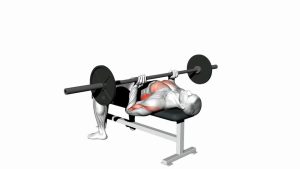
Barbell Pullover with Bench Press: Form, Muscles Worked, Sets, Tips & FAQ
Learn how to do the Barbell Pullover with Bench Press with proper form. Discover muscles worked, setup, execution steps, sets and reps by goal, common mistakes, FAQs, and recommended equipment.
Barbell Pullover with Bench Press
This exercise works best when the pullover stays controlled and the transition into the press remains smooth. The goal is not to rush the movement, but to maintain a strong ribcage position, stable shoulders, and a predictable bar path throughout the entire rep. Done properly, it can be an excellent accessory for lifters who want to blend chest training with lat involvement and shoulder stability.
Quick Overview
| Body Part | Chest |
|---|---|
| Primary Muscle | Pectoralis major |
| Secondary Muscle | Latissimus dorsi, triceps brachii, anterior deltoids, serratus anterior |
| Equipment | Barbell, flat bench, weight plates, collars |
| Difficulty | Intermediate |
Sets & Reps (By Goal)
- Muscle building: 3-4 sets × 6-10 reps, 75-120 seconds rest
- Upper-body strength accessory: 3-5 sets × 4-6 reps, 2-3 minutes rest
- Technique and control: 2-3 sets × 8-12 reps, light-to-moderate load, 60-90 seconds rest
- Chest-focused hypertrophy finisher: 2-3 sets × 10-12 reps, controlled tempo, 45-75 seconds rest
Progression rule: Master the pullover range and press transition before increasing load. Add weight only when you can keep the shoulders stable, the elbows controlled, and the bar path smooth from start to finish.
Setup / Starting Position
- Lie on a flat bench: Place your head, upper back, and glutes on the bench with your feet planted firmly on the floor.
- Grip the barbell evenly: Use a shoulder-width or slightly wider overhand grip, depending on comfort and shoulder mobility.
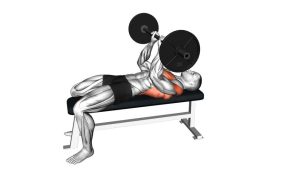
- Start above the chest: Hold the bar with arms extended over the mid-chest, keeping a slight bend in the elbows.
- Brace the torso: Keep the ribcage controlled, shoulders packed, and core tight to avoid excessive arching during the pullover.
- Set shoulder position: Think stable shoulder blades and a smooth arc, not a loose or uncontrolled drop behind the head.
Tip: Begin with a lighter barbell than your normal bench press load. The pullover component adds leverage demands that make the combo feel harder than a standard press alone.
Execution (Step-by-Step)
- Begin from the top: Hold the barbell above your chest with elbows softly unlocked and shoulders set.
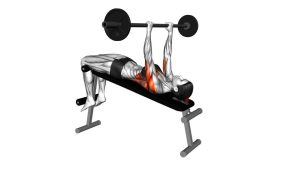
- Lower into the pullover: Move the bar in a controlled arc backward behind the head while keeping the elbows slightly bent and the torso stable.
- Stop at your safe range: Lower only as far as your shoulders allow without pain, rib flare, or loss of tension.
- Pull the bar back over the chest: Reverse the arc smoothly, using the chest and lats to bring the bar back into the pressing position.
- Lower for the bench press: Bring the bar down under control toward the mid-chest or lower chest.
- Press to lockout: Drive the bar back up until your arms are extended over the chest.
- Reset and repeat: Stabilize the bar at the top before beginning the next pullover phase.
Pro Tips & Common Mistakes
- Use a conservative load: This combo is more technical than a normal bench press, so lighter loads usually produce better reps.
- Do not over-bend the elbows: The pullover should keep a soft elbow angle, not turn into a triceps extension.
- Avoid excessive range: Lowering too far behind the head can strain the shoulders and break torso stability.
- Keep the ribcage controlled: Do not let the chest flare aggressively just to force more pullover depth.
- Press from a stable base: After returning from the pullover, reestablish control before lowering into the press.
- Do not rush the transition: A smooth transition improves tension, safety, and muscle targeting.
- Watch wrist alignment: Keep wrists stacked over the forearms during the pressing phase.
- Use spotter support when needed: This is especially useful if you are experimenting with heavier sets.
FAQ
What muscles does the Barbell Pullover with Bench Press work?
It primarily targets the chest, while also involving the lats, triceps, anterior deltoids, and serratus anterior. The pullover phase adds more lat and shoulder-extension demand than a regular bench press.
Is this exercise better for chest or lats?
It is generally more chest-focused overall because the bench press portion is a major part of each rep, but the pullover phase gives the lats meaningful involvement. Think of it as a chest-dominant hybrid exercise with added lat contribution.
Should beginners do this exercise?
Most beginners should first learn the standard barbell bench press and a separate pullover variation before combining them. This exercise is better suited for intermediate lifters who already have decent shoulder mobility and barbell control.
How low should I bring the bar during the pullover?
Only lower the bar through a range you can control comfortably. You should feel a stretch, but not shoulder pinching, instability, or forced end range. A slightly reduced range is often better than chasing extra depth.
Can I use this as a main chest exercise?
Yes, but many lifters use it best as an accessory or secondary chest movement. Because it is more technical than a standard bench press, it often shines as a hypertrophy or variation tool rather than a pure maximal strength lift.
Recommended Equipment
- Steelbody Deluxe Flat Utility Workout Bench — stable flat bench option for barbell pressing and pullover work
- 7FT Olympic Barbell 45 lb Barbell — full-length Olympic bar suitable for pressing and general strength training
- Recycled Rubber Bumper Plates — durable training plates for progressive loading
- GW Tech Barbell Clamps 2-Inch — quick-release collars to keep plates secure during the pullover and press transition
- Olympic Barbell Weight Set — useful if you want a combined setup with barbell and plates for home gym training
Tip: For this exercise, stability matters more than novelty. A secure flat bench, properly sized Olympic barbell, and reliable collars will do more for performance and safety than overcomplicating the setup.