Barbell Shrug: Proper Form, Muscles Worked, Sets, Tips & FAQ
Learn how to do the Barbell Shrug with proper form to build bigger upper traps and stronger shoulders. Includes setup, execution steps, sets and reps by goal, mistakes to avoid, FAQs, and recommended equipment.
Barbell Shrug
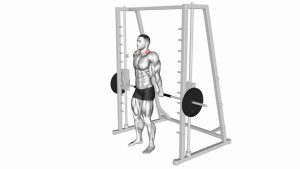
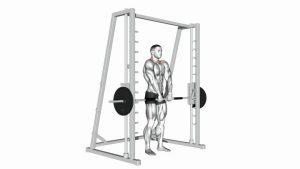
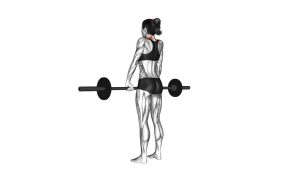
The Barbell Shrug works best when performed with a controlled tempo and a strict vertical shoulder path. Your arms stay straight, your torso stays stable, and the traps do the work. Done properly, this exercise is excellent for lifters who want better upper-back thickness, improved trap development, and more support for heavy pulling movements such as deadlifts, carries, and rows.
Quick Overview
| Body Part | Upper Back |
|---|---|
| Primary Muscle | Upper trapezius |
| Secondary Muscle | Levator scapulae, middle trapezius, forearms, core stabilizers |
| Equipment | Barbell and weight plates |
| Difficulty | Beginner to Intermediate |
Sets & Reps (By Goal)
- Muscle growth: 3-5 sets × 8-15 reps with a controlled squeeze at the top
- Strength focus: 4-5 sets × 5-8 reps with heavier loading and strict form
- Technique / trap activation: 2-4 sets × 12-20 reps using moderate weight and slower tempo
- Finisher / pump work: 2-3 sets × 15-20 reps with shorter rest and constant tension
Progression rule: Add weight gradually only when you can keep the shoulders moving straight up and down without body swing, shoulder rolling, or elbow bending.
Setup / Starting Position
- Load the barbell: Use a manageable weight that allows full control and a clear top contraction.
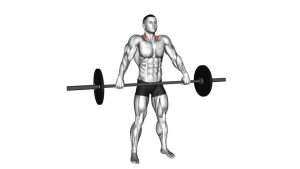
- Stand tall: Place your feet about hip- to shoulder-width apart with your knees slightly soft.
- Grip the bar: Hold the barbell with a pronated grip just outside your thighs.
- Set posture: Keep your chest up, spine neutral, and core braced without leaning backward.
- Let the arms hang straight: The elbows stay extended and relaxed—do not pre-bend them.
Tip: Straps can help if grip fatigue limits your trap work before your upper back is fully challenged.
Execution (Step-by-Step)
- Start from the bottom: Let the shoulders sit naturally down while the bar hangs close to the thighs.
- Brace your torso: Keep your core tight and avoid bouncing or using leg drive.
- Shrug straight up: Elevate your shoulders vertically toward your ears as high as you can under control.
- Squeeze the traps: Pause briefly at the top and focus on contracting the upper traps, not the arms.
- Lower slowly: Return the shoulders to the starting position with control and keep tension on the traps.
- Repeat smoothly: Perform all reps with the same vertical path and controlled rhythm.
Pro Tips & Common Mistakes
- Think “shoulders to ears”: The cue should be upward elevation, not circular shoulder rolling.
- Keep the arms straight: Bending the elbows turns the movement into something else and reduces trap emphasis.
- Use a short pause at the top: A one-second squeeze improves trap engagement and reduces rushing.
- Don’t overload too early: Excessive weight often leads to momentum, poor posture, and reduced trap stimulation.
- Stay tall: Avoid thrusting the head forward or arching the lower back to fake more range.
- Control the lowering phase: The eccentric matters for building size and maintaining joint control.
- Use straps if needed: Grip should not be the limiting factor if the goal is upper-trap development.
FAQ
What muscles do Barbell Shrugs work?
Barbell Shrugs primarily target the upper trapezius. They also involve the levator scapulae, middle traps, and the forearms for grip support, while the core helps stabilize the body.
Should I roll my shoulders during shrugs?
No. Shoulder rolling is a common mistake. The shrug should be a straight up-and-down movement through scapular elevation. Rolling the shoulders does not improve trap activation and may add unnecessary joint stress.
Is it better to go heavy or controlled on Barbell Shrugs?
Controlled reps usually produce better trap stimulation than sloppy heavy reps. You can go heavy, but only if you can maintain strict posture, straight arms, and a clean vertical shrug path.
Can beginners do Barbell Shrugs?
Yes. Barbell Shrugs are beginner-friendly because the movement pattern is simple. Start with moderate weight, learn to elevate the shoulders without swinging, and gradually progress as your control improves.
Where should I feel the exercise?
You should mainly feel the Barbell Shrug in the upper traps, especially near the top of the movement. You may also notice your grip working, but the arms should not be the primary driver.
Recommended Equipment
- Olympic Barbell — the main tool for performing standard Barbell Shrugs at home or in a private gym setup
- Weight Plates / Bumper Plates Set — lets you progressively overload the exercise safely and efficiently
- Lifting Straps — useful when grip fatigue limits your trap-focused sets
- Weightlifting Belt — optional support for lifters handling heavier loads and wanting extra trunk stability
- Power Rack — helpful for storing, loading, and organizing barbell training more efficiently
Tip: For most lifters, a solid barbell, plates, and lifting straps are the most useful upgrades for better shrug training.