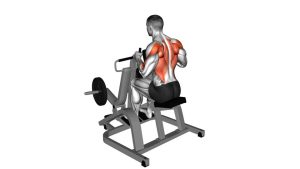
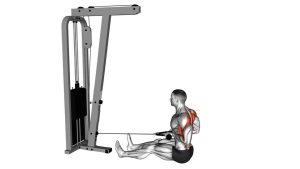
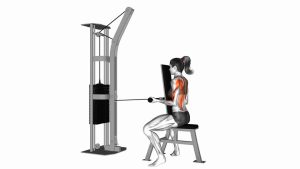
Cable Low Seated Row: Proper Form, Muscles Worked, Sets, Tips & FAQ
Learn how to do the Cable Low Seated Row with proper form to build back thickness, improve posture, and strengthen the lats, rhomboids, and mid traps. Includes setup, execution, sets by goal, mistakes, FAQ, and recommended equipment.
Cable Low Seated Row
This row variation is excellent for improving upper-back development, reinforcing better posture, and teaching strong scapular retraction under load. Because the resistance comes from a cable, the exercise provides smooth tension through the full range of motion, making it a great option for both hypertrophy and general strength work.
Quick Overview
| Body Part | Back |
|---|---|
| Primary Muscle | Latissimus dorsi, rhomboids, middle trapezius |
| Secondary Muscle | Rear deltoids, biceps brachii, brachialis, forearms, lower traps |
| Equipment | Low cable row machine with close-grip handle and foot platform |
| Difficulty | Beginner to intermediate |
Sets & Reps (By Goal)
- Muscle growth: 3–4 sets × 8–12 reps with controlled tempo and a full squeeze at the top
- General back strength: 4–5 sets × 5–8 reps using stricter form and longer rest periods
- Technique and posture work: 2–3 sets × 12–15 reps with lighter weight and smooth execution
- Warm-up / activation: 2 sets × 15–20 reps focusing on shoulder blade movement and control
Progression tip: Increase load only after you can keep your torso stable, elbows tracking cleanly, and shoulder blades moving smoothly without bouncing or leaning back excessively.
Setup / Starting Position
- Select the load: Choose a weight you can row with full control and no torso swinging.
- Sit at the machine: Place your feet firmly on the foot platform and grab the close-grip handle.
- Set your posture: Sit tall with a neutral spine, chest up, and shoulders relaxed.
- Extend the arms: Let the handle move forward until your arms are straight while keeping tension in the cable.
- Brace lightly: Tighten your core enough to keep the torso steady throughout the set.
Tip: A slight forward reach at the start is fine, but avoid rounding your whole spine just to get more range.
Execution (Step-by-Step)
- Initiate with the upper back: Begin by pulling your shoulder blades back and down.
- Drive the elbows back: Pull the handle toward your lower ribs or upper abdomen.
- Keep the chest tall: Stay upright and resist the urge to jerk the torso backward.
- Squeeze at the top: Pause briefly when the handle reaches your torso and the shoulder blades are fully retracted.
- Return under control: Extend the arms gradually and allow the shoulder blades to protract smoothly.
- Repeat cleanly: Maintain the same path and tempo on every rep.
Pro Tips & Common Mistakes
- Lead with the elbows: This helps keep the emphasis on the back instead of overusing the arms.
- Use full scapular motion: Reach forward under control, then retract hard without collapsing posture.
- Pause at peak contraction: Even a brief pause improves back engagement and reduces sloppy reps.
- Avoid excessive lean-back: Turning the row into a full-body heave reduces the training effect on the target muscles.
- Do not shrug the shoulders: Keep the traps from dominating by staying long through the neck.
- Do not yank with momentum: Smooth reps build more quality tension and are easier on the lower back.
- Match grip to goal: A close neutral grip often feels strong and stable for back thickness and mid-back focus.
FAQ
What muscles does the Cable Low Seated Row work the most?
It mainly targets the lats, rhomboids, and middle traps. The rear delts, biceps, and forearms also assist during the pull.
Where should I pull the handle?
In most cases, pull the handle toward the lower ribs or upper abdomen. This usually keeps the elbows in a strong path and makes it easier to keep the chest tall.
Is the seated cable row better for thickness or width?
It is especially effective for back thickness because it emphasizes horizontal pulling and scapular retraction. It still trains the lats, but it is especially valuable for the mid-back.
Should I lean forward and backward during the row?
A very small natural torso movement can happen, but your reps should stay mostly stable and controlled. Big swinging usually means the load is too heavy.
Can beginners use the Cable Low Seated Row?
Yes. It is one of the most beginner-friendly back exercises because the cable path is fixed and the load is easy to adjust. Start light and focus on smooth shoulder blade movement before chasing heavier weights.
Recommended Equipment
- Close-Grip Row Handle — useful for neutral-grip seated rows and strong elbow-back pulling mechanics
- Weight Lifting Straps — helpful when grip fatigue limits your back work before the target muscles are fully challenged
- Cable Machine Attachment Set — expands your cable training options with multiple row, pulldown, and isolation attachments
- Home Gym Pulley System — a practical option for lifters building a home setup for rows, pulldowns, and arm work
- Cable Accessories for Home Gym — useful for upgrading grip variety and making your rowing setup more versatile
Tip: For this exercise, the most important upgrade is usually a comfortable close-grip row handle and, if needed, a pair of lifting straps to keep grip from becoming the weak link.