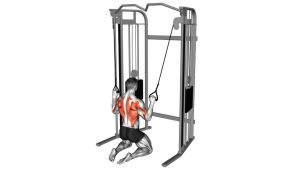
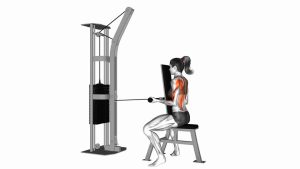
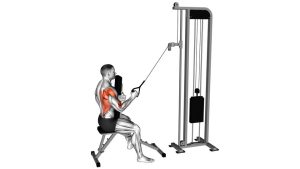
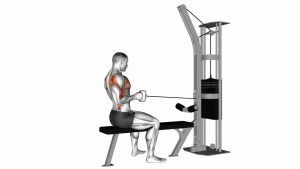
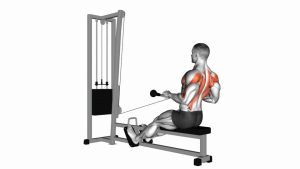
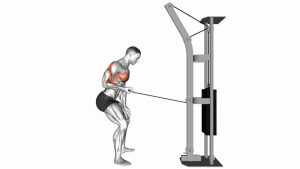
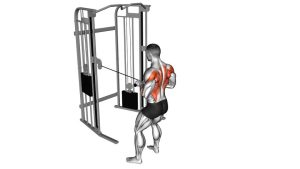
Cable One-Arm Bent-Over Row: Proper Form, Muscles Worked, Sets, Tips & FAQ
Learn how to do the Cable One-Arm Bent-Over Row with proper form. Discover muscles worked, setup, execution, sets and reps by goal, common mistakes, FAQs, and recommended equipment.
Cable One-Arm Bent-Over Row
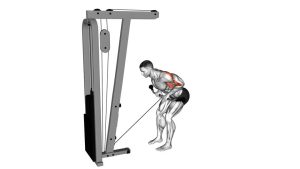
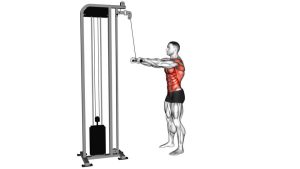
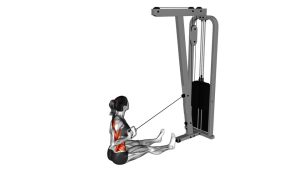
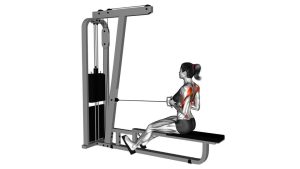
This variation works best when you combine stable body positioning with a deliberate elbow path. The goal is not to yank the handle with your arm, but to row through the back while keeping the ribcage steady and the shoulder blade moving naturally. A clean rep should feel strong in the lat and middle back, not sloppy in the lower back or neck.
Quick Overview
| Body Part | Back |
|---|---|
| Primary Muscle | Latissimus dorsi |
| Secondary Muscle | Rhomboids, middle trapezius, posterior deltoid, biceps, brachialis, teres major, spinal erectors |
| Equipment | Cable machine with low pulley and single D-handle attachment |
| Difficulty | Beginner to Intermediate |
Sets & Reps (By Goal)
- Muscle growth: 3-4 sets × 8-12 reps per side with 60-90 seconds rest
- Strength: 4-5 sets × 5-8 reps per side with 90-120 seconds rest
- Technique and control: 2-3 sets × 10-15 reps per side with lighter load and strict form
- Warm-up or activation: 2-3 sets × 12-15 reps per side with smooth tempo and moderate tension
Progression rule: Increase load only when you can keep the torso steady, fully control the lowering phase, and finish each rep without shrugging or rotating.
Setup / Starting Position
- Set the pulley low: Attach a single D-handle to the low pulley of a cable machine.
- Stand beside the machine: Grab the handle with one hand and step back until the cable has light tension.
- Use a staggered stance: Place one foot slightly forward and the other back to improve balance.
- Hinge at the hips: Lean the torso forward roughly 30-45 degrees while keeping the chest open and spine neutral.
- Brace the core: Keep the ribs stacked, shoulders down, and neck neutral before starting the row.
- Let the working arm extend: Start with the arm reaching toward the pulley and the shoulder blade slightly protracted.
Tip: Your stance should feel strong enough that the cable cannot pull you into rotation before the first rep begins.
Execution (Step-by-Step)
- Lock in your position: Brace the core, keep the hips still, and maintain a flat back.
- Initiate with the back: Begin the movement by drawing the shoulder blade slightly back and down.
- Drive the elbow rearward: Pull the handle toward the side of your torso, aiming the elbow toward the hip rather than flaring it high.
- Squeeze at the top: When the handle reaches the lower ribs or waist area, pause briefly and contract the lats and mid-back.
- Lower under control: Extend the arm slowly back to the start while allowing the shoulder blade to move naturally forward.
- Repeat evenly: Complete all reps on one side, then switch arms and match the same tempo and range of motion.
Pro Tips & Common Mistakes
- Keep the elbow close to the body: This usually improves lat engagement and keeps the pull efficient.
- Do not rotate the torso: Twisting to finish the rep shifts tension away from the working back muscles.
- Control the eccentric: Lowering the handle slowly improves tension and reinforces better mechanics.
- Avoid shrugging: Keep the upper trap from taking over by keeping the shoulder down as you row.
- Do not overextend at the finish: Pull until the back contracts hard, but avoid cranking the elbow excessively behind the torso.
- Use grip aids only when needed: If grip gives out before the back, straps can help on heavier sets.
- Stay hinged: The torso angle should remain nearly constant throughout the set.
FAQ
What muscles does the Cable One-Arm Bent-Over Row work most?
It primarily targets the latissimus dorsi, while also training the rhomboids, middle traps, rear delts, and biceps. Your core and spinal erectors also help stabilize the bent-over position.
Is this better than a dumbbell one-arm row?
It depends on your goal. The cable version provides more constant tension through the full range, while a dumbbell row may allow heavier loading and a slightly different resistance curve. Both are excellent when programmed well.
Should I row toward my chest or hip?
For stronger lat emphasis, most lifters do best rowing the elbow toward the hip or lower ribs. Pulling too high toward the chest often shifts more work toward the upper back and rear delts.
Can beginners use this exercise?
Yes. It is beginner-friendly when performed with light to moderate resistance and a stable stance. Start with strict control before increasing load.
What is the most common mistake?
The most common mistake is using body rotation and momentum instead of rowing with the back. If your chest opens hard toward the ceiling during the pull, the weight is probably too heavy.
Recommended Equipment
- Single D-Handle Cable Attachment — the most direct attachment for unilateral cable rows and controlled elbow tracking
- Lifting Wrist Straps — helpful when grip fatigue limits your back training on heavier working sets
- Adjustable Weight Bench — useful as a support option for chest-supported row variations and accessory back work
- Cable Attachment Set — expands your cable training options with multiple row and pulldown handles
- Ergonomic D-Handle Cable Attachment — a comfortable option for lifters who want a more natural wrist position during rows
Tip: Choose attachments that feel secure in the hand and allow a smooth pull path without forcing awkward wrist angles.