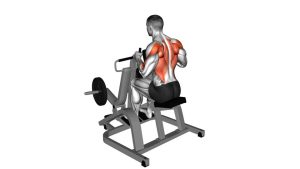
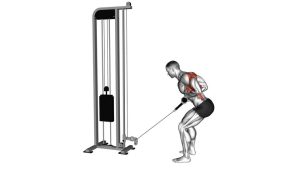
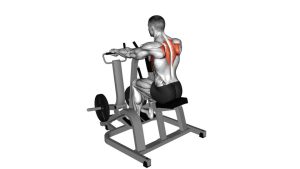
Cable Seated High Row (V-Bar): Proper Form, Muscles Worked, Sets, Tips & FAQ
Learn how to do the Cable Seated High Row with a V-Bar for back thickness, scapular retraction, and upper-back strength. Includes muscles worked, setup, step-by-step form, sets and reps, mistakes, FAQ, and recommended equipment.
Cable Seated High Row (V-Bar)
This row variation works best when you focus on pulling through the elbows instead of yanking with the hands. The goal is to create a smooth contraction through the upper and middle back, not to swing your torso or overuse the biceps. Done well, it is excellent for improving posture, back density, and shoulder-blade control.
Quick Overview
| Body Part | Back |
|---|---|
| Primary Muscle | Rhomboids, middle trapezius, latissimus dorsi |
| Secondary Muscle | Rear deltoids, teres major, biceps brachii, brachialis, brachioradialis, core stabilizers |
| Equipment | High cable pulley, flat bench, V-bar / double-D neutral-grip attachment |
| Difficulty | Beginner to Intermediate |
Sets & Reps (By Goal)
- Muscle growth: 3-4 sets x 8-12 reps with controlled tempo and 60-90 seconds rest
- Back strength: 4-5 sets x 5-8 reps using a challenging load and 90-120 seconds rest
- Technique and control: 2-3 sets x 10-15 reps with lighter weight and deliberate pauses
- Warm-up activation: 2 sets x 12-15 reps using light resistance before heavier back work
Progression tip: Increase weight only when you can keep the chest up, control the stretch, and finish each rep with a clean back squeeze instead of momentum.
Setup / Starting Position
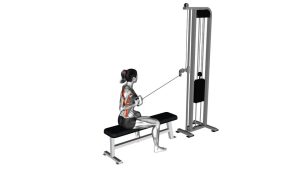
- Set the pulley high: Attach a V-bar or double-D handle to the high pulley.
- Place a bench in position: Sit facing the machine so the cable line stays high and slightly forward.
- Grab the handle with a neutral grip: Palms face each other, wrists straight, grip secure but not overly tense.
- Plant your feet: Keep both feet flat for stability and brace your core lightly.
- Start tall: Extend the arms upward toward the pulley, lift the chest, and keep a natural neutral spine.
Tip: Sit far enough from the machine to get a full stretch, but not so far that you have to round your back to reach the start.
Execution (Step-by-Step)
- Set your posture: Sit upright with your chest proud, shoulders down, and arms extended toward the high pulley.
- Initiate with the shoulder blades: Begin by pulling the scapulae down and back before bending the elbows hard.
- Drive the elbows down and back: Pull the V-bar toward the upper chest or lower sternum while keeping the torso mostly still.
- Squeeze the back: At the contracted position, bring the shoulder blades together and pause briefly without shrugging.
- Return under control: Slowly extend the arms back to the starting position and allow a full stretch without collapsing posture.
Pro Tips & Common Mistakes
- Lead with the elbows: Don’t over-focus on the hands. The elbows should guide the row path.
- Keep the chest lifted: A proud chest helps you target the upper back instead of rounding forward.
- Use a full stretch and full squeeze: Controlled range of motion builds more useful back tension.
- Avoid shrugging: Let the mid-back work instead of letting the upper traps dominate.
- Don’t lean excessively: A slight natural torso adjustment is fine, but large swings reduce tension on the target muscles.
- Control the negative: The lowering phase helps reinforce scapular control and back development.
- Keep wrists neutral: Avoid curling the handle with the wrists to compensate for weak back engagement.
FAQ
What muscles does the Cable Seated High Row with a V-bar work most?
It mainly targets the rhomboids, middle trapezius, and lats, while the rear delts and arm flexors assist. It is especially useful for building mid-back and upper-back thickness.
Is this exercise more for the upper back or the lats?
It hits both, but this high-row angle tends to emphasize the upper and middle back more than a lower cable row. The exact feel depends on elbow path, torso angle, and how well you retract the shoulder blades.
Where should I pull the handle?
For most lifters, pulling the V-bar toward the upper chest or lower sternum works best. The handle path should allow the elbows to travel down and back while the chest stays lifted.
Can beginners use this exercise?
Yes. The cable setup and neutral-grip V-bar make it beginner-friendly as long as the load is manageable and the movement stays controlled. Start light and learn to move the shoulder blades well before chasing heavy weight.
What are the most common mistakes?
The biggest mistakes are rounding the back, shrugging, using momentum, and turning the rep into an arm-dominant pull. Keep the torso stable and focus on squeezing the back on every rep.
Recommended Equipment
- V-Handle Cable Attachment — the most direct attachment for this exercise, ideal for a secure neutral grip and strong elbow drive
- Lat Pulldown / Cable Attachment Set — useful if you want multiple grip options for rows, pulldowns, and other cable back movements
- Double-D Row Handle — a solid alternative to a standard V-bar for comfortable, close-grip rowing patterns
- Weight Lifting Straps — helpful when grip fatigue limits your back work before the target muscles are fully trained
- Lat Pulldown Pulley System — useful for home gym setups if you want to replicate cable rows and pulldown-style movements with limited space
Choose durable cable attachments with comfortable grip thickness, smooth rotation, and solid weld quality. For back training, better handles often improve comfort and pulling mechanics immediately.