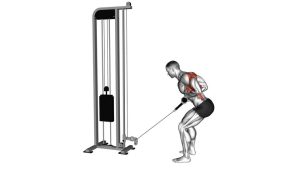
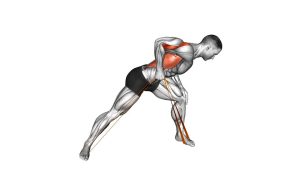
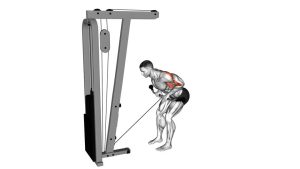
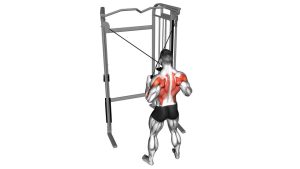
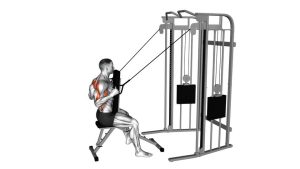
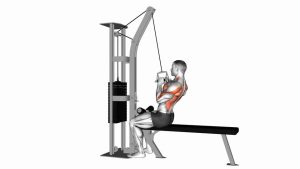
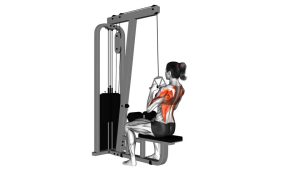
Cable Seated One-Arm Alternate Row: Form, Muscles Worked, Sets, Tips & FAQ
Learn how to perform the Cable Seated One-Arm Alternate Row with proper form. Discover muscles worked, setup, step-by-step execution, sets and reps by goal, common mistakes, FAQs, and recommended equipment.
Cable Seated One-Arm Alternate Row
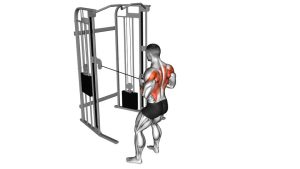
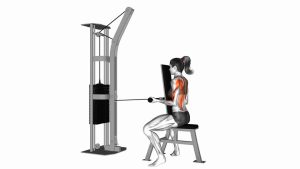
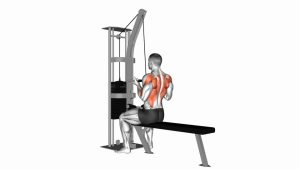
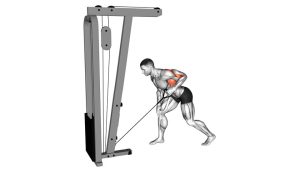
This row variation works best when you keep your torso stable, your chest lifted, and your elbow driving back close to your body. The goal is not to yank the handle with the hand, but to pull through the elbow and squeeze the shoulder blade back without shrugging. Use a controlled rhythm so the returning arm fully extends under tension while the other side rows smoothly.
Quick Overview
| Body Part | Back |
|---|---|
| Primary Muscle | Latissimus dorsi, rhomboids, middle trapezius |
| Secondary Muscle | Rear deltoids, biceps, brachialis, forearms, core stabilizers |
| Equipment | Seated cable row machine with independent single handles |
| Difficulty | Beginner to Intermediate |
Sets & Reps (By Goal)
- Muscle growth: 3–4 sets × 8–12 reps per arm
- Strength-focused rowing: 4–5 sets × 6–8 reps per arm
- Control and symmetry: 2–4 sets × 10–15 reps per arm
- Warm-up / activation: 2–3 sets × 12–15 light reps per arm
Progression rule: Increase load only when you can keep both sides equally smooth, avoid torso twisting, and control the return without letting the weight stack slam.
Setup / Starting Position
- Adjust the machine: Sit at the cable row station with your feet firmly planted on the foot platform.
- Grab the handles: Hold one single-grip handle in each hand with your arms extended in front of you.
- Set posture: Keep your chest up, spine neutral, shoulders down, and core lightly braced.
- Find tension: Let the shoulders reach slightly forward without collapsing your upper back.
- Start balanced: Both handles should be under tension before the first rep begins.
Tip: Sit tall rather than leaning far back. A slight natural torso movement is fine, but the exercise should still look controlled and deliberate.
Execution (Step-by-Step)
- Begin with one arm: Pull one handle toward your lower ribs or side torso by driving the elbow back.
- Keep the opposite arm long: While one side rows, let the other arm stay extended under tension.
- Squeeze the back: At the end of the pull, briefly contract the lat and mid-back without shrugging.
- Return with control: Extend the working arm forward smoothly until the shoulder blade can move naturally.
- Alternate sides: Repeat with the opposite arm in a steady left-right rhythm.
- Maintain posture: Keep the chest proud, neck neutral, and torso stable throughout the full set.
Pro Tips & Common Mistakes
- Pull through the elbow: This helps shift emphasis from the hands and biceps to the back.
- Don’t twist hard: A little natural rotation may happen, but avoid using torso momentum to finish reps.
- Control the stretch: Let the working side extend fully without losing posture.
- Don’t shrug: Keep the shoulders down so the lats and mid-back do more of the work.
- Match both sides: Use the weaker arm as the standard for load and rep quality.
- Avoid rushing: Alternating rows should still look smooth, not frantic.
FAQ
What muscles does the Cable Seated One-Arm Alternate Row work most?
The main emphasis is on the lats, rhomboids, and middle traps. The rear delts, biceps, brachialis, and forearms also assist, while the core helps keep your torso stable.
Is this better than a regular seated cable row?
It is not automatically better, but it is excellent for fixing side-to-side imbalances, improving unilateral control, and building a stronger mind-muscle connection in each side of the back.
How far back should I pull the handle?
Pull until your elbow passes slightly behind your torso and the handle reaches around the lower rib area. Do not force extra range by leaning back aggressively.
Should I alternate every rep or finish one arm first?
For this variation, alternating every rep is the defining feature. It creates a smooth rhythm and keeps the movement dynamic while still training each side independently.
Can beginners use this exercise?
Yes. It is beginner-friendly if the load is moderate and posture stays controlled. Start lighter so you can learn how to row with the back instead of relying only on the arms.
Recommended Equipment
- Single D-Handle Cable Attachment — useful for unilateral rows and independent arm pulling
- Double D Row Handle — useful if you also want a close-grip bilateral row option
- Lifting Straps — helpful when grip fatigue limits back training volume
- Resistance Band Set — good for warm-ups, scapular activation, and extra rowing practice
- Weightlifting Gloves — optional comfort support for high-volume cable sessions
For this exercise, the most directly useful options are single D-handles, lifting straps, and resistance bands for warm-up work.