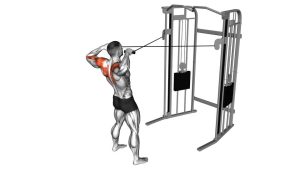
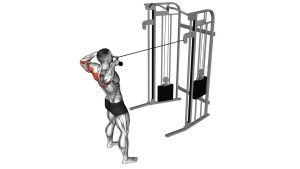
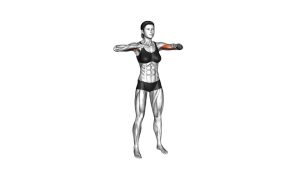
Cable Standing Shoulder External Rotation: Form, Muscles Worked, Sets, Tips & FAQ
Learn how to do the Cable Standing Shoulder External Rotation with proper form to strengthen the rotator cuff, improve shoulder stability, and build healthier pressing and pulling mechanics. Includes setup, execution, sets and reps, tips, FAQs, and recommended equipment.
Cable Standing Shoulder External Rotation
This exercise works best with light-to-moderate resistance and strict control. You should feel the small stabilizing muscles at the back of the shoulder working, not your traps taking over or your whole body helping the rep. Use a manageable load, keep the elbow tucked, and focus on a clean arc of motion through the shoulder joint.
Quick Overview
| Body Part | Shoulders |
|---|---|
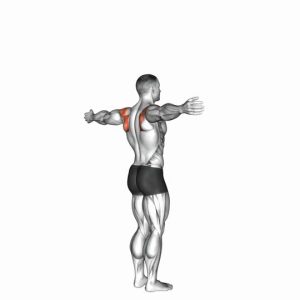
| Primary Muscle | Infraspinatus and teres minor (rotator cuff external rotators) |
| Secondary Muscle | Posterior deltoid, scapular stabilizers, deep shoulder stabilizers |
| Equipment | Cable machine with single handle attachment |
| Difficulty | Beginner (technique-focused and commonly used for rehab or prehab) |
Sets & Reps (By Goal)
- Shoulder warm-up / activation: 2–3 sets × 10–15 reps per side with light resistance
- Rotator cuff strength: 3–4 sets × 8–12 reps per side with slow, controlled tempo
- Rehab / prehab control: 2–3 sets × 12–20 reps per side using very strict form
- Upper-body balance work: 2–3 sets × 10–15 reps per side after pressing or pulling sessions
Progression rule: Add reps or improve control before increasing weight. If the shoulder hikes up, the elbow drifts, or the torso twists, the load is too heavy.
Setup / Starting Position
- Set the pulley height: Position the cable at roughly elbow height.
- Stand side-on to the machine: The working arm should be the arm farthest from the pulley.
- Grip the handle: Use a neutral grip and bend the elbow to about 90 degrees.
- Tuck the elbow near the torso: Keep the upper arm close to your side to create a stable pivot.
- Brace your posture: Stand tall with a neutral spine, chest up, ribs down, and shoulders relaxed.
- Start with the forearm across the body: The cable should be pulling inward at the start position.
Tip: Placing a small towel between the elbow and torso can help you keep the upper arm stable and prevent cheating.
Execution (Step-by-Step)
- Lock in your stance: Keep your feet planted and core engaged so the body stays still.
- Set the elbow position: Maintain a 90-degree bend and keep the elbow pinned close to your side.
- Rotate outward: Move the forearm away from the body in a controlled arc while keeping the upper arm fixed.
- Pause briefly: At the end of the range, hold for a moment without shrugging or losing alignment.
- Return slowly: Let the forearm come back inward under control, resisting the pull of the cable.
- Repeat evenly: Keep every rep smooth, symmetrical, and focused on shoulder rotation—not body movement.
Pro Tips & Common Mistakes
- Keep the elbow anchored: Letting it drift away shifts the exercise away from the rotator cuff.
- Use light resistance: This is a small-muscle control movement, not a max-strength lift.
- Don’t twist the torso: The body should stay square and stable while the shoulder does the work.
- Avoid shrugging: If the upper traps take over, lower the load and reset your shoulder position.
- Control the eccentric: The return phase is valuable for shoulder stability and tendon control.
- Train both sides evenly: Balanced rotator cuff strength helps shoulder mechanics and posture.
- Use it before upper-body sessions: This exercise fits well in warm-ups before pressing, rowing, or overhead work.
FAQ
What muscles does the cable standing shoulder external rotation work?
It primarily targets the infraspinatus and teres minor, which are key external rotators of the shoulder. It also involves smaller stabilizers around the shoulder blade and upper back.
Should I use heavy weight for this exercise?
Usually no. This movement is most effective with strict technique and controlled resistance. Going too heavy often causes torso rotation, elbow drift, and trap compensation.
Is this a good rehab or prehab exercise?
Yes. It is commonly used in shoulder-strengthening routines to improve rotator cuff function, joint stability, and movement quality—especially when performed pain-free and with good control.
Where should I feel it?
Most people feel it at the back of the shoulder, around the rotator cuff and rear shoulder area. You should not feel sharp pain in the front of the shoulder.
Can beginners do cable external rotations?
Yes. This is a beginner-friendly movement as long as the load stays light and the form stays strict. It’s a great entry point for improving shoulder stability and control.
Recommended Equipment
- Single D-Handle Cable Attachment — ideal for one-arm cable external rotations and other unilateral shoulder work
- Shoulder Resistance Bands Set — useful for home-based rotator cuff training, warm-ups, and rehab-style shoulder work
- Rotator Cuff Exercise Equipment — practical for shoulder prehab, stability work, and controlled accessory training
- Shoulder Rehab Pulley System — helpful for range-of-motion work and general shoulder recovery routines
- Door Anchor Resistance Band Kit — a simple way to perform shoulder external rotations at home without a cable machine
Tip: For this exercise, lighter and smoother resistance is usually better than aggressive loading. Prioritize control, range, and joint comfort over heavy weight.