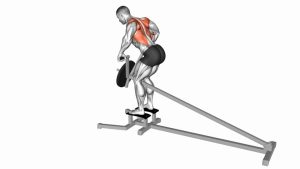
Cambered Bar Lying Row: Form, Muscles Worked, Sets, Tips & FAQ
Learn how to perform the Cambered Bar Lying Row with strict chest-supported form to build upper-back thickness, lats, rhomboids, and rear delts. Includes setup, execution, sets and reps, mistakes, FAQ, and recommended equipment.
Cambered Bar Lying Row
This exercise is especially useful for lifters who want more upper-back thickness without relying on hip drive or torso swing. Because the chest stays supported on the bench, the movement becomes more honest: the back does the work, not momentum. The result is a highly effective row for hypertrophy, posture-supporting strength, and improving your ability to squeeze the shoulder blades together under load.
Quick Overview
| Body Part | Back |
|---|---|
| Primary Muscle | Upper back (Rhomboids and Middle Trapezius) |
| Secondary Muscle | Latissimus dorsi, rear deltoids, biceps, brachialis, forearms |
| Equipment | Elevated flat bench, cambered barbell, weight plates, collars |
| Difficulty | Intermediate |
Sets & Reps (By Goal)
- Muscle growth: 3–5 sets × 8–12 reps with controlled tempo and a hard squeeze at the top
- Strength focus: 4–6 sets × 4–8 reps using strict chest support and full-range reps
- Technique practice: 2–4 sets × 8–10 reps with moderate load and slower eccentrics
- Accessory back work: 3–4 sets × 10–15 reps after primary pulls or deadlift work
Progression rule: Add load only when you can keep the chest glued to the bench, reach full extension at the bottom, and squeeze the shoulder blades together without bouncing the bar.
Setup / Starting Position
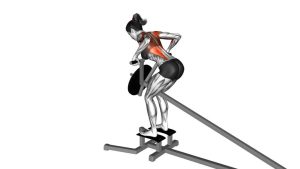
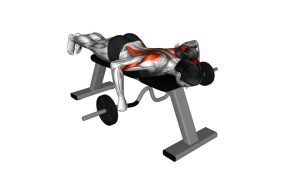
- Elevate the bench: Use a flat bench high enough that the cambered bar can hang freely below you without touching the floor.
- Lie face down: Position your chest and torso firmly on the bench, with your head neutral and eyes down.
- Set your lower body: Keep your feet planted on the floor for stability and your body quiet throughout the set.
- Grip the bar: Take a secure shoulder-width or slightly wider grip on the cambered bar.
- Start long: Let the arms hang straight down and allow a natural shoulder stretch without losing your chest contact.
Tip: The bench height matters. If the plates hit the floor or the bar path gets cut short, raise the bench setup before loading heavier.
Execution (Step-by-Step)
- Brace and stay planted: Keep your chest pressed into the bench and avoid lifting your torso to start the rep.
- Initiate with the upper back: Begin by pulling the shoulder blades back and down rather than yanking with the arms.
- Drive the elbows back: Row the bar upward toward the lower chest or underside of the bench.
- Squeeze at the top: Pause briefly when the elbows travel behind the torso and the shoulder blades are fully retracted.
- Lower under control: Extend the arms smoothly until you reach a full stretch at the bottom without losing position.
- Repeat cleanly: Every rep should look nearly identical, with no bouncing, hip drive, or neck overextension.
Pro Tips & Common Mistakes
- Keep the chest glued down: The whole point of the movement is strict back work with minimal cheating.
- Pull with elbows, not ego: Think about driving the elbows back instead of just moving the bar.
- Use a full stretch: Let the shoulder blades move naturally at the bottom for better range and tension.
- Do not shrug excessively: Pulling the shoulders up toward the ears shifts emphasis away from a strong mid-back contraction.
- Avoid bouncing into the top: Momentum reduces tension on the target muscles and makes the row less precise.
- Keep the neck neutral: Looking too far forward can create unnecessary tension in the upper traps and cervical spine.
- Control the eccentric: The lowering phase is where you reinforce position, stretch, and muscle tension.
FAQ
What muscles does the Cambered Bar Lying Row work most?
It mainly targets the upper back, especially the rhomboids and middle traps, while also training the lats, rear delts, biceps, and forearms.
Why use a cambered bar instead of a straight bar?
A cambered bar can allow a slightly deeper pull and often feels more comfortable through the wrists and shoulders, especially in chest-supported row setups.
Is this the same as a seal row?
It is very similar. Many lifters consider the Cambered Bar Lying Row a seal-row variation because both are performed chest-supported on an elevated bench to remove momentum and emphasize strict rowing mechanics.
Should I go heavy on this exercise?
You can load it progressively, but only as long as you keep the reps strict. This lift works best when the chest stays planted and the upper back—not momentum— controls the movement.
Where should I pull the bar?
Most lifters should row toward the lower chest or the underside of the bench while keeping elbows driving back and shoulder blades retracting hard.
Recommended Equipment
- Titan Fitness Cambered Bench Press and Rowing Bar — a cambered bar option suited to rowing variations and deeper chest-supported pulls
- Seal Row Bench — purpose-built chest support that helps you perform strict prone rowing without lower-back compensation
- Gymreapers Lifting Wrist Straps — useful when grip becomes the limiting factor before your upper back is fully fatigued
- Clout Fitness Olympic Barbell Clamps — helps keep plates secure during repeated rowing sets
- Fractional Weight Plates — ideal for small, steady progression when strict rowing form matters more than big jumps in load
Tip: Prioritize bench stability and bar path clearance first. A solid setup improves this exercise more than simply adding extra weight.