Dumbbell Bent-Over Row: Proper Form, Muscles Worked, Sets, Tips & FAQ
Learn how to do the Dumbbell Bent-Over Row with proper form to build back thickness, lats, rhomboids, and upper-back strength. Includes setup, step-by-step execution, sets and reps by goal, common mistakes, FAQs, and recommended equipment.
Dumbbell Bent-Over Row
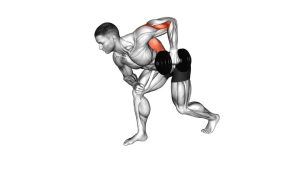
This variation is best when performed with a strong hip hinge, a neutral spine, and deliberate elbow drive. Instead of yanking the dumbbells upward, think about pulling through the elbows and squeezing the shoulder blades together near the top. When done correctly, the movement challenges both the upper back and the postural muscles that keep your torso stable throughout each rep.
Quick Overview
| Body Part | Back |
|---|---|
| Primary Muscle | Latissimus dorsi, rhomboids, middle trapezius |
| Secondary Muscle | Posterior deltoids, biceps brachii, brachialis, brachioradialis, erector spinae, core |
| Equipment | Pair of dumbbells |
| Difficulty | Intermediate |
Sets & Reps (By Goal)
- Muscle growth: 3-4 sets × 8-12 reps with controlled tempo and 60-90 sec rest
- Strength focus: 4-5 sets × 5-8 reps with heavier dumbbells and 90-150 sec rest
- Technique / control: 2-3 sets × 10-15 reps using moderate weight and strict form
- Accessory back work: 3 sets × 12-15 reps after pull-ups, pulldowns, or barbell rows
Progression rule: Increase load only when you can keep the torso stable, avoid shrugging, and complete every rep with full control on both the pull and the lowering phase.
Setup / Starting Position
- Stand tall with a dumbbell in each hand: Place your feet about hip-width apart for a balanced base.
- Soften the knees: Keep a slight knee bend so you can hinge comfortably without locking the legs.
- Hinge at the hips: Push the hips back and lean the torso forward until you reach roughly a 45- to 60-degree torso angle.
- Brace the trunk: Keep your core tight, chest set, and spine neutral from head to hips.
- Let the dumbbells hang naturally: Arms should be extended under the shoulders with a neutral grip and shoulders packed down.
Tip: Think “long spine, hips back, chest proud.” A stable setup makes it much easier to feel the back doing the work.
Execution (Step-by-Step)
- Lock in your hinge: Before you start rowing, brace the abs and keep the torso fixed.
- Initiate with the back: Begin the pull by driving the elbows up and back rather than curling the dumbbells with the arms.
- Keep the weights close: Row the dumbbells toward the lower ribs or upper waist while keeping the elbows near the body.
- Squeeze at the top: Retract the shoulder blades and pause briefly when the elbows move slightly behind the torso.
- Lower under control: Extend the arms slowly and let the shoulder blades move naturally without losing your spinal position.
- Repeat without swinging: Maintain the same torso angle and avoid using momentum to start the next rep.
Pro Tips & Common Mistakes
- Drive through the elbows: This helps you recruit the back instead of turning the movement into an arm-dominant pull.
- Keep your neck neutral: Avoid cranking the head up. Let the gaze stay slightly forward and down.
- Don’t shrug at the top: Focus on pulling the shoulders back, not up toward the ears.
- Use a controlled eccentric: Lowering the dumbbells slowly improves tension and technique quality.
- Avoid torso swing: Excessive body English reduces back tension and increases stress on the lower back.
- Don’t round the spine: A rounded torso weakens leverage and can make the movement uncomfortable under load.
- Match both sides: Keep the range, tempo, and elbow path symmetrical from rep to rep.
FAQ
What muscles does the Dumbbell Bent-Over Row work most?
It mainly targets the latissimus dorsi, rhomboids, and middle traps. The posterior delts, biceps, forearms, spinal erectors, and core also contribute to the movement.
Should I row toward my chest or my waist?
For a more back-focused row like this one, aim the dumbbells toward the lower ribs or upper waist. That usually helps keep the elbows in a better path for the lats and mid-back.
Is this better for back thickness or width?
It is especially effective for back thickness because it trains the mid-back, rhomboids, and traps while still giving the lats a strong stimulus.
Can beginners do Dumbbell Bent-Over Rows?
Yes, but beginners should start with lighter weights and focus first on learning the hip hinge, bracing the core, and controlling the dumbbells without jerking.
What if I feel it more in my lower back than my upper back?
Usually that means the torso position is weak, the weight is too heavy, or the set lasts too long for your current strength. Reduce the load, brace harder, and keep the chest set while rowing with a slower tempo.
Recommended Equipment
- Adjustable Dumbbells — the most practical option for progressing load at home
- Lifting Straps — useful when grip fatigue limits your back work on heavier sets
- Adjustable Weight Bench — helpful for adding chest-supported row variations and other dumbbell back work
- Resistance Bands Set — good for warm-ups, scapular activation, and extra upper-back volume
- Workout Gloves — optional for comfort and grip support during higher-volume sessions
Choose equipment that supports clean pulling mechanics and progressive overload, not just heavier weight.