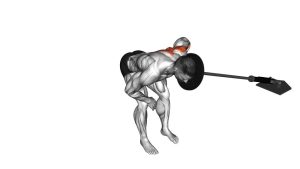
Kettlebell One-Arm Row: Proper Form, Muscles Worked, Sets, Tips & FAQ
Learn how to do the Kettlebell One-Arm Row with proper form to build lats, rhomboids, and upper-back strength. Includes setup, step-by-step execution, sets by goal, common mistakes, FAQs, and recommended equipment.
Kettlebell One-Arm Row
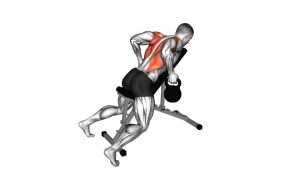
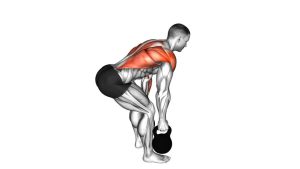
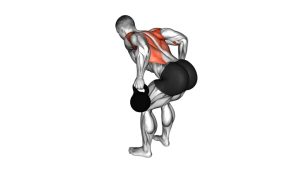
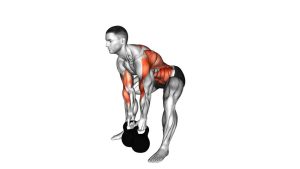
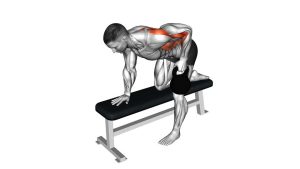
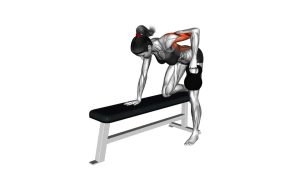
This exercise works best when you stay braced through the trunk and move the kettlebell with the back, not with momentum. A quality rep should feel smooth and deliberate, with the shoulder blade moving naturally and the elbow tracking close to the body. You should feel the pull through the lat, rhomboids, rear delts, and upper back, while the lower body and core stabilize your position.
Quick Overview
| Body Part | Back |
|---|---|
| Primary Muscle | Latissimus dorsi |
| Secondary Muscle | Rhomboids, middle trapezius, rear deltoids, biceps, brachialis, forearms, core stabilizers |
| Equipment | Kettlebell |
| Difficulty | Beginner to Intermediate |
Sets & Reps (By Goal)
- Muscle building: 3–4 sets × 8–12 reps per side with 60–90 seconds rest
- Strength focus: 4–5 sets × 5–8 reps per side with 90–120 seconds rest
- Technique and control: 2–3 sets × 10–15 reps per side using a moderate load and slow tempo
- General fitness: 2–4 sets × 8–10 reps per side after your main hinge or pull work
Progression rule: Add reps before adding load when possible. Once you can complete all sets with a stable torso, full range of motion, and a clean pause at the top, move up to a heavier kettlebell.
Setup / Starting Position
- Take a split stance: Place one foot slightly forward and the other back to create a strong base.
- Hinge at the hips: Push the hips back until your torso is angled forward while keeping the spine neutral.
- Support with the free hand: Rest your non-working hand on your front thigh or knee for balance and torso control.
- Grab the kettlebell: Hold the handle with a neutral grip and let the arm hang straight down under the shoulder.
- Brace the trunk: Keep the chest open, core tight, neck neutral, and shoulders square to the floor.
Tip: Think of your setup as a locked-in platform. The more stable your lower body and torso are, the more tension you can place on the back.
Execution (Step-by-Step)
- Start from a dead hang: Let the kettlebell hang directly below the shoulder with the arm fully extended.
- Initiate with the back: Lightly set the shoulder blade, then begin the pull by driving the elbow upward and backward.
- Row toward the hip: Keep the elbow close to the body and guide the kettlebell toward the lower ribs or hip area.
- Squeeze at the top: Pause briefly when the elbow reaches just behind the torso without twisting the chest open.
- Lower under control: Extend the arm slowly back to the start while keeping the torso fixed and the spine neutral.
- Repeat evenly: Complete all reps on one side, then switch arms and match the same form and effort.
Pro Tips & Common Mistakes
- Drive the elbow back, not up: This helps bias the lats and upper back instead of turning the movement into a curl.
- Keep the torso quiet: Avoid rotating through the ribcage to “help” the kettlebell reach the top.
- Use a full stretch: Let the arm extend fully at the bottom without losing spinal position.
- Do not yank from the floor: Each rep should be controlled, especially the first one.
- Stay packed through the neck: Keep your head neutral and shoulders away from your ears.
- Match both sides: Start with your weaker side and keep reps and tempo even to reduce imbalances.
- Avoid rounding: If the lower back rounds during the set, lower the weight or shorten the set.
FAQ
What muscles does the kettlebell one-arm row work?
The primary target is the latissimus dorsi, with strong assistance from the rhomboids, middle traps, rear deltoids, biceps, and forearms. Your core and hip hinge muscles also work to stabilize the position.
Should I row the kettlebell to my ribs or my hip?
For most lifters, thinking “elbow toward the hip” helps keep the shoulder in a stronger path and improves lat involvement. The exact touch point can vary slightly based on your build and torso angle.
Is this better than a dumbbell one-arm row?
Both are effective. A kettlebell can change the feel of the pull because the load sits below the handle, which may challenge grip and control a bit differently. The best option is the one you can load progressively with solid technique.
Can beginners do the kettlebell one-arm row?
Yes. It is beginner-friendly when you use a manageable load and stable setup. Focus first on a neutral spine, controlled reps, and even left-to-right performance.
How do I stop twisting during the row?
Widen your stance slightly, brace your abs before each rep, press your support hand firmly into the thigh, and reduce the weight if needed. A stable torso is one of the most important technique goals in this exercise.
Recommended Equipment
- Cast Iron Kettlebell — the core tool for loading the movement with a durable, stable handle
- Adjustable Kettlebell — useful for progressive overload without needing multiple separate kettlebells
- Weight Lifting Straps — helpful if grip fatigue limits your back work before the target muscles are challenged
- Adjustable Weight Bench — useful for supported row variations and for expanding your overall back training setup
- Workout Gloves / Grip Gloves — optional comfort tool for improving handle feel during high-volume sets
Tip: Prioritize a kettlebell with a comfortable handle and enough load progression for your current strength level. Accessories should support performance, not replace proper setup and technique.