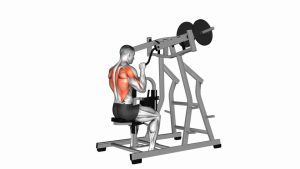
Reverse-Grip Machine Lat Pulldown: Proper Form, Muscles Worked, Sets & FAQ
Learn how to do the Reverse-Grip Machine Lat Pulldown with proper form. Discover muscles worked, setup, step-by-step execution, sets by goal, common mistakes, FAQs, and recommended equipment.
Reverse-Grip Machine Lat Pulldown
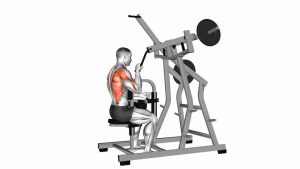
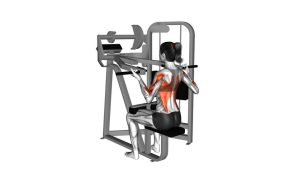
This exercise works best when you stay tall through the chest, pull your elbows down toward your sides, and avoid turning the rep into a full-body swing. The reverse grip often feels stronger and more natural for many lifters than a wide overhand grip, but the key is still controlled motion: stretch fully at the top, pull smoothly to the upper chest, and return under control.
Quick Overview
| Body Part | Back |
|---|---|
| Primary Muscle | Latissimus dorsi |
| Secondary Muscle | Biceps brachii, brachialis, teres major, rhomboids, middle traps, rear delts |
| Equipment | Lever lat pulldown machine / plate-loaded pulldown machine |
| Difficulty | Beginner to Intermediate |
Sets & Reps (By Goal)
- Muscle growth: 3–4 sets × 8–12 reps with controlled tempo and a full stretch
- Strength-focused machine work: 4–5 sets × 5–8 reps with heavier loading and clean form
- Technique practice: 2–3 sets × 10–15 reps using a moderate load and slower eccentrics
- Back-day accessory work: 2–4 sets × 12–15 reps after rows or pull-ups
Progression rule: Add reps before adding weight when possible. If your shoulders shrug, wrists bend excessively, or you need body momentum to finish the rep, the load is too heavy.
Setup / Starting Position
- Adjust the machine: Sit so the handles are comfortably reachable overhead and lock your thighs firmly under the support pad.
- Take an underhand grip: Use a shoulder-width or slightly narrower supinated grip so your palms face you.
- Set your torso: Sit tall with your chest up, ribs stacked, and a small natural arch in your upper torso without overleaning.
- Start in a stretched position: Let the arms extend overhead while keeping tension through the shoulders and lats.
- Brace lightly: Keep your core engaged so the movement comes from the shoulders and elbows, not from swinging the torso.
Tip: A medium underhand grip usually feels best for combining lower-lat focus with a strong, comfortable pulling path.
Execution (Step-by-Step)
- Depress the shoulders first: Think about pulling your shoulders down away from your ears before bending the elbows.
- Drive the elbows down: Pull the handles toward your upper chest while keeping the elbows close to your sides.
- Keep the chest proud: Maintain an upright torso with only a slight natural lean if needed—do not rock backward aggressively.
- Squeeze at the bottom: Pause briefly when the handles reach the upper chest or upper sternum area and contract the lats hard.
- Return slowly: Extend the arms back overhead in a controlled eccentric until you feel a full lat stretch.
Pro Tips & Common Mistakes
- Lead with the elbows: Think elbows down, not hands down.
- Do not lean back too much: Excessive torso swing turns the movement into a hybrid row.
- Use full range of motion: Get a real stretch at the top and a clean contraction at the bottom.
- Keep wrists neutral: Avoid excessive wrist curl to keep tension where you want it.
- Do not shrug: Raised shoulders reduce lat emphasis and can irritate the neck/upper traps.
- Control the eccentric: The lowering phase is where a lot of lat-building stimulus comes from.
- Match grip width to comfort: Shoulder-width or slightly narrow usually works best for this variation.
FAQ
What muscles does the Reverse-Grip Machine Lat Pulldown work?
It mainly targets the latissimus dorsi, especially the lower-lat line of pull, while also involving the biceps, teres major, rhomboids, and middle traps.
Is reverse grip better than overhand for lat pulldowns?
Not automatically better—just different. Reverse grip often feels stronger, allows the elbows to stay closer to the torso, and usually increases biceps contribution. Overhand variations may shift the feel slightly more toward the upper outer back.
Where should I pull the handles?
Pull toward the upper chest while keeping the chest lifted and shoulders down. Avoid pulling too low into the stomach or yanking the machine behind the neck.
Can beginners use this exercise?
Yes. The machine-guided path makes it beginner-friendly, provided the weight is controlled and the setup is adjusted correctly.
Why do I feel this more in my arms than my back?
That usually happens when the load is too heavy, the wrists curl excessively, or you initiate the rep by bending the elbows first. Focus on driving the shoulders down and pulling with the elbows.
Recommended Equipment
- Gymreapers Lifting Wrist Straps — helpful for reducing grip fatigue on heavy pulldown and row work
- ATERCEL Workout Gloves — useful for comfort, grip support, and reducing handle pressure on long back sessions
- Fit Active Sports Workout Gloves — a glove option with added hand protection and wrist support for machine pulling workouts
- Fit Simplify Resistance Loop Exercise Bands — ideal for lat activation, shoulder warm-ups, and scapular prep before pulldowns
- Black Mountain Products Resistance Band Set — useful for home back training, pulldown pattern practice, and warm-up work between gym sessions
Choose accessories that improve comfort and control, not shortcuts that hide weak technique. For most lifters, straps and a simple band warm-up setup are the most useful additions.