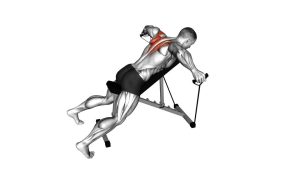
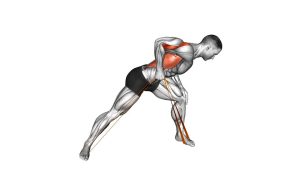
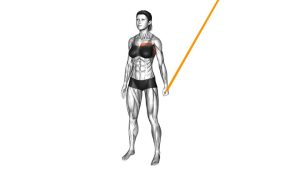
Band Straight-Back Seated Row : Form, Muscles Worked, Sets & Tips
Learn how to do the Band Straight-Back Seated Row with proper form. Discover muscles worked, setup tips, sets and reps by goal, common mistakes, FAQs, and recommended equipment.
Band Straight-Back Seated Row
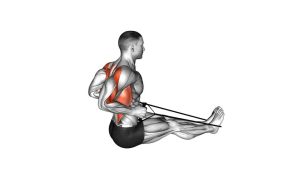
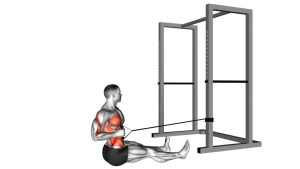
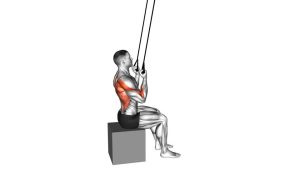
This exercise is most effective when the torso stays straight and stable while the arms pull the band toward the lower ribs or waist. Instead of yanking with the biceps, focus on drawing the elbows back and squeezing the shoulder blades together. The return phase should also stay controlled so the band does not snap the arms forward.
Quick Overview
| Body Part | Back |
|---|---|
| Primary Muscle | Latissimus dorsi, rhomboids, middle trapezius |
| Secondary Muscle | Rear deltoids, biceps, forearms, erector spinae, core stabilizers |
| Equipment | Resistance band with handles or loop band |
| Difficulty | Beginner (easy to scale by changing band tension and tempo) |
Sets & Reps (By Goal)
- General fitness: 2–4 sets × 10–15 reps with smooth, controlled form
- Muscle building: 3–4 sets × 8–12 reps using a stronger band and full contraction
- Posture / activation work: 2–3 sets × 12–20 reps with a lighter band and strict tempo
- Warm-up before pulling workouts: 1–2 sets × 12–15 reps at light-to-moderate tension
Progression rule: First improve control, range, and squeeze quality. Then increase resistance, add reps, or use a short pause at the fully contracted position.
Setup / Starting Position
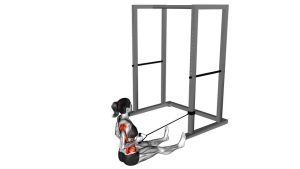
- Sit on the floor with your legs extended in front of you. Keep them hip-width apart or slightly wider for comfort.
- Anchor the band securely around the middle of your feet. Hold one handle in each hand.
- Sit tall with your chest up, shoulders down, and core lightly braced.
- Extend the arms forward until there is light tension in the band without rounding your back.
- Keep a neutral spine and look forward. Avoid collapsing through the lower back or jutting the chin forward.
Tip: If your hamstrings are tight and your back rounds easily, sit on a folded towel or mat, or keep a soft bend in the knees.
Execution (Step-by-Step)
- Set posture first: Stay upright with your ribcage stacked over your hips and the shoulders relaxed.
- Start the pull: Drive the elbows backward while keeping them relatively close to the sides.
- Retract the shoulder blades: Squeeze the upper and mid-back as the handles travel toward the lower ribs or waist.
- Pause briefly: Hold the contracted position for 1 second without leaning back or shrugging.
- Return under control: Slowly extend the arms forward until the shoulder blades move naturally apart again.
- Repeat smoothly: Maintain tension in the band and keep every rep controlled rather than rushed.
Pro Tips & Common Mistakes
- Lead with the elbows: Think about pulling the elbows back instead of curling the handles with the hands.
- Keep the chest open: A proud chest helps prevent rounding and improves back-muscle engagement.
- Don’t shrug: Keep the shoulders away from the ears so the traps do not take over.
- Avoid momentum: Do not lean back hard or jerk the band to create extra force.
- Control the eccentric: The return phase is just as important for muscle development and joint control.
- Use full but clean range: Reach forward enough to stretch the back, but not so far that posture collapses.
- Match the band to your strength: A lighter band with excellent form beats a heavy band with poor mechanics.
FAQ
What muscles does the Band Straight-Back Seated Row work?
It mainly targets the lats, rhomboids, and middle traps. It also trains the rear delts, biceps, forearms, core, and spinal stabilizers.
Is this exercise good for beginners?
Yes. It is a beginner-friendly rowing variation because resistance bands are easy to scale and the seated position helps you focus on posture and pulling mechanics.
Where should I pull the handles?
In most cases, pull the handles toward the lower ribs or waistline. That path usually gives a strong back contraction while keeping the shoulders in a safer position.
What if my lower back rounds while sitting?
Slightly bend your knees, elevate your hips on a folded mat, or reduce the forward reach. Your goal is to maintain a tall torso without forcing an uncomfortable seated position.
Can I use this exercise for posture improvement?
Yes. When done with strict control, it helps strengthen the muscles that support better upper-back posture and shoulder positioning. It works especially well when combined with chest mobility and scapular control drills.
Recommended Equipment
- Resistance Bands with Handles — the most direct option for comfortable seated rows and other home pulling exercises
- Stackable Resistance Bands Set — useful for adjusting tension as you progress from light technique work to harder sets
- Resistance Band Door Anchor — expands your training options so you can perform rows, pulldowns, presses, and more
- Exercise Mat — adds comfort and grip when performing seated band work on hard floors
- Replacement Resistance Band Handles — a helpful upgrade if you want a more secure grip and smoother pulling mechanics
Tip: For better exercise quality, choose a band that lets you complete every rep without leaning back, shrugging, or losing tension at the end range.