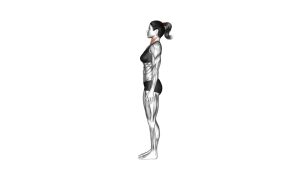
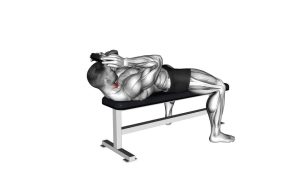
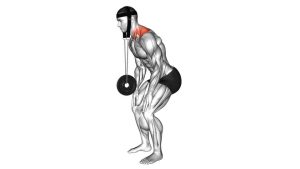
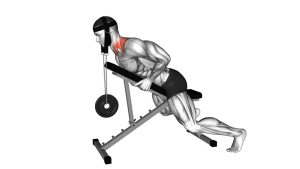
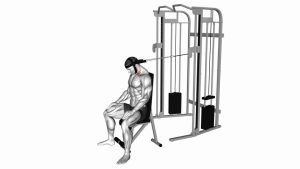
Weighted Lying Neck Flexion (Head Harness): Safe Anterior Neck Strength Guide
Learn how to do weighted lying neck flexion with a head harness: setup, step-by-step form, sets & reps by goal, tips, mistakes, FAQs, and gear picks.
Weighted Lying Neck Flexion (Head Harness)
This exercise works best with strict control and moderate loading. You should feel the effort mostly in the front/side of the neck (SCM area), not in the jaw, shoulders, or upper traps. If the weight swings, you feel “pinching,” or you can’t lower slowly, reduce the load and/or shorten the range.
Quick Overview
| Body Part | Neck |
|---|---|
| Primary Muscle | Sternocleidomastoid (SCM) + deep neck flexors |
| Secondary Muscle | Scalenes, upper cervical flexors, deep cervical stabilizers |
| Equipment | Head harness + chain/strap + weight plate (or loading pin), bench (flat or slight incline) |
| Difficulty | Beginner–Intermediate (beginner-friendly if loads are very light and reps are strict) |
Sets & Reps (By Goal)
- Hypertrophy (size): 3–5 sets × 12–20 reps (60–90 sec rest)
- Strength (controlled): 3–4 sets × 8–12 reps (75–120 sec rest)
- Endurance / resilience: 2–4 sets × 20–30 reps (45–75 sec rest)
- Return-to-training (gentle): 2–3 sets × 10–15 reps (light load, short range)
Progression rule: Add 1–2 reps first. Only add weight after you can keep every rep smooth (no swinging).
Setup / Starting Position
- Bench position: Lie on your back with your upper back supported and your head just off the edge.
- Harness placement: Center the harness so it sits evenly (no twisting). Ensure the chin strap is comfortable.
- Load check: Start light—your first working set should feel easy enough to stay perfectly controlled.
- Neutral torso: Keep ribs down, hips quiet, and shoulders relaxed (no shrugging).
- Neck start: Begin neutral or only slightly extended—avoid dropping into a deep stretch under load.
Tip: Keep the weight hanging straight down. If the chain or plate swings, pause, reset, and reduce the load.
Execution (Step-by-Step)
- Brace & breathe: Take a calm breath and keep the torso completely still.
- Chin tuck first: Think “double chin” (slight tuck) before you flex—this reduces chin-jutting.
- Lift smoothly: Flex the neck to raise the head (controlled, no jerking, no crunching the torso).
- Stop before strain: Finish when you still feel strong control—don’t force max flexion.
- Brief pause: Hold 0.5–1 second under control.
- Lower slowly: Return in ~2–4 seconds with tension (no drop, no bounce, no swinging).
Pro Tips & Common Mistakes
- Use a “quiet” tempo: 2–3 sec up, brief pause, 3–4 sec down.
- Center the harness every set: Off-center fit can create unwanted twisting forces.
- Avoid bottom-range hanging: Don’t let the load pull you into a deep stretch.
- Don’t chase heavy singles: The neck responds best to controlled reps and gradual progression.
- Skip momentum: If the plate swings, the set is too heavy or too fast.
- Balance your neck training: Pair with light extension/lateral work on separate days for symmetry.
FAQ
Where should I feel weighted lying neck flexion?
Mainly in the front/side of the neck (SCM area). A little stabilizer effort is normal, but the torso, shoulders, and traps should stay quiet.
How heavy should I go?
Start very light and increase slowly. Choose a load you can control with no swinging and a slow eccentric. If you can’t lower smoothly, it’s too heavy.
Is it okay to go into a deep stretch at the bottom?
You don’t need an extreme stretch. Begin at neutral or slight extension and keep the motion pain-free. Deep stretching under load can irritate sensitive neck tissues for some lifters.
How often should I train this?
Most lifters do well with 1–3 sessions per week. If you get lingering soreness, headaches, or irritation, reduce volume, load, and range of motion.
Who should avoid this exercise?
If you have an acute neck injury, severe pain, or nerve-like symptoms (tingling/numbness down the arm), avoid heavy neck loading and seek professional guidance.
Recommended Equipment (Optional)
- Adjustable Neck / Head Harness (Weighted) — the core tool for loading neck flexion safely
- Plate Loading Pin (Cable/Chain Loading) — helps load plates cleanly and can reduce swing vs. some setups
- Micro / Fractional Weight Plates (1.25 lb, 2.5 lb) — perfect for tiny progressions (neck work benefits from small jumps)
- Adjustable Incline Bench — stable support makes reps stricter and more comfortable
- Resistance Bands Set (Optional Alternative) — a smoother, lower-swing option for lighter neck flexion work
Tip: If any tool increases symptoms, stop using it and reassess. The neck rewards light-to-moderate loads and consistency.