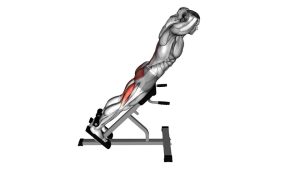
Suspender Hyperextension: Proper Form, Muscles Worked, Sets, Tips & FAQ
Learn how to do the Suspender Hyperextension with proper form. Discover muscles worked, setup, execution, sets and reps by goal, common mistakes, FAQs, and recommended equipment.
Suspender Hyperextension
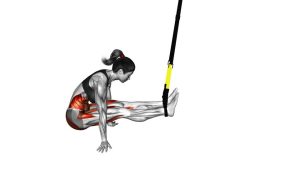
This exercise is best performed with smooth control and moderate tension through the straps. The goal is to create a strong hinge pattern: hips travel backward on the way down, then forward on the way up. You should feel the work primarily in the glutes, hamstrings, and lower back stabilizers, while the shoulders and arms mainly help with balance and positioning.
Quick Overview
| Body Part | Back |
|---|---|
| Primary Muscle | Gluteus maximus, hamstrings, spinal erectors |
| Secondary Muscle | Core stabilizers, lats, rear delts, calves |
| Equipment | Suspension trainer / suspension straps |
| Difficulty | Beginner to Intermediate |
Sets & Reps (By Goal)
- Movement learning / activation: 2–3 sets × 8–10 reps, slow tempo, 45–60 sec rest
- Posterior-chain strength endurance: 3–4 sets × 10–15 reps, 45–75 sec rest
- Warm-up before deadlifts or hinges: 2–3 sets × 6–8 controlled reps
- General fitness: 3 sets × 10–12 reps, smooth pace, strict form
Progression rule: First improve control, range, and tempo. Then increase difficulty by stepping farther from the anchor point, using a slower eccentric, or adding a brief pause in the hinged position.
Setup / Starting Position
- Adjust the straps: Set the suspension trainer to a length that allows you to lean forward while keeping tension in the handles.
- Face the anchor point: Stand with feet about hip-width apart and grip the handles firmly.
- Create body tension: Extend the arms forward or slightly overhead and lean into the straps with control.
- Set posture: Keep the chest open, shoulders down, core braced, and spine neutral.
- Unlock the knees: Maintain a soft knee bend so the movement comes mainly from the hips.
Tip: Think of the straps as a balance aid, not the main source of force. Your hips should drive the exercise.
Execution (Step-by-Step)
- Brace and breathe: Tighten your core lightly and keep your neck in line with your torso.
- Push the hips back: Hinge backward while keeping the spine neutral and the straps under tension.
- Lower with control: Let the torso angle forward as one unit without rounding the back.
- Reach your bottom position: Stop when you feel a good stretch in the hamstrings and glutes while still holding alignment.
- Drive the hips forward: Squeeze the glutes and return to upright without yanking on the handles.
- Finish tall: Stand tall with hips extended, ribs stacked, and no excessive lower-back arch.
Pro Tips & Common Mistakes
- Hinge, don’t squat: Keep shin movement minimal and send the hips backward instead of dropping straight down.
- Maintain a neutral spine: Avoid both lower-back rounding and excessive arching at the top.
- Use the straps for support, not pulling: The hands stabilize; the posterior chain drives the movement.
- Keep the neck neutral: Don’t crank the head upward or tuck aggressively.
- Move as one unit: The torso should rise and lower together rather than collapsing segment by segment.
- Control the tempo: A slower lowering phase improves tension and technique.
- Avoid overextending at lockout: Finish tall by squeezing the glutes, not by leaning backward.
FAQ
What muscles does the Suspender Hyperextension work?
It mainly targets the glutes, hamstrings, and spinal erectors. The core and upper back also help stabilize the body during the movement.
Is this exercise for beginners?
Yes. The suspension setup makes it beginner-friendly because the straps help with balance and body positioning. It is an excellent option for learning the hip-hinge pattern before progressing to heavier loaded exercises.
Should I feel this more in my lower back or glutes?
You should usually feel a strong contribution from the glutes and hamstrings, with the lower back working more as a stabilizer. If it feels only in the lower back, check your hinge mechanics and avoid overextending at the top.
How is this different from a Romanian deadlift?
The movement pattern is similar, but the suspension trainer adds support and reduces the need to manage external load. That makes it useful for technique practice, control, and posterior-chain training with less spinal loading.
Can I use this in a warm-up?
Yes. It works well in a warm-up before deadlifts, kettlebell hinges, glute sessions, or lower-back endurance work.
Recommended Equipment
- TRX GO Suspension Trainer — the most direct equipment choice for performing this exercise
- Gaiam Essentials Thick Exercise Mat — useful for floor-based warm-ups, glute activation, or pairing mobility drills
- Fit Simplify Resistance Loop Bands Set — great for glute activation and posterior-chain prep before suspension work
- Yes4All Balance Pad — useful for stability training, rehab-style balance work, and low-impact accessory drills
- Suspension Trainer Door Anchor — helpful if you want to mount straps securely at home without a dedicated anchor point
Tip: For most people, a good suspension trainer plus a simple mat is enough to build an effective setup for this exercise and related posterior-chain work.