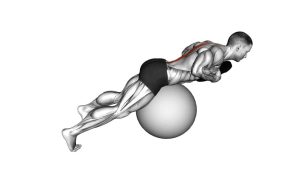
Back Extension on Exercise Ball: Form, Muscles Worked, Sets, Tips & FAQ
Learn how to do the Back Extension on Exercise Ball with proper form. Discover muscles worked, setup, execution steps, sets and reps by goal, common mistakes, FAQs, and recommended equipment.
Back Extension on Exercise Ball
This exercise is most effective when done with a moderate range of motion and clean body control. You should feel the work mainly through the lower back, glutes, and the rest of the posterior chain, with the abdominal wall helping stabilize the torso. The movement should feel smooth and deliberate, not like you are snapping the chest upward or collapsing over the ball between reps.
Quick Overview
| Body Part | Back |
|---|---|
| Primary Muscle | Erector spinae (lower back) |
| Secondary Muscle | Glutes, hamstrings, spinal stabilizers, deep core, upper back stabilizers |
| Equipment | Exercise ball / stability ball / Swiss ball |
| Difficulty | Beginner to Intermediate |
Sets & Reps (By Goal)
- Technique & control: 2–3 sets × 8–10 reps with slow tempo and full control
- Muscular endurance: 2–4 sets × 12–20 reps with 30–60 sec rest
- General posterior-chain strength: 3–4 sets × 8–15 reps with a 1–2 second squeeze at the top
- Warm-up / activation: 1–2 sets × 8–12 easy reps before rows, deadlifts, or hip hinges
Progression rule: Increase reps first, then improve tempo control or pause time at the top. Progress to harder arm positions or light external load only when you can keep the torso stable and avoid overextending the lower back.
Setup / Starting Position
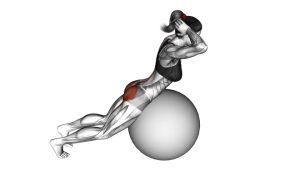
- Position the ball: Place the stability ball under your hips and lower abdomen so your torso can bend forward over it.
- Set your feet: Extend your legs behind you and plant your toes or the balls of your feet firmly into the floor for balance.
- Brace lightly: Tighten your midsection just enough to stabilize the trunk without holding your breath.
- Choose your arm position: Keep your hands beside your head, crossed over your chest, or extended slightly forward if you need a modification.
- Align the neck: Keep your head in line with the spine. Look slightly downward instead of cranking the chin up.
Tip: The higher the ball sits under your torso, the more stable the exercise usually feels. Adjust your body position until you can move smoothly without rolling.
Execution (Step-by-Step)
- Start from the lowered position: Let your torso drape slightly over the ball while keeping your feet grounded and your core lightly braced.
- Lift the chest: Extend through the spine and raise your torso upward in a smooth arc until your body reaches a neutral line from head to hips.
- Squeeze at the top: Briefly contract the lower back and glutes without throwing the chest too high or jamming the lumbar spine.
- Lower under control: Return slowly to the starting position by bending forward over the ball with control instead of dropping down.
- Repeat evenly: Keep the tempo steady and make every rep look the same.
Pro Tips & Common Mistakes
- Keep the neck neutral: Do not lift the chin aggressively or look forward too hard at the top.
- Drive from the posterior chain: Focus on the lower back and glutes instead of swinging with momentum.
- Do not overextend: Going too high often turns a productive rep into lumbar compression.
- Anchor the feet well: A weak base makes the ball shift and reduces control.
- Use a smooth tempo: Slow lowering improves muscle control and makes the movement safer.
- Keep the ribs under control: Avoid flaring the chest upward excessively as you lift.
- Start with bodyweight: Master the pattern before adding plates, bands, or overhead arm variations.
FAQ
What muscles does the Back Extension on Exercise Ball work?
It primarily targets the erector spinae in the lower back, while also training the glutes, hamstrings, and core stabilizers to support posture and trunk control.
Is this exercise good for beginners?
Yes, it can be very beginner-friendly when performed with a small, controlled range of motion and a stable setup. It is a useful introduction to posterior-chain training and spinal extension mechanics.
Should I hyperextend at the top?
No. In most cases, you should lift until your torso reaches a strong neutral alignment. Excessive hyperextension can place unnecessary stress on the lower back.
Where should I feel this exercise?
You should feel it mainly in the lower back and glutes, with some support from the hamstrings and core. If you feel mostly neck strain or sharp lumbar discomfort, your setup or range may need adjustment.
How can I make it harder?
You can increase the challenge by slowing the tempo, adding a pause at the top, moving the hands behind the head, extending the arms overhead, or eventually holding a light weight once bodyweight reps are easy and controlled.
Recommended Equipment
- Anti-Burst Stability Ball — the main tool for performing the exercise safely and comfortably
- Exercise Ball with Pump — convenient option for quick setup and proper inflation at home or in the gym
- Non-Slip Exercise Mat — improves foot grip and comfort when setting up on hard floors
- Resistance Bands Set — useful for pairing this movement with glute, core, and posture accessory work
- Stability Ball Base Ring — helps keep the ball from rolling when storing it or during setup between exercises
Tip: Choose a ball size that allows your hips to sit securely on top while your feet still anchor comfortably into the floor.