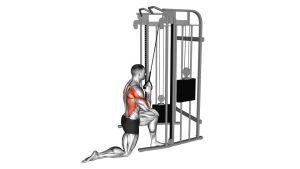
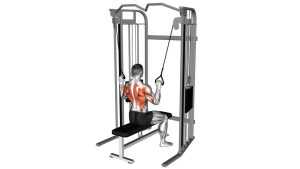
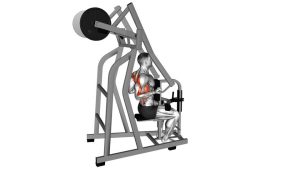
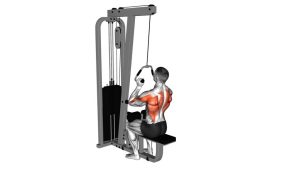
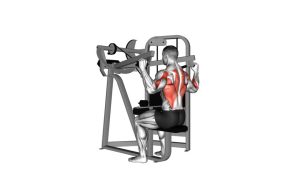
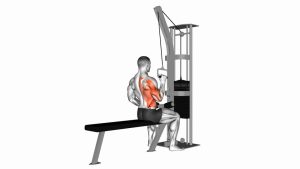
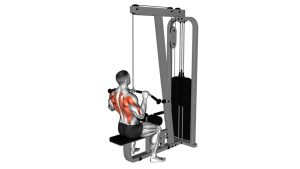
Lever One-Arm Lateral Wide Pulldown: Form, Muscles Worked, Sets & Tips
Learn how to perform the Lever One-Arm Lateral Wide Pulldown with proper form. Discover muscles worked, setup, step-by-step execution, sets and reps by goal, common mistakes, FAQs, and recommended equipment.
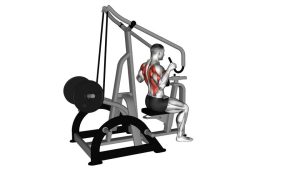
Lever One-Arm Lateral Wide Pulldown (Plate-Loaded)
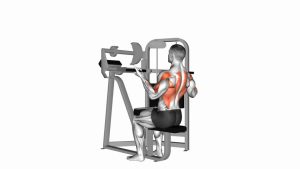
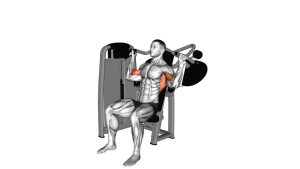
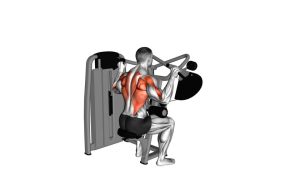
This exercise works best when the movement starts from the shoulder blade rather than the hand. A smooth rep usually begins with the shoulder staying packed, followed by the elbow moving down and slightly back. The working lat should do most of the job, while the torso stays steady and the neck remains relaxed. Use a full stretch at the top, then pull through a controlled range without jerking the handle.
Quick Overview
| Body Part | Back |
|---|---|
| Primary Muscle | Latissimus dorsi |
| Secondary Muscle | Teres major, rhomboids, middle traps, lower traps, posterior deltoid, biceps, brachialis |
| Equipment | Plate-loaded unilateral pulldown machine |
| Difficulty | Intermediate |
Sets & Reps (By Goal)
- Muscle growth: 3–4 sets × 8–12 reps per side
- Strength emphasis: 4–5 sets × 5–8 reps per side
- Technique and control: 2–3 sets × 10–15 reps per side with lighter load
- Back workout finisher: 2–3 sets × 12–15 reps per side with strict tempo
Progression rule: Add load only when you can keep the top stretch, control the negative, and finish every rep without shrugging or twisting to cheat.
Setup / Starting Position
- Load the machine: Add an appropriate amount of weight that lets you control the full range on one side at a time.
- Sit tall: Place your feet firmly on the floor or platform and set your torso upright against the pad if the machine includes one.
- Grip the handle: Reach up and take the single handle with the working arm while keeping the wrist neutral.
- Set the shoulder: Let the arm reach overhead into a stretch, but do not let the shoulder collapse or the neck tense up.
- Brace lightly: Keep the ribs down, chest proud, and core engaged so the body stays stable during the pull.
Tip: Before your first rep, think about pulling your elbow down rather than yanking with your hand. That cue usually improves lat recruitment.
Execution (Step-by-Step)
- Start from the stretched position: Allow the working arm to reach overhead while keeping your torso steady and shoulders under control.
- Initiate with the back: Depress the shoulder blade slightly, then begin pulling the elbow down in a wide arc.
- Drive through the elbow: Continue the pull until the handle reaches the lower side of the upper chest or shoulder line, depending on machine design.
- Squeeze briefly: Pause for a moment at the bottom while keeping the chest tall and the lat fully engaged.
- Return slowly: Let the handle travel back up under control until you reach a full stretch again without losing posture.
- Repeat evenly: Complete all reps on one side, then switch arms, or alternate sides according to your program.
Pro Tips & Common Mistakes
- Use a full top stretch: Let the lat lengthen at the top without losing shoulder control.
- Keep the chest lifted: A proud chest helps create a cleaner pulling line and better lat engagement.
- Lead with the elbow: This reduces the urge to curl the handle down with the arm alone.
- Control the eccentric: The lowering phase is valuable for hypertrophy and joint control.
- Avoid excessive torso lean: Small natural movement is fine, but large body English reduces quality tension on the target muscle.
- Do not shrug: Shoulder elevation usually shifts tension away from the lats and into the upper traps.
- Match both sides: Use the same range and tempo for each arm to expose and correct imbalances.
FAQ
What muscles does the Lever One-Arm Lateral Wide Pulldown work most?
The main target is the latissimus dorsi. Secondary muscles include the teres major, rhomboids, middle/lower traps, rear delts, and elbow flexors.
Is this better than a regular two-arm lat pulldown?
It is not automatically better, but it is excellent for unilateral strength, improving mind-muscle connection, and fixing side-to-side differences that bilateral pulling can hide.
Should I pull the handle all the way down as low as possible?
Only as low as you can while keeping the movement clean. The best bottom position is one where the lat stays loaded, the shoulder stays controlled, and your torso does not twist to fake extra range.
Can beginners use this exercise?
Yes, if the machine setup is comfortable and the load is light enough to control. Beginners should focus on smooth reps, full stretch, and shoulder positioning before chasing heavy weights.
Where should I feel it?
Most people should feel it along the side of the upper back and lat, especially from the armpit area down toward the mid-back. If you mostly feel the biceps, adjust the load and think more about elbow drive.
Recommended Equipment
- Harbinger Padded Cotton Lift Straps — useful when grip becomes the limiting factor before your lats do
- Schiek Sports Deluxe Power Lifting Wrist Straps — a stronger strap option for heavier machine back work
- Trideer Workout Gloves — adds palm protection and comfort during repeated pulling sessions
- Fractional Micro Weight Plates — helpful for making smaller load jumps on plate-loaded machines
- Yes4All Fractional Weight Plates — another practical option for progressive overload on unilateral machine work
Choose accessories that improve control rather than encourage sloppy loading. Straps and small change plates are especially useful for back-focused machine training.