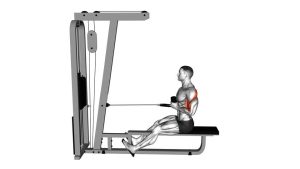
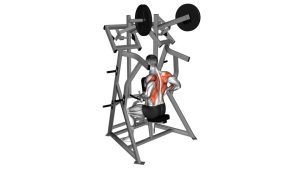
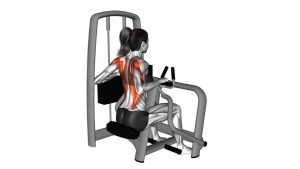
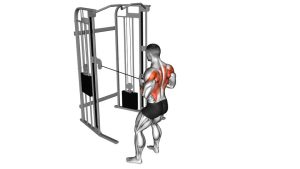
Lever Reverse-Grip Vertical Row: Form, Muscles Worked, Sets & Tips
Learn how to do the Lever Reverse-Grip Vertical Row with proper form. Discover muscles worked, setup, execution steps, sets and reps by goal, common mistakes, FAQs, and recommended gear.
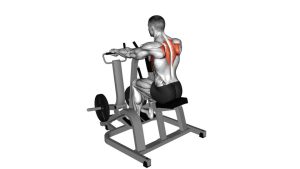
Lever Reverse-Grip Vertical Row
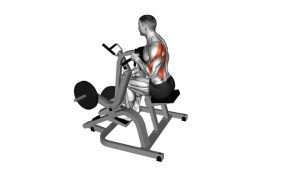
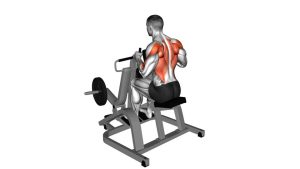
This exercise is especially useful for lifters who want to build back size without the balance demands of free-weight rows. The reverse grip often helps create a more natural elbow path close to the body, which can improve lat involvement and make the finish position feel stronger. Done correctly, the movement should feel smooth and deliberate, with tension concentrated in the back rather than turning into a biceps-only pull.
Quick Overview
| Body Part | Back |
|---|---|
| Primary Muscle | Latissimus dorsi |
| Secondary Muscle | Rhomboids, middle trapezius, rear deltoids, biceps, brachialis, forearms |
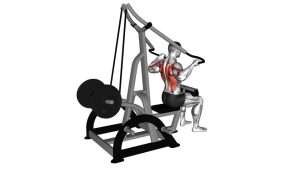
| Equipment | Lever row machine with reverse-grip or underhand handle position |
| Difficulty | Beginner to Intermediate |
Sets & Reps (By Goal)
- Muscle growth: 3–4 sets × 8–12 reps, 60–90 sec rest
- Strength focus: 4–5 sets × 5–8 reps, 90–150 sec rest
- Technique and control: 2–3 sets × 10–15 reps, moderate load, smooth tempo
- Back accessory work: 2–4 sets × 12–15 reps after heavier compound pulls
Progression rule: Add reps before adding load whenever possible. Increase resistance only if you can keep your chest up, elbows tracking cleanly, and the eccentric phase controlled.
Setup / Starting Position
- Adjust the machine: Set the seat or chest support so the handles line up comfortably with your upper torso and shoulders.
- Take an underhand grip: Grab the handles with palms facing up and wrists straight or only slightly extended.
- Plant your base: Keep your feet flat and your lower body steady throughout the set.
- Lift the chest: Sit tall with a neutral spine and avoid rounding forward before the pull begins.
- Start with reach, not collapse: Let the shoulders move slightly forward to create stretch, but do not lose posture.
Tip: A properly adjusted seat usually makes it easier to pull into the lower chest or upper abdomen without shrugging.
Execution (Step-by-Step)
- Brace and set your posture: Keep the ribcage stacked, chest lifted, and neck neutral before starting the row.
- Initiate with the back: Begin the pull by drawing the shoulder blades back and down as the elbows travel toward your sides.
- Pull through the elbows: Bring the handles toward the lower chest or upper abdomen without yanking with the arms alone.
- Squeeze at the finish: Pause briefly when the elbows reach behind the torso and the back is fully contracted.
- Lower with control: Return the handles forward slowly, allowing the lats and upper back to stretch without losing your posture.
Pro Tips & Common Mistakes
- Drive the elbows, not just the hands: This helps keep the emphasis on the back instead of turning the movement into an arm curl.
- Keep the chest proud: A lifted chest improves scapular mechanics and helps you finish the row in a stronger position.
- Use full but controlled range: Reach forward enough to stretch the lats, then pull back without bouncing.
- Avoid excessive torso swing: Momentum reduces tension on the target muscles and can irritate the lower back.
- Do not over-shrug: Let the upper traps assist naturally, but do not turn the exercise into a shrugging pattern.
- Watch your wrists: Keep them mostly neutral so the grip stays secure and the forearms do not fatigue too early.
- Use straps if grip fails first: If your hands give out long before your back does, straps can help keep the set back-focused.
FAQ
What muscles does the Lever Reverse-Grip Vertical Row work most?
It mainly targets the latissimus dorsi, while also training the rhomboids, middle traps, rear delts, and biceps. The underhand grip usually increases arm flexor involvement compared with some overhand rowing variations.
Is this better for lats or upper back?
It can train both effectively. With elbows kept closer to the body and a strong pull toward the lower chest or upper abdomen, many lifters feel more lat involvement. A slightly wider elbow path often shifts more emphasis toward the upper back.
Should I go heavy on this exercise?
You can load it progressively, but only as long as your torso stays stable and your range of motion remains clean. For most lifters, moderate to moderately heavy loads with strict form work best for muscle growth.
Is the reverse grip safe for the wrists and elbows?
Usually yes, provided the grip feels natural and your wrists stay mostly neutral. If the underhand position causes discomfort, reduce the load, check machine setup, or switch to a grip variation that feels better.
Can beginners use this machine?
Yes. The fixed path and stable setup make it beginner-friendly. It is often easier to learn than free-weight rows because balance demands are lower and the machine helps guide the movement pattern.
Recommended Equipment
- Lifting Straps — useful when grip fatigue limits your back work before the target muscles are fully challenged
- Gymreapers Weight Lifting Grips — grip-assist style support for rows, pulldowns, and other pulling exercises
- Weight Training Gloves with Wrist Support — can improve handle comfort and reduce palm irritation during higher-volume machine pulling
- Resistance Bands Set with Handles — great for extra lat activation, warm-ups, and back training when you are away from machines
- Foam Roller — helpful for upper-back mobility and recovery work between pulling sessions
Tip: Accessories should improve comfort, grip, or setup quality. They should not replace good technique, controlled tempo, and appropriate loading.