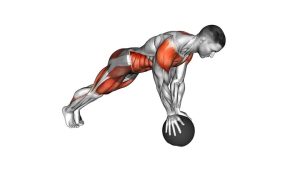
Medicine Ball Catch and Overhead Throw: Form, Benefits, Sets, Tips & FAQ
Learn how to perform the Medicine Ball Catch and Overhead Throw with proper form. Discover muscles worked, setup, execution steps, sets by goal, common mistakes, FAQs, and recommended equipment.
Medicine Ball Catch and Overhead Throw
This exercise blends force absorption, coordination, and explosive power production in one movement. During the catch, the back and posterior chain work to stabilize the torso and control the load. During the throw, the hips, legs, trunk, and shoulders transfer force upward in a fast, athletic pattern. Smooth timing matters more than using a ball that is too heavy.
Quick Overview
| Body Part | Back |
|---|---|
| Primary Muscle | Latissimus dorsi, spinal erectors, upper back |
| Secondary Muscle | Glutes, hamstrings, deltoids, core, triceps |
| Equipment | Medicine ball or slam ball, open floor space, optional wall/throwing area |
| Difficulty | Intermediate |
Sets & Reps (By Goal)
- Power development: 3–5 sets × 4–6 reps with full recovery between sets
- Athletic conditioning: 3–4 sets × 8–12 reps with 45–75 seconds rest
- Warm-up for explosive sessions: 2–3 sets × 4–5 crisp reps using a lighter ball
- General fitness: 2–4 sets × 6–10 reps at controlled but explosive effort
Progression rule: Increase ball weight only after you can catch cleanly, keep the spine neutral, and produce a powerful overhead release without slowing down.
Setup / Starting Position
- Choose the right ball: Pick a medicine ball or slam ball heavy enough to challenge you, but light enough to move explosively.
- Set your stance: Stand with feet around shoulder-width apart and keep your weight balanced through the mid-foot.
- Create space: Make sure the throw zone is clear and the surface can safely handle repeated throws or catches.
- Brace the torso: Keep the chest up, ribs controlled, and core engaged before receiving the ball.
- Prepare to hinge: As the ball comes down, shift the hips back and soften the knees to absorb force.
Tip: This movement usually feels best with a textured, non-slip ball that is easy to catch even when moving fast.
Execution (Step-by-Step)
- Receive the ball: Catch the ball in front of the body while moving into a hip hinge with a flat back and slightly bent knees.
- Absorb the load: Let the hips shift back as the arms guide the ball downward. Avoid collapsing the chest or rounding the spine.
- Stay tight through the trunk: Keep the core braced so the lower back stays stable during the transition.
- Drive upward explosively: Extend the hips and knees, then transfer that momentum through the torso and arms.
- Throw overhead: Finish tall and release the ball overhead with control and speed.
- Reset for the next rep: Regain your stance, prepare for the next catch, and repeat with the same rhythm.
Pro Tips & Common Mistakes
- Use the hips first: Generate power from the lower body and posterior chain instead of trying to muscle the throw with the shoulders alone.
- Keep the back flat on the catch: A clean hinge protects the spine and improves force transfer.
- Absorb before exploding: Do not rush the catch. Control the loading phase, then reverse direction sharply.
- Avoid overextending the lower back: Finish tall, but do not lean back excessively at the top.
- Choose the right ball type: A ball with dependable grip and stable shape makes repeated catch-and-throw work safer and smoother.
- Prioritize crisp reps: Once the speed drops or technique breaks down, end the set.
FAQ
What muscles does the Medicine Ball Catch and Overhead Throw work the most?
The movement strongly involves the upper back, lats, spinal erectors, and the posterior chain. The glutes, hamstrings, shoulders, triceps, and core also contribute to force production and stabilization.
Is this a back exercise or a full-body exercise?
It is best described as a full-body explosive exercise with a strong back and posterior-chain emphasis. The back helps stabilize the catch and transfer force into the overhead throw.
What weight medicine ball should I start with?
Start with a load that lets you move fast and maintain posture. For many people, a lighter ball is better for learning the pattern before increasing resistance.
Can I use a slam ball instead of a traditional medicine ball?
Yes. A slam ball can work very well because it often has a textured outer shell and little bounce, which helps with repeated explosive handling.
Who should be cautious with this exercise?
Anyone with active shoulder pain, acute low-back issues, or poor tolerance for overhead movements should progress carefully and prioritize technique before intensity.
Recommended Equipment
- Yes4All Slam Ball — durable, textured, and built for repeated explosive throws
- Venbytech Fitness Slam Ball — another weighted slam-ball option for power and conditioning work
- Yes4All Wall Ball — useful if you want a softer ball option with multiple weight choices
- Grytfit Interlocking Rubber Floor Tiles — impact-resistant flooring that suits repeated throw training
- Rubber-Cal Interlocking Rubber Flooring — another heavy-duty flooring option for home-gym throw sessions
Choose a ball that matches your goal: lighter for speed and coordination, heavier for force production. Reliable grip and a training surface that can tolerate impact make this exercise much more practical.