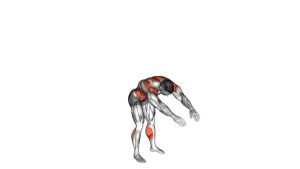
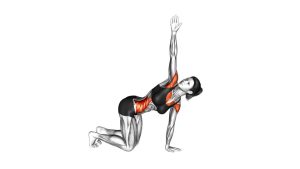
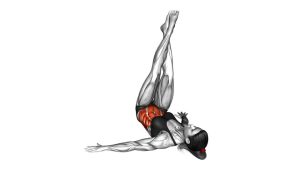
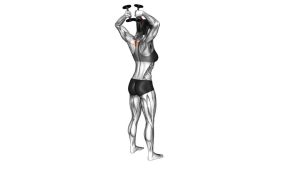
Standing Back Rotation Stretch: Proper Form, Benefits, Tips & FAQ
Learn how to do the Standing Back Rotation Stretch with proper form. Improve thoracic mobility, loosen the back and obliques, and reduce stiffness with step-by-step instructions, tips, FAQs, and recommended equipment.
Standing Back Rotation Stretch
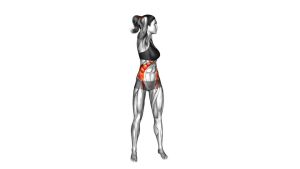
This exercise is best used as a gentle dynamic stretch for people who feel tightness from long periods of sitting, poor posture, or limited rotational mobility. It can also work well before upper-body training, golf, tennis, martial arts, and other activities that depend on healthy spinal rotation. Keep the movement relaxed and avoid using momentum to swing through the stretch.
Quick Overview
| Body Part | Back |
|---|---|
| Primary Muscle | Thoracic spinal rotators and obliques |
| Secondary Muscle | Erector spinae, deep core stabilizers, scapular stabilizers |
| Equipment | None |
| Difficulty | Beginner |
Sets & Reps (By Goal)
- Daily mobility: 2–3 sets × 8–12 rotations per side
- Warm-up before training: 1–2 sets × 6–10 rotations per side
- Flexibility and movement quality: 2–4 sets × 10–15 slow reps per side
- Desk break reset: 1–2 sets × 5–8 easy reps per side
Progression rule: Increase range gradually only if your torso stays tall, your hips remain controlled, and the movement feels smooth with no spinal discomfort.
Setup / Starting Position
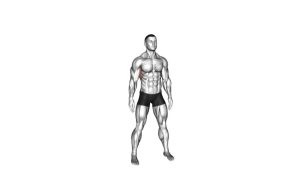
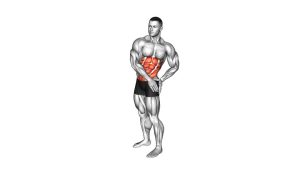
- Stand tall: Place your feet about hip-width apart for balance and stability.
- Soften the knees: Keep a slight bend in the knees so the body stays relaxed and mobile.
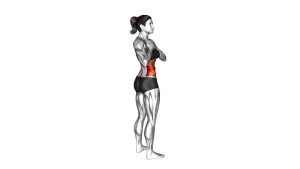
- Cross the arms: Fold your arms across your chest or place your hands on opposite shoulders.
- Brace lightly: Engage your core just enough to stay tall without stiffening.
- Keep the hips forward: Your pelvis should stay mostly square while the upper body rotates.
Tip: Crossing the arms over the chest reduces momentum and helps isolate rotation through the upper and mid-back.
Execution (Step-by-Step)
- Start in a tall neutral stance: Keep the chest lifted, shoulders relaxed, and neck aligned.
- Rotate to one side: Turn your torso slowly to the right or left while keeping the hips mostly facing forward.
- Move through the mid-back: Think about rotating through the thoracic spine instead of twisting hard through the lower back.
- Pause briefly: Hold the end position for a moment if it feels comfortable, without bouncing or forcing range.
- Return to center: Come back under control and repeat on the opposite side.
- Continue evenly: Alternate sides with a steady rhythm and relaxed breathing.
Pro Tips & Common Mistakes
- Keep the hips stable: Let the upper body rotate while the pelvis stays mostly forward.
- Stay tall: Avoid slouching, leaning, or collapsing through the chest.
- Use a slow tempo: Controlled reps improve mobility better than rushed twisting.
- Do not force the range: Go only as far as you can rotate comfortably.
- Avoid lower-back overrotation: The goal is to open the thoracic spine, not crank through the lumbar spine.
- Breathe naturally: Exhale gently into the turn and inhale as you return to center.
- Do not use momentum: Swinging the torso quickly reduces control and can irritate the back.
FAQ
What does the Standing Back Rotation Stretch work?
It mainly improves thoracic spine mobility while lightly stretching and activating the obliques, spinal rotators, and back stabilizers.
Should I feel this in the lower back?
You may feel light involvement there, but the stretch should mainly come from the mid-back. If you feel compression or discomfort in the lower back, reduce the range and focus on staying tall.
Is this a warm-up or a stretch?
It can be used as both. Performed smoothly for repetitions, it works well as a dynamic warm-up. Performed slowly with brief pauses, it can also serve as a mobility stretch.
How often can I do this exercise?
Most people can perform it daily as long as the movement stays easy, controlled, and pain-free. It is especially useful after long sitting periods or before workouts.
Who should be careful with this exercise?
Anyone with an acute spinal injury, recent surgery, severe back pain, or symptoms that worsen with rotation should avoid forcing the movement and seek professional guidance first.
Recommended Equipment (Optional)
- Exercise Yoga Mat — useful for warm-ups, mobility sessions, and floor-based stretch variations
- Foam Roller — helps loosen the upper back before rotational mobility work
- Resistance Bands Set — useful for pairing mobility work with rowing and posture-strengthening exercises
- Massage Peanut Ball — can help release tight muscles around the thoracic spine and shoulder blades
- Stretching Strap — helpful for broader flexibility and mobility work in a full recovery routine
Tip: These tools are optional. The Standing Back Rotation Stretch works well with just bodyweight and controlled movement.