Inverted Row on Bench: Form, Muscles Worked, Sets, Tips & FAQ
Learn how to perform the Inverted Row on Bench with proper form. Discover muscles worked, setup tips, sets and reps by goal, common mistakes, FAQs, and recommended equipment.
Inverted Row on Bench
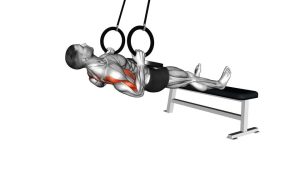
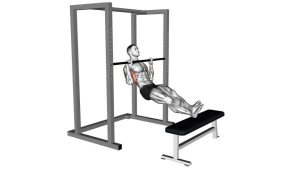
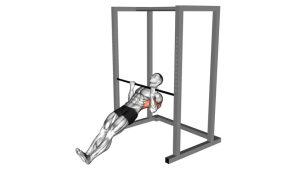
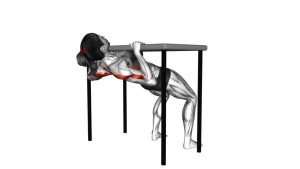
This variation works best when the movement stays controlled from start to finish. The body should rise as one unit without sagging hips, excessive arching, or momentum. You should feel a strong contraction across the mid-back and upper back, with the elbows driving down and back as the chest approaches the bar.
Quick Overview
| Body Part | Upper Back |
|---|---|
| Primary Muscle | Rhomboids, middle trapezius, latissimus dorsi |
| Secondary Muscle | Rear deltoids, biceps, brachialis, forearms, core, glutes |
| Equipment | Fixed bar or Smith machine bar, flat bench |
| Difficulty | Intermediate (can be advanced for beginners due to feet elevation and full-body tension demands) |
Sets & Reps (By Goal)
- Strength: 3–5 sets × 5–8 reps, 90–150 sec rest
- Muscle building: 3–4 sets × 8–12 reps, 60–90 sec rest
- Control and technique: 2–4 sets × 6–10 reps, slow tempo, 60–90 sec rest
- Bodyweight training circuits: 2–4 sets × 10–15 reps, moderate pace, 30–60 sec rest
Progression rule: First improve range of motion and body control, then add reps, slow the lowering phase, or raise the feet higher only if your torso stays rigid and the chest still reaches the bar cleanly.
Setup / Starting Position
- Set the station: Place a flat bench in front of a fixed bar or Smith machine bar set at an appropriate height.
- Position under the bar: Lie beneath the bar with your chest directly below it.
- Elevate the feet: Place your heels on the bench with legs extended.
- Grip the bar: Use an overhand grip slightly wider than shoulder width unless a different grip feels stronger and more comfortable.
- Brace the body: Tighten the core and glutes so your body forms a straight line from shoulders to heels.
- Set the shoulders: Let the arms extend fully while keeping the chest open and the neck neutral.
Tip: Bar height should allow full arm extension at the bottom without the hips touching the floor.
Execution (Step-by-Step)
- Start from a dead hang: Arms straight, heels on the bench, body rigid, and chest lifted.
- Initiate with the upper back: Pull the shoulder blades back and down before bending the elbows.
- Drive the elbows back: Pull your torso upward until the chest reaches or nearly touches the bar.
- Pause briefly at the top: Squeeze the upper back without jutting the chin forward.
- Lower under control: Extend the arms slowly and return to the start without losing body alignment.
- Repeat smoothly: Maintain the same plank-like body position on every rep.
Pro Tips & Common Mistakes
- Lead with the chest: Think about pulling the chest to the bar instead of just curling the arms.
- Keep the body stiff: Squeeze glutes and abs so the rep stays clean and powerful.
- Use full range: Start with straight arms and finish with a strong squeeze at the top.
- Avoid shoulder shrugging: Keep the shoulders from riding up toward the ears.
- Do not rush the lowering phase: A slow eccentric improves control and back engagement.
- Watch elbow path: Elbows should move down and back, not flare wildly out to the sides.
- Do not let the hips drop: This turns the row into a broken-body rep and reduces tension where you want it.
FAQ
What muscles does the inverted row on bench work most?
It mainly targets the upper back, especially the rhomboids, middle traps, and lats. The rear delts, biceps, forearms, core, and glutes also help throughout the movement.
Is this harder than a regular inverted row?
Yes. Elevating the feet makes the body more horizontal, which increases the amount of bodyweight you must row on each rep.
Should my chest touch the bar?
In most cases, yes. Reaching the chest or upper torso close to the bar is a good sign that you are using a strong range of motion.
Can beginners do the inverted row on bench?
Beginners can do it, but many will perform better with a standard inverted row first. Lowering the feet to the floor reduces difficulty and makes it easier to learn proper body alignment.
What is the best tempo for this exercise?
A controlled pull up, a brief squeeze at the top, and a slower lowering phase usually works best for building strength and muscle.
Recommended Equipment
- Adjustable Weight Bench — useful for elevating the feet and expanding bodyweight and dumbbell training options
- Doorway Pull-Up Bar — a practical home-gym option for pull-ups, hanging work, and some row setups
- Suspension Trainer — ideal for bodyweight rows when a fixed bar setup is not available
- Resistance Bands Set — great for assistance, warm-ups, and pairing with back activation drills
- Lifting Straps — helpful if grip fatigue limits your back training volume on pulling movements
Tip: Choose equipment that helps you keep the setup stable and repeatable. A safe setup matters more than making the movement harder too early.