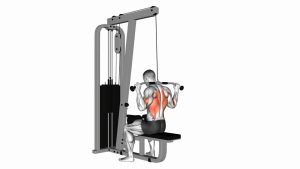
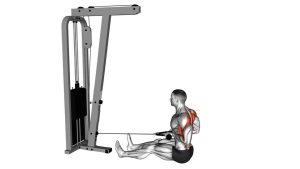
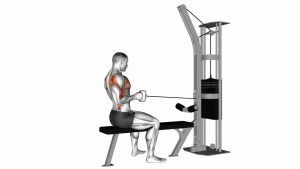
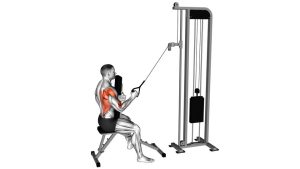
Cable Thibaudeau Kayak Row: Form, Muscles Worked, Sets, Tips & FAQ
Learn how to perform the Cable Thibaudeau Kayak Row with proper form. Discover muscles worked, setup, execution steps, sets and reps by goal, common mistakes, FAQs, and recommended equipment.
Cable Thibaudeau Kayak Row
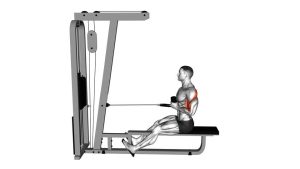
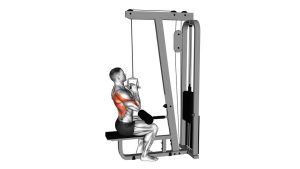
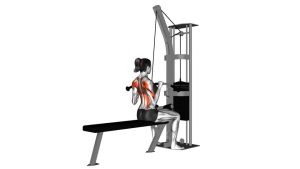
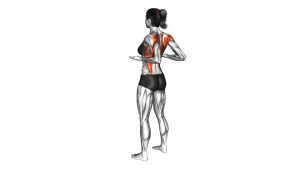
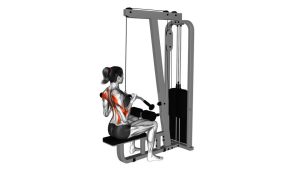
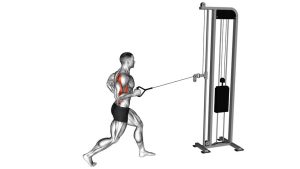
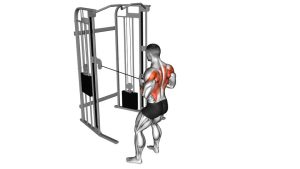
This exercise works best when you keep the movement smooth, deliberate, and tension-driven. You should feel the lats and mid-back doing most of the work while the core helps resist excessive rotation. A slight torso turn is natural, but the pull should still be led by the back, not by swinging the body. When done well, the Cable Thibaudeau Kayak Row is excellent for building rowing strength, improving mind-muscle connection, and adding variety to back training.
Quick Overview
| Body Part | Back |
|---|---|
| Primary Muscle | Latissimus dorsi |
| Secondary Muscle | Rhomboids, middle trapezius, posterior deltoids, biceps, obliques |
| Equipment | Cable machine with rope attachment |
| Difficulty | Intermediate |
Sets & Reps (By Goal)
- Muscle growth: 3–4 sets × 8–12 reps per side with controlled tempo and 60–90 sec rest
- Back activation / warm-up: 2–3 sets × 10–15 reps per side using light-to-moderate weight
- Strength endurance: 3–4 sets × 12–16 alternating reps per side with smooth rhythm
- Technique focus: 2–3 sets × 8–10 reps per side with slower eccentrics and strict form
Progression rule: Increase reps first, then load. Keep the path clean and the shoulder packed before adding more weight.
Setup / Starting Position
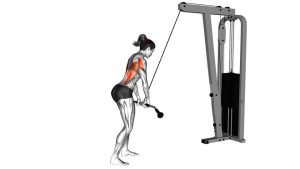
- Set the pulley high: Attach a rope handle to a high cable position so the pull travels diagonally downward.
- Take your stance: Stand facing the machine with feet about shoulder-width apart and knees slightly bent.
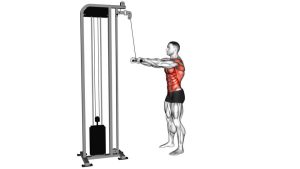
- Create tension: Step back enough so the cable stays taut with both arms extended in front of you.
- Brace the torso: Keep the chest up, spine neutral, and core engaged before starting the first pull.
- Pack the shoulders: Let the shoulders stay down and controlled instead of elevated toward the ears.
Tip: A staggered stance can help if you need more balance, especially when learning the alternating rowing rhythm.
Execution (Step-by-Step)
- Begin with both arms long: Start in the stretched position with the rope in front of you and the cable under tension.
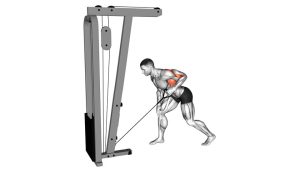
- Pull one elbow down and back: Drive the working-side elbow toward the hip in a diagonal rowing path.
- Let the other arm reach: As one side rows, the opposite arm stays extended forward to keep tension continuous.
- Allow slight torso rotation: Rotate only as much as needed to match the row naturally without swinging the whole body.
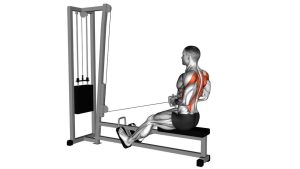
- Squeeze the back: Finish with the lat and mid-back contracted while the shoulder remains down and stable.
- Return with control: Extend the pulling arm forward smoothly instead of letting the weight yank it back.
- Alternate sides rhythmically: Move into the next rep on the opposite side, maintaining the same path and tempo.
Pro Tips & Common Mistakes
- Lead with the elbow: Pulling the elbow back helps shift the work into the lats and mid-back instead of the arms.
- Keep the shoulder depressed: Avoid shrugging during the pull, especially at the finish.
- Use controlled rotation: A small torso turn is fine, but don’t twist aggressively to move the weight.
- Don’t rush the return: The eccentric phase helps reinforce back tension and better technique.
- Stay braced: Keep the ribs stacked and core engaged so the lower back doesn’t overextend.
- Choose the right load: Too much weight usually turns this exercise into a sloppy, momentum-driven movement.
- Maintain cable tension: Avoid letting the rope go slack between reps if you want smoother muscle engagement.
FAQ
What muscles does the Cable Thibaudeau Kayak Row work most?
It mainly targets the latissimus dorsi, while also training the rhomboids, middle traps, rear delts, and core stabilizers.
Is this a back exercise or a core exercise?
It is primarily a back exercise, but the alternating pulling pattern also challenges the core, especially the obliques, to control torso rotation.
Should I use heavy weight on this movement?
Usually, moderate weight works best. This exercise rewards clean mechanics, steady tension, and strong contraction more than max loading.
Can beginners do the Cable Thibaudeau Kayak Row?
Beginners can learn it, but it is easier after developing basic cable row control first. Start light and focus on rhythm, elbow path, and shoulder position.
What is the biggest mistake people make?
The most common mistake is using too much body swing. That reduces back tension and turns the drill into a loose twisting motion instead of a high-quality row.
Recommended Equipment
- Rope Cable Attachment — ideal for creating a comfortable and fluid kayak-style pulling path
- Single D-Handle Cable Attachment — useful for unilateral rowing variations and grip variety
- Lifting Straps — helpful if grip fatigue limits your back training on cable rows
- Resistance Bands Set — great for warming up the shoulders, lats, and upper back before rowing work
- Weightlifting Gloves — optional support for comfort and grip during higher-volume cable sessions
Tip: Accessories should improve comfort and execution, but the main priority is still proper cable setup, controlled tempo, and consistent back tension.