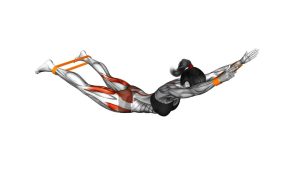
Exercise Ball Back Extension (Hands Behind Head): Form, Sets, Tips & FAQ
Learn how to perform the Exercise Ball Back Extension with hands behind head using proper form. Discover muscles worked, setup, step-by-step execution, sets by goal, common mistakes, FAQs, and useful equipment.
Exercise Ball Back Extension (Hands Behind Head)
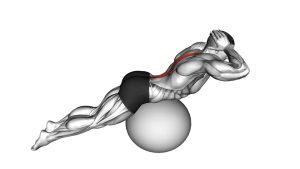
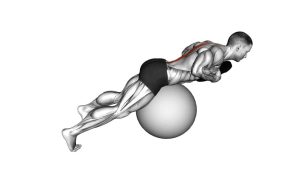
This movement is most effective when performed with controlled spinal extension and steady lower-body stability. You should feel the exercise mainly through the lower back, glutes, and hamstrings, along with some core engagement to keep the torso stable on the ball. The hands-behind-head position increases difficulty, so focus on smooth reps instead of trying to lift too high.
Quick Overview
| Body Part | Lower Back |
|---|---|
| Primary Muscle | Erector spinae |
| Secondary Muscle | Gluteus maximus, hamstrings, deep core stabilizers |
| Equipment | Exercise ball / stability ball |
| Difficulty | Beginner to Intermediate |
Sets & Reps (By Goal)
- Technique practice: 2–3 sets × 8–10 reps (slow tempo, 45–60 sec rest)
- Muscle endurance: 2–4 sets × 12–20 reps (steady control, 30–60 sec rest)
- Posterior-chain strength foundation: 3–4 sets × 8–12 reps (1–2 sec pause at top, 60–75 sec rest)
- Warm-up activation: 1–2 sets × 8–12 reps before rows, deadlifts, or hip hinges
Progression rule: First improve control, then increase reps, then increase time under tension. When the standard version feels easy, you can slow the lowering phase, add a longer pause at the top, or eventually use a light plate held at the chest instead of changing form.
Setup / Starting Position
- Position the ball: Place the exercise ball under your hips or lower abdomen so your torso can move freely over the front of the ball.
- Set your feet: Extend the legs back and plant the toes or balls of the feet firmly into the floor for balance and traction.
- Brace lightly: Tighten the abs just enough to stabilize the trunk without flattening your natural posture.
- Place the hands behind the head: Keep the fingers light and elbows open. Do not pull on the neck.
- Start in the bottom position: Let the torso angle downward in a comfortable range with the neck neutral and eyes facing slightly down.
Tip: Use a non-slip floor surface and make sure the ball size matches your height so you can stay stable throughout the set.
Execution (Step-by-Step)
- Set your body: Keep the feet anchored, core lightly braced, and elbows flared naturally out to the sides.
- Lift the torso: Extend through the lower back and hips to raise your chest off the ball in a smooth, controlled motion.
- Keep the neck neutral: Your head should follow the torso. Avoid cranking the chin upward or looking too far ahead.
- Reach the top under control: Stop when your body forms a straight line from head through hips, or slightly before that if needed.
- Pause briefly: Hold the top for 1–2 seconds and squeeze the glutes while maintaining tension through the spinal erectors.
- Lower slowly: Return to the starting position under control without collapsing onto the ball.
- Repeat evenly: Keep every rep smooth and consistent rather than bouncing or using momentum.
Pro Tips & Common Mistakes
- Do not yank on the head: Your hands are there for position, not for pulling the neck forward or backward.
- Lift with control: Avoid swinging the torso up quickly. Momentum reduces tension on the target muscles.
- Keep the feet secure: Stable foot pressure helps prevent the ball from shifting during reps.
- Do not overextend: Stop near neutral alignment instead of turning the movement into a big spinal arch.
- Use the glutes: Think about squeezing the glutes at the top so the movement is not only a lower-back drill.
- Maintain a neutral neck: A relaxed neck helps keep the exercise focused on the posterior chain.
- Slow eccentrics work well: Lowering for 2–4 seconds can improve control and make lighter bodyweight reps more productive.
FAQ
What muscles does the Exercise Ball Back Extension work?
The main target is the erector spinae. The exercise also trains the glutes, hamstrings, and deep core stabilizers that help control the torso on the ball.
Is this exercise good for beginners?
Yes, it can be beginner-friendly when performed with a small range of motion and strict control. New lifters can also start with arms crossed over the chest before progressing to the hands-behind-head version.
How high should I lift my torso?
Lift until your body reaches a straight, aligned position. You do not need to hyperextend the spine. Controlled neutral alignment is usually the safest and most effective top position.
Should I feel this in my glutes too?
Yes. While the lower back is the primary driver, the glutes should assist strongly at the top. If you only feel your low back, try reducing range slightly and think about extending through the hips as you lift.
Can I use this as a warm-up before back day or leg day?
Absolutely. Light sets of controlled reps can help activate the posterior chain before rows, Romanian deadlifts, deadlifts, hip hinges, and other compound pulling exercises.
Recommended Equipment
- 65 cm Exercise Ball / Stability Ball — the main piece of equipment for performing the movement with proper support and range of motion
- Gym Floor Mats — improve floor grip, comfort, and safety while anchoring the feet
- Resistance Bands Set — useful for pairing with glute activation or additional posterior-chain warm-up work
- Foam Kneeling Pad — adds comfort when setting up on hard flooring or transitioning between floor-based exercises
- Mini Exercise Ball — useful for complementary core and posture drills that support trunk control
Tip: Choose a ball size that lets you balance securely with your hips supported and your feet planted firmly into the floor.