Cable Seated on Floor Row with Rope: Form, Muscles Worked, Sets & Tips
Learn how to do the Cable Seated on Floor Row with Rope with proper form. Discover muscles worked, setup, execution steps, sets and reps by goal, common mistakes, FAQs, and recommended equipment.
Cable Seated on Floor Row with Rope
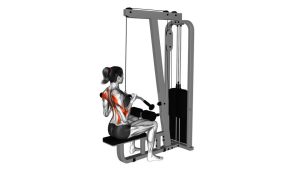
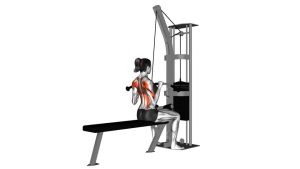
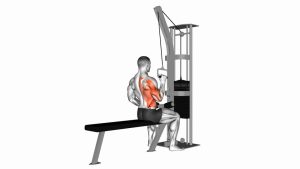
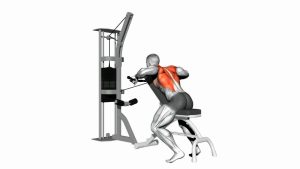
This exercise is excellent for lifters who want cleaner rowing mechanics and better mid-back engagement. Because you are seated on the floor without a bench for support, your torso has to stay organized and stable throughout the set. The movement should feel smooth and deliberate, with the shoulder blades moving naturally from a stretched position into a hard squeeze as the rope reaches the torso.
Quick Overview
| Body Part | Back |
|---|---|
| Primary Muscle | Rhomboids and middle trapezius |
| Secondary Muscle | Latissimus dorsi, rear deltoids, biceps, lower traps, forearms |
| Equipment | Cable machine, rope attachment, floor space |
| Difficulty | Beginner to Intermediate |
Sets & Reps (By Goal)
- Muscle building: 3–4 sets × 8–12 reps with controlled tempo and 60–90 sec rest
- Strength-focused rowing: 4–5 sets × 5–8 reps with heavier weight and 90–120 sec rest
- Posture and control work: 2–4 sets × 12–15 reps with a pause at peak contraction
- Warm-up or activation: 2–3 sets × 12–20 reps using light weight and perfect form
Progression rule: Add reps first, then load. Only increase the weight when you can keep your torso stable, fully control the eccentric, and squeeze the shoulder blades together without shrugging.
Setup / Starting Position
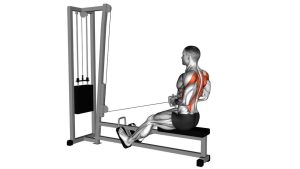
- Attach a rope handle to a low cable pulley and sit on the floor facing the machine.
- Extend your legs comfortably in front of you, keeping a slight knee bend if needed for comfort and posture.
- Grab the rope with a neutral grip, palms facing each other, and sit tall with your chest up.
- Set your spine neutral by bracing your core lightly and avoiding a rounded lower back.
- Start with arms extended and shoulders reaching forward naturally, but do not let your chest collapse.
Tip: If hamstring tightness pulls you into a rounded position, bend your knees slightly so you can sit taller and row safely.
Execution (Step-by-Step)
- Get tall before pulling: Lift the chest, brace the core lightly, and keep your head in a neutral position.
- Initiate with the back: Begin the row by drawing the shoulder blades back rather than yanking with the hands.
- Pull the rope toward your torso: Drive the elbows back and slightly out while keeping the wrists neutral.
- Separate the rope at the finish: As the handle reaches your lower chest or upper abdomen, spread the rope ends slightly for a fuller contraction.
- Squeeze the mid-back: Pause briefly while keeping the shoulders down and away from the ears.
- Return under control: Extend the arms slowly and allow the shoulder blades to move forward naturally without losing posture.
- Repeat smoothly: Each rep should look controlled and deliberate, with no swinging or leaning back to cheat the weight.
Pro Tips & Common Mistakes
- Pull with the elbows: Think about driving your elbows behind you to keep tension on the back.
- Stay tall: A proud chest helps you target the mid-back better than a slouched position.
- Use the rope correctly: Let the rope separate slightly at the end instead of stopping short.
- Control the return: The eccentric phase builds technique and muscle tension, so do not rush it.
- Do not overlean: Excessive backward rocking turns the exercise into a momentum-based movement.
- Avoid shrugging: Keep the traps from taking over by keeping the shoulders down as you row.
- Choose the right load: Too much weight usually causes spinal rounding, arm dominance, and shortened range of motion.
FAQ
What muscles does the Cable Seated on Floor Row with Rope work the most?
It mainly targets the rhomboids and middle trapezius, while also training the lats, rear delts, and biceps. It is especially useful for building mid-back thickness and improving scapular retraction.
Why sit on the floor instead of using a bench?
Sitting on the floor reduces the chance of using leg drive or excessive torso movement. That makes the exercise stricter and often improves your mind-muscle connection with the back.
Where should I pull the rope?
Most lifters should pull the rope toward the lower chest or upper abdomen. The exact touch point can vary slightly depending on arm length and torso proportions, but the goal is a strong squeeze in the back without shrugging.
Is this better than a straight-handle seated cable row?
Not necessarily better for everyone, but the rope attachment allows a more natural neutral grip and a little extra range at the finish. Many lifters find it easier to contract the mid-back hard with the rope.
Can beginners use this exercise?
Yes. Beginners can benefit from it as long as they use a manageable load and focus on posture, controlled tempo, and clean pulling mechanics.
Recommended Equipment (Optional)
- Rope Cable Attachment — useful for comfortable neutral-grip rowing and a better squeeze at peak contraction
- Home Pulley Cable System — a practical option for adding cable-style rowing movements to a home gym
- Resistance Bands Set — helpful for warm-ups, scapular activation, and extra pulling volume
- Thick Exercise Mat — improves comfort while seated on the floor during row variations and other training drills
- Lifting Straps — useful when grip becomes the limiting factor before your back muscles are fully challenged
Tip: Accessories should improve comfort and training quality, not replace proper rowing mechanics and controlled movement.