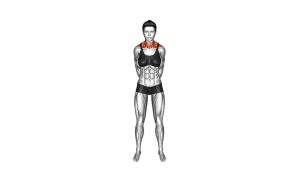
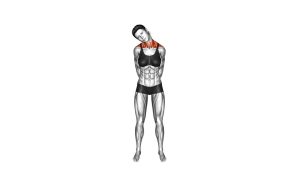
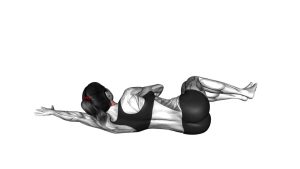
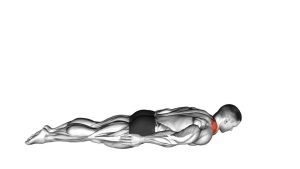
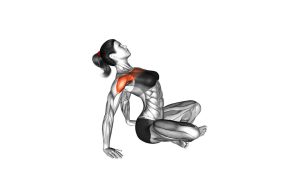
Neck Decompression Roll (Lying on Floor): Safe Form, Sets, Tips & FAQ
Learn the Neck Decompression Roll (Lying on Floor) to relax tight neck muscles, improve gentle cervical mobility, and reduce stiffness. Step-by-step form, sets by goal, mistakes to avoid, FAQs, and recommended equipment.
Neck Decompression Roll (Lying on Floor)
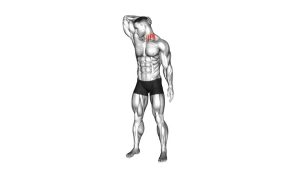
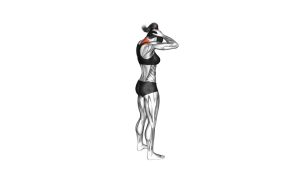
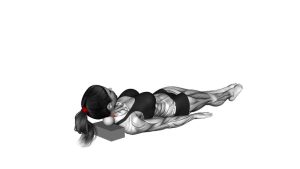
This movement is best used as a reset for tension from screens, stress, or long sitting. The goal is not “max range,” but smooth motion and relaxation. You should feel mild pressure changes as the head rolls and a gentle opening on one side of the neck, without sharp pain, dizziness, or nerve-like symptoms.
Quick Overview
| Body Part | Neck |
|---|---|
| Primary Muscle | Suboccipitals & deep cervical stabilizers (low-level control) |
| Secondary Muscle | SCM, upper traps, levator scapulae (gentle stretch/relaxation) |
| Equipment | None (optional: yoga mat, small towel, thin pillow) |
| Difficulty | Beginner (gentle and floor-supported) |
Sets & Reps (By Goal)
- Tension relief / relaxation: 1–3 sets × 6–10 slow rolls per side (easy effort, 30–60 sec rest)
- Neck mobility warm-up: 1–2 sets × 8–12 controlled reps (smooth tempo, 30–45 sec rest)
- Desk-break “reset”: 1 set × 4–8 reps per side (very light, stop before fatigue)
- Breathing + down-regulation: 2–4 minutes total (very small range, breathe slowly)
Progression rule: Progress by making reps slower and cleaner first. Only increase range slightly if you can keep the shoulders relaxed and your breathing calm.
Setup / Starting Position
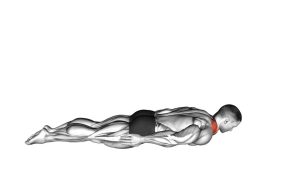
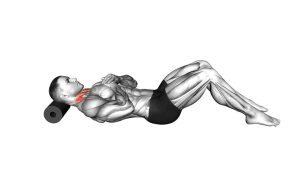
- Lie on your back: Use a mat if the floor is hard. Keep the spine long and relaxed.
- Head support: Start with the head flat. If you feel strain, place a thin towel under the head/neck.
- Shoulders down: Let the shoulder blades melt into the floor—no shrugging.
- Jaw relaxed: Don’t clench. Lips closed or slightly parted; tongue relaxed.
- Find neutral: Face points straight up. Breathe slowly for 2–3 breaths before moving.
Tip: If you tend to over-rotate, imagine your head is heavy and you’re rolling it through thick sand—slow and controlled.
Execution (Step-by-Step)
- Start calm: Inhale gently through the nose, keep the chest and shoulders quiet.
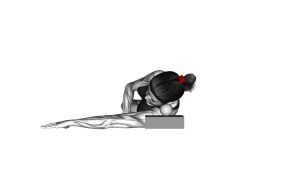
- Roll to one side: Let the head roll slowly so the ear moves closer toward the floor. No rushing.
- Stay in a small range: Stop before you feel pinching or strain—comfort first.
- Brief pause: Hold 1–2 seconds while breathing normally (no breath-holding).
- Return through center: Roll back to neutral with control—no “drop” back.
- Repeat other side: Match the same tempo and range on both sides.
Pro Tips & Common Mistakes
- Go slower than you think: Speed turns this into a swing. Slow motion keeps it soothing.
- Keep range modest: The goal is relaxation, not extreme rotation.
- Don’t push with your shoulders: The torso stays still; only the head rolls.
- Avoid jaw clenching: If your jaw tightens, reduce range and breathe out longer.
- No bouncing or “cracking” chase: Don’t force clicks/pops—stay gentle.
- Use breath as the driver: Exhale during the roll; inhale back to center for a calming rhythm.
FAQ
Where should I feel the Neck Decompression Roll?
Most people feel a gentle release around the base of the skull (suboccipitals) and along the sides of the neck (SCM/upper trap area). It should feel soothing—never sharp or “pinchy.”
How often can I do it?
Because it’s low intensity, many people can use it daily or as a desk-break reset. Keep the effort light. If you feel lingering soreness or headaches afterward, reduce range and volume.
Is this the same as neck traction?
Not exactly. This is a floor-supported relaxation and mobility drill. It doesn’t apply strong traction forces. Think “gentle decompression and calming movement,” not pulling.
What if I feel dizzy when I roll my head?
Stop immediately and return to neutral. Dizziness can be a sign that the movement is too fast, the range is too large, or you may need professional guidance. Keep the range smaller or skip the drill.
Who should be cautious with this exercise?
Anyone with an acute neck injury, severe pain, recent concussion, vascular concerns, or nerve-like symptoms (tingling/numbness down the arm) should avoid self-experimenting and consult a professional.
Recommended Equipment (Optional)
- Thick Yoga Mat — adds comfort and reduces pressure points on the skull
- Cervical Roll / Neck Support Roll — helps maintain a neutral neck position if you feel strain lying flat
- Small Memory Foam Pillow — optional head support for sensitive necks (keep it thin)
- Neck & Shoulder Heating Pad — warmth can improve relaxation before you do the drill
- Peanut Massage Ball (Suboccipital) — optional self-massage tool for the base of the skull (use lightly)
Tip: Optional tools should make the drill feel easier and more comfortable. If a tool increases symptoms, stop using it and return to a simpler setup.