Cable Bent-Over Row: Proper Form, Sets, Muscles Worked & FAQ
Learn how to do the Cable Bent-Over Row with proper form to build a stronger, thicker back. Includes muscles worked, setup, execution steps, sets and reps by goal, common mistakes, FAQ, and recommended equipment.
Cable Bent-Over Row
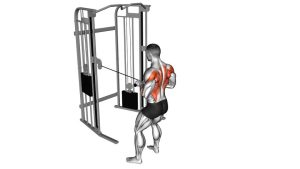
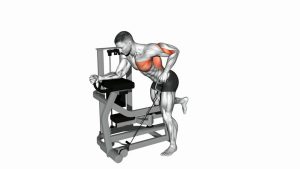
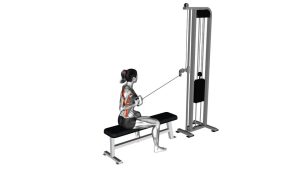
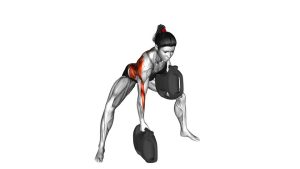
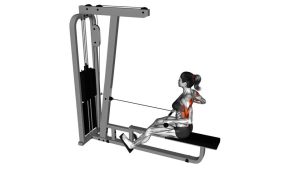
This exercise works best when the torso stays fixed and the movement comes from the shoulders and elbows. In the attached video, the lifter maintains a bent-over position while rowing the cable toward the lower torso, which creates strong contraction in the mid-back and lats. The controlled return is just as important as the pull, since the eccentric phase helps reinforce posture, muscular tension, and back development.
Quick Overview
| Body Part | Back |
|---|---|
| Primary Muscle | Latissimus dorsi, rhomboids, middle trapezius |
| Secondary Muscle | Rear deltoids, biceps, forearms, spinal erectors, core stabilizers |
| Equipment | Cable machine with straight bar, dual handle, or close-grip attachment |
| Difficulty | Intermediate |
Sets & Reps (By Goal)
- Muscle growth: 3–4 sets × 8–12 reps with controlled tempo and a hard squeeze at the top
- Strength focus: 4–5 sets × 5–8 reps with heavier weight and strict torso position
- Technique and activation: 2–3 sets × 12–15 reps using lighter resistance and full range of motion
- Back finisher: 2–3 sets × 15–20 reps with constant tension and short rest periods
Progression rule: Add weight only when you can keep a flat back, avoid torso swing, and control both the pull and return on every rep.
Setup / Starting Position
- Set the cable: Position the pulley low enough to allow a smooth rowing path toward the waist or lower abdomen.
- Take your stance: Stand with feet about shoulder-width apart for stability.
- Hinge at the hips: Push the hips back and lean the torso forward roughly 30–45 degrees while keeping the chest open.
- Brace the core: Tighten the abdominals and maintain a neutral spine from head to pelvis.
- Grab the handle: Extend the arms fully and let the shoulders protract slightly without rounding the back.
- Set the neck position: Keep the head neutral and eyes focused slightly forward or down, not craned upward.
Tip: Start with a lighter load until you can hold the bent-over position comfortably without lower-back fatigue dominating the set.
Execution (Step-by-Step)
- Lock in your torso: Keep the hip hinge fixed and the core engaged before initiating the row.
- Lead with the elbows: Pull the handle toward your lower torso by driving the elbows backward.
- Keep the arms secondary: Think of the hands as hooks while the back muscles do the real work.
- Squeeze at the top: Retract the shoulder blades and pause briefly when the elbows move just past the torso.
- Lower with control: Extend the arms slowly to return to the start without losing spinal position.
- Repeat smoothly: Maintain constant tension and avoid bouncing or snapping the weight stack.
Pro Tips & Common Mistakes
- Keep the spine neutral: A rounded back reduces efficiency and increases unnecessary stress on the lumbar area.
- Drive elbows back, not up: This helps target the lats and mid-back instead of turning the move into a shrug.
- Do not stand up during the pull: Rising with the torso shifts tension away from the back muscles.
- Avoid using momentum: Swinging the torso makes the exercise less effective and harder to standardize.
- Use a full stretch: Let the shoulder blades move naturally forward at the bottom without collapsing posture.
- Pause at peak contraction: Even a one-second squeeze can improve mind-muscle connection and back activation.
- Keep shoulders away from the ears: Excess shrugging can overemphasize the upper traps and reduce clean rowing mechanics.
FAQ
What muscles does the Cable Bent-Over Row work most?
The exercise primarily targets the lats, rhomboids, and middle traps. It also involves the rear delts, biceps, forearms, spinal erectors, and core for support and stability.
Is the Cable Bent-Over Row better than a barbell row?
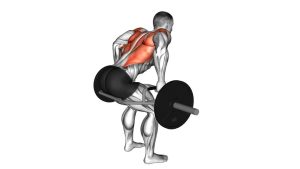
It depends on your goal. The cable version provides constant tension and can be easier to control, while the barbell row may allow heavier loading. Both are effective when performed with proper technique.
Where should I pull the handle?
In most cases, pulling toward the lower abdomen or waistline works well for emphasizing the lats and mid-back. The exact path can vary slightly depending on your attachment and body structure.
Should I go heavy on this exercise?
You can train it heavy, but only if you can maintain a solid hinge, neutral spine, and strict pulling mechanics. If form breaks down, reduce the load and focus on clean reps.
Can beginners do the Cable Bent-Over Row?
Yes, but beginners should start with a light weight and prioritize posture, bracing, and controlled motion. Mastering the hip hinge and elbow path matters more than lifting heavy early on.
Recommended Equipment
- V-Handle Cable Row Attachment — ideal for close-grip cable rows with strong mid-back contraction
- Straight Bar Cable Attachment — useful for traditional cable row variations and grip changes
- Lifting Straps — helps reduce grip limitations so you can focus more on the back muscles
- Weightlifting Belt — optional support for heavier sets when bracing and torso stability become challenging
- Home Cable Pulley System — a practical option for cable-based back training outside a commercial gym
Tip: Choose attachments that let you keep your wrists comfortable and your elbows moving smoothly through the row path.