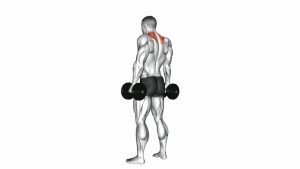
Barbell Seated Shrug (Behind the Back): Proper Form, Sets, Tips & FAQ
Learn how to perform the Barbell Seated Shrug (Behind the Back) for upper trap growth and shoulder elevation strength. Includes form tips, sets and reps by goal, common mistakes, FAQs, and recommended equipment.
Barbell Seated Shrug (Behind the Back)
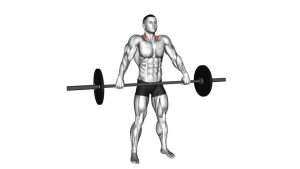
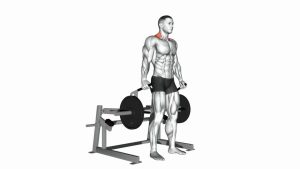
This shrug variation works best when the movement stays strict and vertical. Your arms should remain straight, your elbows should stay quiet, and the shoulders should travel up and down rather than rolling in circles. Because you are seated, this version can help you isolate the traps with less assistance from the hips and torso.
Quick Overview
| Body Part | Shoulders |
|---|---|
| Primary Muscle | Upper trapezius |
| Secondary Muscle | Levator scapulae, middle trapezius, forearms (grip stabilisation) |
| Equipment | Barbell, weight plates, flat bench or utility bench |
| Difficulty | Beginner to Intermediate |
Sets & Reps (By Goal)
- Muscle growth: 3–4 sets × 10–15 reps, 60–90 seconds rest
- Strength emphasis: 4–5 sets × 6–10 reps, 90–120 seconds rest
- Technique practice: 2–3 sets × 10–12 reps with light weight and a 1–2 second pause at the top
- Finisher for traps: 2–3 sets × 15–20 reps with smooth control and no swinging
Progression rule: Add reps first, then add load gradually once you can keep the shrug vertical, pause at the top, and lower the bar without dropping tension.
Setup / Starting Position
- Sit tall on a bench: Plant your feet firmly on the floor and stay balanced on the bench without slouching.
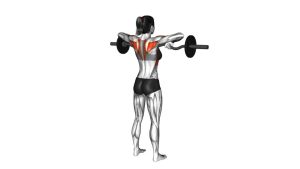
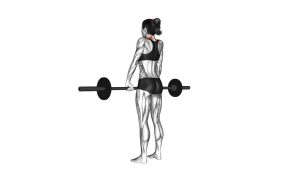
- Place the bar behind the legs: Hold the barbell with both hands just outside hip width, letting it hang behind your body.
- Keep the arms straight: Do not pre-bend the elbows or turn the movement into a row.
- Brace lightly: Keep your chest lifted, core tight, and neck neutral.
- Start from a dead-hang position: Let the shoulders settle naturally before each rep.
Tip: A stable bench height and enough clearance behind the calves help make the movement smoother and easier to control.
Execution (Step-by-Step)
- Begin from the bottom: Let the bar hang behind you with the shoulders relaxed but not loose.
- Shrug straight up: Elevate your shoulders toward your ears without bending the elbows.
- Pause and squeeze: Hold the top position briefly and focus on contracting the upper traps.
- Lower with control: Return the shoulders to the start position slowly instead of dropping the weight.
- Repeat cleanly: Keep each rep smooth, controlled, and vertical from start to finish.
Pro Tips & Common Mistakes
- Keep the shrug vertical: Lift the shoulders straight upward rather than backward or forward.
- Do not bend the elbows: Elbow flexion shifts tension away from the traps and changes the lift completely.
- Avoid momentum: Stay seated and resist the urge to bounce or jerk the torso.
- Pause at the top: A short squeeze helps improve mind-muscle connection with the traps.
- Control the eccentric: Lowering too fast reduces tension and makes the movement less effective.
- Keep the neck neutral: Do not jut the chin forward or shrug while craning the head.
FAQ
What muscles does the barbell seated shrug work most?
The main target is the upper trapezius. The levator scapulae and grip muscles also help stabilise the movement.
Why do this shrug behind the back instead of in front?
The behind-the-back position changes the feel of the shrug and often encourages a cleaner upright path. Many lifters find it easier to focus on strict shoulder elevation this way.
Should I roll my shoulders during shrugs?
No. The best technique is a straight upward shrug followed by a controlled descent. Rolling usually adds unnecessary motion and makes it harder to keep tension on the traps.
Is seated better than standing for shrugs?
Seated shrugs can reduce body English and make the exercise more isolated. Standing shrugs allow more total loading, but seated versions are often better for strict form.
How heavy should I go?
Use a load that lets you keep your arms straight, reach a clear top squeeze, and lower under control. If the torso starts bouncing or the shoulders stop moving cleanly, the weight is too heavy.
Recommended Equipment
- CAP Barbell Adjustable Training Utility Weight Bench — useful if you want a stable seated setup for shrugs and other upper-body lifts
- CAP Barbell Olympic 7-Foot Bar Series — a full-length Olympic barbell suited for loaded shrug work
- Lifting Straps — helpful when grip fatigue limits trap training before the target muscles are challenged
- CAP Barbell Competition Olympic Bumper Plate Set — practical for loading the bar gradually as your shrug strength improves
- CAP Barbell Foldable Flat Weight Bench — a compact flat-bench option for home gym setups with limited space
Tip: If your grip gives out before your traps do, straps can help. If your setup feels unstable, prioritise a sturdy bench and balanced plate loading before increasing the weight.