Lever One-Arm Low Row (Plate-Loaded): Proper Form, Sets, Tips & FAQ
Learn how to perform the Lever One-Arm Low Row (Plate-Loaded) with proper form for stronger lats, rhomboids, and upper-back development. Includes setup, execution, sets by goal, mistakes, FAQs, and recommended equipment.
Lever One-Arm Low Row (Plate-Loaded)
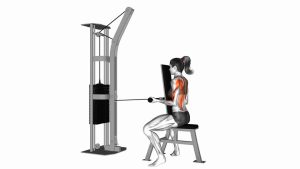
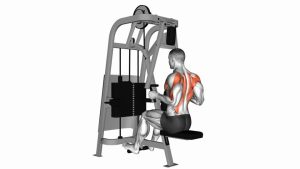
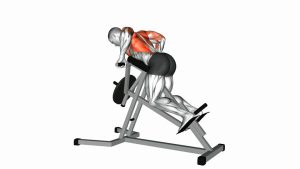
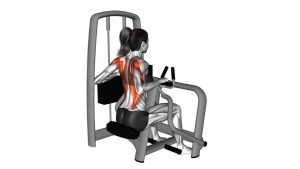
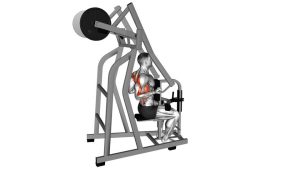
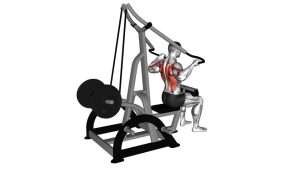
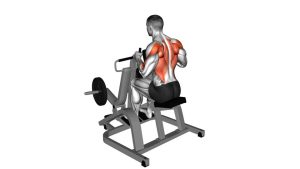
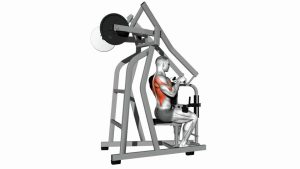
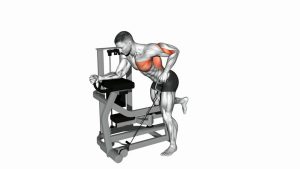
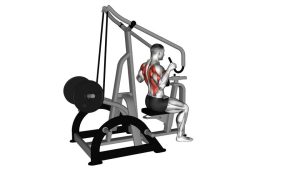
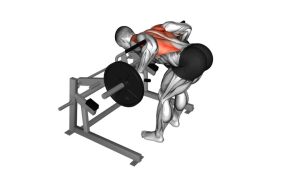
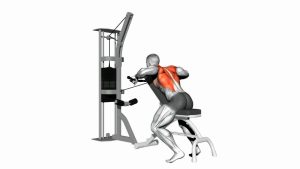
This exercise is ideal for lifters who want a stable rowing pattern without relying on momentum. The chest support helps keep the torso quiet, which allows the working side of the back to do more of the job. In the video, the movement is performed with a full stretch at the front, a strong elbow-driven pull, and a controlled eccentric that keeps constant tension on the target muscles.
Quick Overview
| Body Part | Back |
|---|---|
| Primary Muscle | Latissimus dorsi, rhomboids |
| Secondary Muscle | Middle traps, rear delts, teres major, biceps, brachialis |
| Equipment | Plate-loaded unilateral low row / lever row machine |
| Difficulty | Beginner to Intermediate |
Sets & Reps (By Goal)
- Muscle growth: 3–4 sets × 8–12 reps per side, 60–90 sec rest
- Strength focus: 4–5 sets × 5–8 reps per side, 90–120 sec rest
- Technique and control: 2–3 sets × 10–15 reps per side, slow tempo, 45–75 sec rest
- Back finisher / pump work: 2–3 sets × 12–15 reps per side, short rest, controlled squeeze
Progression rule: Add reps first while keeping the chest fixed to the pad and the eccentric controlled. Increase load only when both sides can complete clean, even reps without torso rotation.
Setup / Starting Position
- Load the machine: Add an appropriate amount of weight that lets you feel the back working without jerking the lever.
- Adjust your position: Sit so your chest is firmly supported by the pad and your feet are planted securely.
- Grip the handle: Take the working handle with one hand and let the arm extend forward into a comfortable stretch.
- Set your torso: Keep a neutral spine, ribs down, and avoid lifting your chest off the support pad.
- Start with the shoulder relaxed: Allow a mild reach at the front, but do not collapse posture or round excessively.
Tip: Use your non-working hand for balance only if the machine design allows it. Keep the body square to the pad throughout the set.
Execution (Step-by-Step)
- Reach into the stretch: Begin with the arm extended and the shoulder blade allowed to move forward slightly.
- Drive the elbow back: Pull the handle by leading with the elbow, keeping the arm path close to the torso.
- Retract the shoulder blade: As the handle moves in, squeeze through the mid-back without shrugging the shoulder upward.
- Hit the contracted position: Bring the handle toward the lower ribs or side of the torso and pause briefly.
- Lower under control: Return the handle slowly until the arm is extended again and the back is fully lengthened.
- Repeat evenly: Finish all reps on one side or alternate sides based on your program.
Pro Tips & Common Mistakes
- Keep your chest glued to the pad: Lifting off the support reduces tension on the back and adds unnecessary body English.
- Lead with the elbow: This helps shift attention away from the biceps and into the lats and rhomboids.
- Use the full range: Let the shoulder blade move at the front, then row into a complete contraction without rushing.
- Control the eccentric: Dropping the lever too fast wastes one of the best parts of the rep for muscle growth.
- Do not twist the torso: Unilateral work should challenge the back, not become a rotational cheat rep.
- Avoid shrugging: Keep the shoulder away from the ear so the lats and mid-back stay dominant.
- Match both sides: Start with your weaker side and use that performance to guide the stronger side’s reps and load.
FAQ
What muscles does the Lever One-Arm Low Row work the most?
It mainly targets the lats and rhomboids, with support from the middle traps, rear delts, and elbow flexors. The exact emphasis depends on your elbow path and machine setup.
Is this better than a two-arm machine row?
Not necessarily better, but different. The unilateral version is excellent for fixing imbalances, improving control, and helping you focus on one side of the back at a time.
Should I let my shoulder move forward at the start?
Yes, in most cases a controlled forward reach gives you a better stretch and fuller range of motion. Just avoid collapsing your torso or losing chest support.
Where should the handle finish?
For most lifters, the handle should finish around the lower ribs or side of the torso. The exact endpoint depends on the machine design and your limb length, but the movement should feel smooth and natural.
Is this a good exercise for beginners?
Yes. Because the torso is supported, it is easier to learn than many free-weight rows. It is a strong choice for building back awareness without heavy lower-back demands.
Recommended Equipment
- Lifting Straps — helpful when grip gives out before your back does on higher-rep rows
- Weightlifting Gloves — can improve comfort and reduce handle irritation during machine pulling work
- Resistance Bands Set — useful for warm-ups, activation drills, and additional lat or rear-delt work
- Gym Log Book — great for tracking left-right strength balance, reps, and progressive overload
- Foam Roller — useful for thoracic mobility work before back sessions and for post-workout recovery
Choose tools that improve comfort and consistency, not tools that encourage sloppy loading. Clean execution matters more than adding plates too fast.