Barbell Pullover (Back-Focused): Proper Form, Sets, Tips & FAQ
Learn how to perform the back-focused barbell pullover with proper form to target the lats, improve shoulder extension, and build upper-body control. Includes setup, execution, sets by goal, common mistakes, FAQ, and recommended equipment.
Barbell Pullover (Back-Focused)
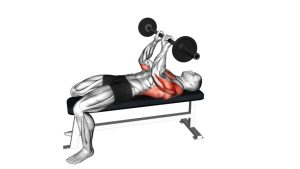
This exercise works best when the movement stays controlled, smooth, and shoulder-driven. The goal is to load the lats through a deep but manageable stretch, then use those muscles to bring the bar back over the chest. You should feel tension through the sides of the upper back and around the lats, with the core and shoulders staying organized throughout the rep.
Quick Overview
| Body Part | Back |
|---|---|
| Primary Muscle | Latissimus dorsi |
| Secondary Muscle | Teres major, long head of triceps, rear delts, upper back stabilizers, core |
| Equipment | Barbell, flat bench |
| Difficulty | Intermediate |
Sets & Reps (By Goal)
- Muscle growth: 3–4 sets × 8–12 reps with steady tempo and full control
- Lat activation before back training: 2–3 sets × 10–15 reps with moderate weight
- Strength-support accessory work: 3–4 sets × 6–8 reps with controlled form and longer rest
- Stretch-focused finisher: 2–3 sets × 12–15 reps using lighter weight and smooth motion
Progression rule: Increase weight only when you can keep the elbow angle consistent, maintain the same bar path on every rep, and return to the top without momentum or low-back compensation.
Setup / Starting Position
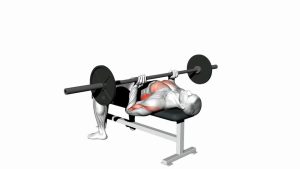
- Lie on a flat bench: Position your upper back and torso securely on the bench with your feet planted firmly on the floor.
- Grip the barbell evenly: Use a shoulder-width or slightly narrower grip, depending on comfort and shoulder mobility.
- Start above the chest: Hold the barbell over the chest with arms extended but not rigidly locked.
- Keep a soft elbow bend: Maintain a small, fixed bend in the elbows so the movement comes mainly from the shoulders.
- Brace the torso: Keep the ribs controlled, core engaged, and neck relaxed to avoid over-arching the lower back.
Tip: Start with a conservative load. The barbell pullover can feel harder at the stretched bottom position, so good control matters more than heavy weight.
Execution (Step-by-Step)
- Set the top position: Begin with the bar above your chest, shoulders packed, and elbows slightly bent.
- Lower in an arc: Move the bar slowly backward and down behind your head in a smooth semicircle.
- Keep the elbows fixed: Do not let the movement turn into a press or extension; the elbow angle should stay nearly the same.
- Reach a controlled stretch: Lower until you feel a deep lat stretch without losing shoulder position or rib control.
- Pull back with the lats: Reverse the arc and bring the bar back above the chest by driving through the shoulders, not by bending the arms.
- Finish under control: Pause briefly at the top, reset your brace, and repeat without rushing.
Pro Tips & Common Mistakes
- Think “long arc, steady pull”: Let the shoulders move the weight instead of muscling it up with the arms.
- Use a manageable range: Go only as low as your shoulders and lats can handle without compensation.
- Keep the ribs from flaring too much: Excessive arching can shift tension away from the target muscles.
- Don’t over-bend the elbows: Too much bend turns the exercise into more of a triceps movement.
- Avoid jerking out of the bottom: Momentum reduces tension on the lats and raises injury risk.
- Pair it intelligently: This exercise works well after rows, pulldowns, or pull-ups as a lengthened-position back accessory.
FAQ
Is the barbell pullover more for back or chest?
It can train both depending on execution, but this variation is back-focused. Keeping a relatively fixed elbow angle and thinking about shoulder extension tends to bias the lats more strongly.
Where should I feel this exercise?
You should mainly feel it in the lats and along the sides of the upper torso, especially in the stretched bottom position. Some assistance from the triceps and upper back is normal.
How heavy should I go?
Use a weight that allows a smooth arc and a controlled return. Most lifters benefit more from moderate loading with excellent control than from going heavy and shortening the range.
Can beginners do barbell pullovers?
Beginners can learn the movement, but many start more comfortably with a dumbbell pullover because it may feel easier to control. A barbell version usually suits lifters who already have decent shoulder mobility and bench stability.
What is the biggest mistake with this exercise?
One of the most common mistakes is using too much weight and turning the movement into a rushed, unstable rep with elbow flexion, rib flare, and low-back arching. The pullover works best when it stays clean and deliberate.
Recommended Equipment (Optional)
- Olympic Barbell — the primary tool for performing barbell pullovers with stable hand placement
- Adjustable Weight Bench — provides full upper-body support and a secure setup for the movement
- Barbell Weight Plates — lets you scale the exercise gradually while keeping technique intact
- Lifting Straps — optional grip support if your hands fatigue before your lats do
- Exercise Mat — useful for improving floor traction and comfort around the bench setup area
Tip: A stable bench and an appropriate starting load matter more than extra accessories. Build the movement around control first, then add weight gradually.