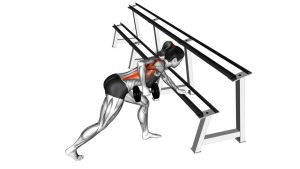
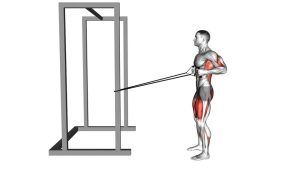
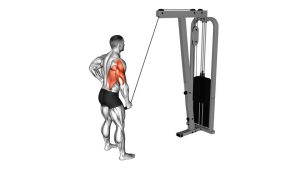
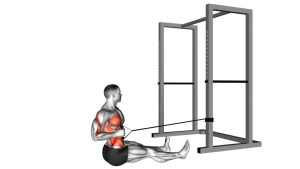
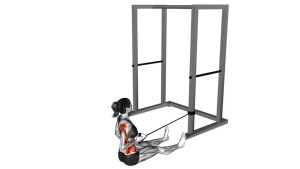
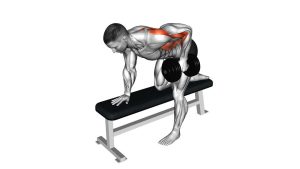
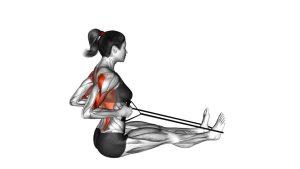
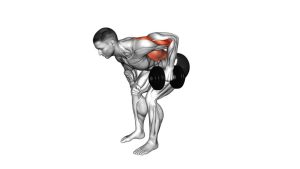
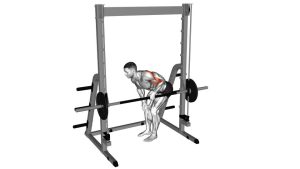
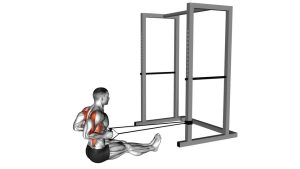
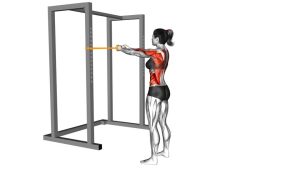
Resistance Band One-Arm Bent-Over Row: Proper Form, Sets, Tips & FAQ
Learn how to do the Resistance Band One-Arm Bent-Over Row with proper form. Discover setup, execution, sets by goal, common mistakes, FAQs, and recommended equipment for stronger back training.
Resistance Band One-Arm Bent-Over Row
This row variation is ideal for home training, warm-ups, hypertrophy work, and posture-focused back sessions. Because band tension increases as you pull, the movement encourages a strong squeeze at the top while still being joint-friendly. It works best when performed with controlled tempo, steady breathing, and minimal body movement. You should feel the effort mainly in the working side of the back, not in the neck, lower back, or wrist.
Quick Overview
| Body Part | Back |
|---|---|
| Primary Muscle | Latissimus dorsi (lats) |
| Secondary Muscle | Rhomboids, middle trapezius, rear deltoid, biceps, spinal erectors, core stabilizers |
| Equipment | Resistance band with handle or loop band |
| Difficulty | Beginner to Intermediate |
Sets & Reps (By Goal)
- Muscle building: 3–4 sets × 8–15 reps per side, 45–75 sec rest
- General back strength: 3–5 sets × 6–10 reps per side, 60–90 sec rest
- Posture and control: 2–3 sets × 10–15 reps per side with slower tempo
- Warm-up or activation: 2–3 sets × 12–20 light reps per side
Progression rule: First increase control, then reps, then band resistance. Keep the range smooth and avoid sacrificing posture just to make the set harder.
Setup / Starting Position
- Anchor the band: Step on the resistance band securely with the same-side or opposite foot, depending on the setup and band length.
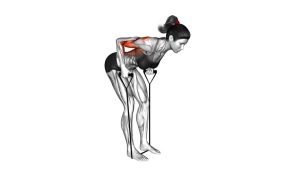
- Take your hinge: Push the hips back and lean the torso forward to roughly 30–45 degrees while keeping the chest open.
- Set the spine: Keep a neutral back, soft knees, and the head in line with the torso.
- Grip the band: Hold the handle or band firmly with one hand and let the arm extend naturally toward the floor.
- Brace the body: Tighten the core and keep the shoulders level before starting the first rep.
Tip: If balance feels unstable, stagger your stance slightly and use the free hand on the thigh for extra support.
Execution (Step-by-Step)
- Start from a stretched position: Let the working arm hang down under the shoulder while maintaining band tension and full-body stability.
- Drive the elbow back: Pull the elbow close to the torso and aim it toward the hip or lower ribs rather than flaring it outward.
- Squeeze the back: At the top, retract the shoulder blade and feel the contraction through the lat and mid-back.
- Pause briefly: Hold the peak position for a moment without shrugging the shoulder toward the ear.
- Lower with control: Return slowly to the start until the arm is extended again, keeping posture stable the entire time.
Pro Tips & Common Mistakes
- Pull with the elbow, not the hand: Thinking about the elbow path helps shift the focus into the back.
- Keep the shoulder down: Avoid shrugging at the top, which shifts tension into the upper traps and neck.
- Do not rotate the torso: The chest should stay mostly square to the floor throughout the rep.
- Maintain a true hip hinge: Standing too upright turns the movement into a less effective partial row.
- Control the eccentric: Lowering slowly improves tension and reinforces better mechanics.
- Avoid over-gripping: Squeezing the handle too hard can cause unnecessary forearm fatigue before the back is fully trained.
- Use full but clean range: Reach into a stretch at the bottom, then row until the elbow passes the torso without forcing the shoulder forward.
FAQ
Where should I feel the Resistance Band One-Arm Bent-Over Row?
You should mainly feel it in the lat, mid-back, and around the shoulder blade on the working side. Some biceps involvement is normal, but the back should do most of the work.
Is this exercise good for beginners?
Yes. It is beginner-friendly because band resistance is easy to scale, and the single-arm setup makes it easier to focus on form and muscle connection.
Should I pull the elbow high or keep it close?
For a back-focused version like the one shown, keep the elbow relatively close to the torso and drive it back toward the hip. That usually emphasizes the lats more effectively.
Can I use this instead of dumbbell rows?
Yes. It is a solid home-training alternative, especially when you want a lighter joint feel, variable resistance, or a portable back exercise with minimal equipment.
What if I feel my lower back more than my lats?
Reduce the load, shorten the set, brace harder through the core, and hinge less aggressively. You can also support the free hand on your thigh or a bench-like surface for better stability.
Recommended Equipment
- Resistance Bands Set with Handles — versatile for rows, presses, curls, and full-body home training
- Door Anchor for Resistance Bands — expands your setup options for rows, pulldowns, and other pulling angles
- Single D-Handle Attachment — useful if you train with a band-and-anchor setup and want a more secure single-arm grip
- Non-Slip Exercise Mat — improves foot stability and comfort during bent-over band work
- Resistance Band Training System with Door Anchor — convenient all-in-one option for home lifters who want more exercise variety
Choose bands that let you row with control and a full range of motion. Search results on Amazon commonly feature band sets with handles, door anchors, mats, and single-handle attachments for this type of home back training. :contentReference[oaicite:0]{index=0}