Dumbbell Bent-Over Scapula Row: Form, Muscles Worked, Sets, Tips & FAQ
Learn how to perform the Dumbbell Bent-Over Scapula Row with proper form. Discover muscles worked, setup, step-by-step execution, sets by goal, common mistakes, FAQs, and recommended equipment.
Dumbbell Bent-Over Scapula Row
This exercise works best with light-to-moderate weight, strict body positioning, and a strong mind-muscle connection. The motion is intentionally short. Your goal is not to row the dumbbell as high as possible, but to let the shoulder blade glide back smoothly while keeping the torso stable and the neck neutral. When performed correctly, you should feel clean tension through the mid-upper back rather than strain in the arm, trap, or lower back.
Quick Overview
| Body Part | Back |
|---|---|
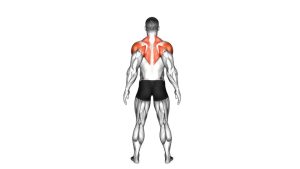
| Primary Muscle | Rhomboids and middle trapezius |
| Secondary Muscle | Rear deltoids, lower traps, lats, core stabilizers |
| Equipment | Dumbbell and flat bench |
| Difficulty | Beginner to Intermediate |
Sets & Reps (By Goal)
- Activation / warm-up: 2–3 sets × 10–15 reps per side with light weight and slow control
- Muscle control / technique: 3–4 sets × 8–12 reps per side with a brief squeeze at the top
- Posture / upper-back endurance: 2–4 sets × 12–15 reps per side with strict tempo
- Prehab accessory work: 2–3 sets × 10–12 reps per side, focusing on quality over load
Progression rule: Increase control and pause quality before increasing weight. If the movement starts looking like a normal dumbbell row, the load is too heavy for this variation.
Setup / Starting Position
- Set your support: Place one knee and the same-side hand on a flat bench. Plant the opposite foot firmly on the floor.
- Hold the dumbbell: Let the working arm hang straight down below the shoulder with a relaxed but secure grip.
- Brace your torso: Keep your spine neutral, chest slightly open, and core tight to prevent twisting or sagging.
- Square the shoulders: Start with the shoulder blade slightly relaxed forward, but do not let the shoulder collapse completely.
- Set your head position: Keep your neck neutral and your eyes angled down toward the floor rather than craning upward.
Tip: Use a lighter dumbbell than you would for a standard row. This exercise is about scapular movement quality, not maximum pulling load.
Execution (Step-by-Step)
- Start from the hang: Let the dumbbell hang naturally below the shoulder while keeping the elbow only slightly soft.
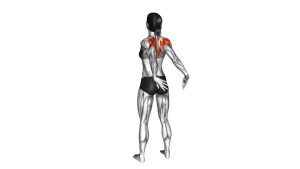
- Retract the scapula: Pull the shoulder blade back toward the spine without aggressively bending the elbow.
- Lift only slightly: The dumbbell should rise a little as a result of scapular motion, not because you are rowing it hard.
- Squeeze at peak: Pause briefly when the shoulder blade is fully retracted and feel the contraction across the mid-upper back.
- Return with control: Slowly allow the shoulder blade to move forward again until you reach the starting position.
- Repeat smoothly: Keep every rep quiet, deliberate, and stable without twisting your torso or shrugging the shoulder.
Pro Tips & Common Mistakes
- Keep the motion small: A short range is normal here. Bigger is not better if you lose the scapular focus.
- Use lighter weight: Heavy dumbbells encourage elbow flexion and torso movement, which defeats the purpose.
- Don’t shrug: Keep the shoulder away from the ear so the rhomboids and middle traps do more of the work.
- Don’t twist the torso: Your chest and hips should stay stable throughout the set.
- Control the lowering phase: The return is just as important as the squeeze. Let the shoulder blade glide forward under control.
- Save it for quality work: This exercise is excellent before rows, pulldowns, or pull-ups to wake up the upper back.
- Avoid turning it into a full row: This is the most common mistake and usually happens when the load is too heavy.
FAQ
What is the main purpose of the Dumbbell Bent-Over Scapula Row?
Its main purpose is to improve scapular retraction and strengthen the muscles that control the shoulder blades, especially the rhomboids and middle traps. It is more of a control and activation exercise than a heavy mass-builder.
How is this different from a regular dumbbell row?
In a regular dumbbell row, the elbow drives the movement and the dumbbell travels much higher. In the scapula row, the shoulder blade does most of the work, the elbow stays nearly straight, and the range of motion is much shorter.
Where should I feel this exercise?
You should feel it mainly across the mid-upper back, particularly between the shoulder blades. You should not feel the arms taking over or the upper traps doing all the work.
Should I use heavy weight for this exercise?
No. This movement works best with a manageable load that allows you to control the scapula cleanly. Too much weight usually turns it into a normal row.
Can beginners use this movement?
Yes. It is a very useful beginner-friendly accessory exercise for learning upper-back activation, improving posture awareness, and preparing for more advanced pulling variations.
Recommended Equipment
- Adjustable Dumbbells — practical for progressive loading and ideal for home upper-back training
- Flat Weight Bench — provides stable support for one-arm bent-over rowing variations
- Resistance Bands Set — useful for adding extra scapular activation drills, pull-aparts, and warm-up work
- Weight Lifting Straps — helpful if grip fatigue limits your back-focused training on rowing movements
- Exercise Mat — useful for comfort, floor-based warm-ups, and accessory mobility work around upper-back sessions
Good equipment options for this exercise include adjustable dumbbells, flat benches, resistance bands, and lifting straps, all of which are commonly available on Amazon.