Bodyweight Lying Shoulder External Rotation: Form, Sets, Tips & FAQ
Learn how to perform the Bodyweight Lying Shoulder External Rotation with proper form. Improve rotator cuff strength, shoulder stability, and control with step-by-step instructions, sets by goal, tips, FAQs, and recommended equipment.
Bodyweight Lying Shoulder External Rotation
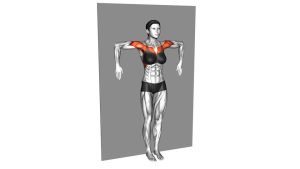
This exercise works best when the movement stays small, calm, and highly controlled. You should feel the shoulder doing the work without tension spreading into the neck, upper traps, or lower back. Because the drill uses very low resistance, it is especially useful for warm-ups, rehab-style routines, posture work, and building awareness of proper shoulder mechanics.
Quick Overview
| Body Part | Shoulders |
|---|---|
| Primary Muscle | Infraspinatus and Teres Minor |
| Secondary Muscle | Posterior Deltoid and Scapular Stabilizers |
| Equipment | None |
| Difficulty | Beginner |
Sets & Reps (By Goal)
- Shoulder activation / warm-up: 2–3 sets × 8–12 reps per side with slow, controlled reps and 30–45 seconds of rest.
- Shoulder stability and control: 2–4 sets × 10–15 reps per side with a brief pause at the top and 30–60 seconds of rest.
- Rehab-style training: 2–3 sets × 6–10 reps per side using a very easy effort and perfect form.
- Movement quality practice: 1–2 sets × 8–10 reps per side, focusing on smooth rotation and no compensation.
Progression rule: Increase control and pause quality before adding volume. Once every rep is smooth and pain-free, you can later progress to light dumbbells, bands, or cable external rotation variations.
Setup / Starting Position
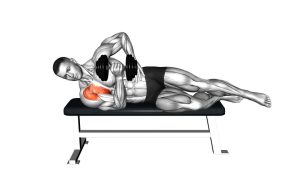
- Lie on your side: Stack your shoulders and hips so the body stays aligned from head to pelvis.
- Support your head: Rest your head on your lower arm or use a small towel or pillow if needed for comfort.
- Bend the working arm: Keep the top elbow bent at about 90 degrees and tucked against your side.
- Start with the forearm inward: The forearm begins across the abdomen or slightly in front of the torso.
- Brace lightly: Keep the torso still, ribs quiet, and shoulder relaxed before starting the first rep.
Tip: Place a small rolled towel between your elbow and ribcage if you need help keeping the upper arm stable.
Execution (Step-by-Step)
- Set your position: Keep the elbow close to the body, wrist neutral, and shoulder relaxed away from the ear.
- Rotate the forearm upward: Externally rotate the shoulder by lifting the forearm in an arc while the elbow stays planted.
- Pause briefly: Stop when you reach a comfortable range without rolling the torso backward or shrugging the shoulder.
- Lower under control: Slowly return the forearm to the starting position without dropping it.
- Repeat smoothly: Keep the tempo steady and make every rep look the same.
Pro Tips & Common Mistakes
- Think rotation, not lifting: The forearm moves because the shoulder rotates, not because the whole arm drifts upward.
- Keep the shoulder down: Avoid shrugging or tightening the neck during the rep.
- Use a small range if needed: A shorter clean rep is better than a larger sloppy one.
- Do not roll the torso: Twisting backward reduces the work on the rotator cuff and changes the exercise.
- Control the lowering phase: The eccentric portion is valuable for building stability and awareness.
- Avoid speed: Fast reps usually turn this into a momentum drill instead of a shoulder-control drill.
- Match both sides carefully: One shoulder may feel weaker or less coordinated, so stay patient and consistent.
FAQ
What muscles does the Bodyweight Lying Shoulder External Rotation work?
It mainly targets the infraspinatus and teres minor, which are part of the rotator cuff. It also involves smaller stabilizers that help keep the shoulder joint controlled during rotation.
Should I feel this in my shoulder or my neck?
You should mostly feel gentle work around the back and outer area of the shoulder. If your neck or upper traps take over, reduce the range of motion and relax the shoulder more intentionally.
Is this a rehab exercise or a strength exercise?
It is most often used as a rehab-style or control-focused exercise, but it also works well as a warm-up or activation drill before upper-body training.
Can beginners do this exercise safely?
Yes, most beginners can perform it safely because it uses bodyweight and a controlled side-lying position. Start with a pain-free range and focus on smooth movement instead of trying to force more motion.
How can I progress this movement later?
Once bodyweight reps are clean and easy, you can progress to a light dumbbell, resistance band, or cable external rotation while keeping the same mechanics.
Recommended Equipment (Optional)
- Exercise Yoga Mat — adds comfort and support for side-lying shoulder work on the floor
- Small Support Towel or Therapy Towel — useful for head comfort or as a spacer between the elbow and torso
- Light Resistance Bands Set — a simple progression option once bodyweight reps become too easy
- Light Dumbbells (1–2 lb) — ideal for gradually progressing external rotation strength
- Shoulder Pulley for Mobility Work — helpful for gentle shoulder range-of-motion work alongside stability drills
Tip: Choose light, easy-to-control tools. For shoulder stability work, smooth mechanics matter far more than heavy resistance.