Barbell Bench Press: Proper Form, Sets & Reps, Tips & FAQ (Chest Builder)
Learn the barbell bench press with perfect technique for chest strength and size. Step-by-step setup, execution cues, sets & reps by goal, common mistakes, FAQs, and recommended equipment.
Barbell Bench Press
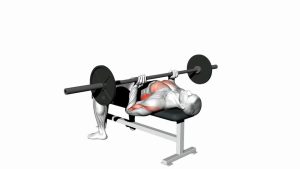
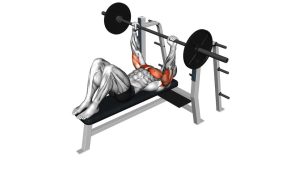
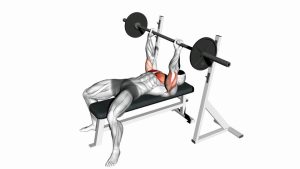
Done correctly, the bench press heavily targets the pectoralis major while the triceps and front delts assist the press. Your goal is a repeatable rep: same touch point, same elbow path, and the bar stays stacked over your wrists and forearms. If your shoulders feel irritated, tighten your upper back, lower the load, and keep your elbows at a comfortable angle—not flared straight out.
Quick Overview
| Body Part | Chest |
|---|---|
| Primary Muscle | Pectoralis major (sternal + clavicular fibers) |
| Secondary Muscle | Triceps, anterior deltoids, serratus anterior (stability), upper back (scapular control) |
| Equipment | Barbell, flat bench, rack/stands (recommended: collars, spotter/safeties) |
| Difficulty | Beginner–Intermediate (skill improves quickly with practice) |
Sets & Reps (By Goal)
- Strength: 3–6 sets × 3–6 reps (2–4 min rest, heavier loads, perfect form)
- Hypertrophy (size): 3–5 sets × 6–12 reps (90–150 sec rest, controlled tempo)
- Technique / volume base: 2–4 sets × 8–10 reps (easy–moderate load, repeatable reps)
- Power focus (optional): 6–10 sets × 2–3 reps (fast concentric, long rests, submax load)
Progression rule: Add reps first (until you hit the top of the rep range), then add small weight. If form breaks (bar path changes, shoulders roll forward, bouncing starts), reduce load and rebuild.
Setup / Starting Position
- Position under the bar: Lie on the bench so your eyes are roughly under the bar.
- Feet planted: Place feet firmly on the floor and create steady leg drive (no dancing feet).
- Upper back tight: Pull shoulder blades back and down into the bench to build a stable “shelf.”
- Grip: Use an overhand grip slightly wider than shoulder width. Wrists stacked over forearms.
- Brace: Ribcage controlled, core tight, glutes on the bench. Maintain a natural (not extreme) arch.
- Unrack: Pull the bar out over the shoulders with straight wrists—don’t press it out and lose tightness.
Tip: If you feel your shoulders at the bottom, try a slightly narrower grip, stronger upper-back squeeze, and keep elbows at ~30–60° from your torso (not straight out to the sides).
Execution (Step-by-Step)
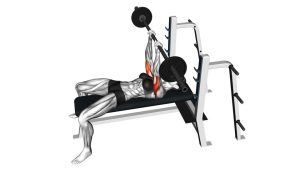
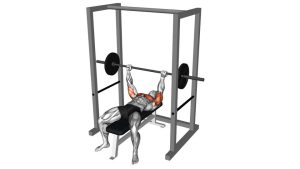
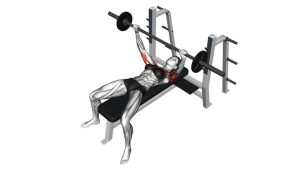
- Start stacked: Bar over shoulders, wrists neutral, elbows locked softly (not hyperextended).
- Lower with control: Inhale and brace. Bring the bar down to the mid–lower chest with steady tempo.
- Elbow path: Keep elbows slightly tucked—avoid extreme flare. Forearms near vertical at the bottom.
- Light touch: Tap the chest gently (or hover) without bouncing or losing tightness.
- Press up & back: Drive the bar upward and slightly back toward the shoulders while pushing through your feet.
- Lockout: Finish with the bar stable over the shoulders, maintaining tight upper back and control.
Pro Tips & Common Mistakes
Pro Tips
- “Row the bar down”: Think of pulling the bar to your chest to keep lats engaged and stable.
- Leg drive is steady: Push the floor away—don’t lift your hips or wiggle the feet.
- Consistent touch point: Same spot on the chest every rep = better strength and less shoulder stress.
- Use collars & safeties: Especially when training near failure.
- Pause reps for control: A 1-second pause on the chest improves technique and reduces bouncing.
Common Mistakes
- Elbows flared hard: Can increase shoulder strain and reduce stability.
- Bouncing off the chest: Inconsistent reps + higher risk. Control the bottom.
- Wrists bent back: Weak force transfer; keep knuckles up and wrists stacked.
- Shoulders rolling forward: Loss of upper-back tightness; re-pack scapulae.
- Half reps without intent: If you shorten ROM, do it intentionally (e.g., board press), not accidentally.
FAQ
Where should I feel the barbell bench press?
Mostly in the chest, with assistance from the triceps and front delts. If you feel it mainly in the shoulders, tighten your upper back, lower the load, and avoid excessive elbow flare.
How wide should my grip be?
A good starting point is slightly wider than shoulder width, with forearms close to vertical at the bottom. Wider grips can increase chest emphasis but may stress shoulders; narrower grips shift more work to triceps.
Should I touch my chest every rep?
For most lifters, yes—light touch with control helps consistency and strength. Avoid bouncing. If shoulder discomfort persists, reduce range slightly or use dumbbells temporarily while fixing setup.
Is bench press enough to build the chest?
Bench press is a great base, but chest growth improves when you also include a second press angle (incline or dumbbell press) and a fly/pec isolation movement. Volume and technique matter most.
What if I train alone?
Use a rack with safety pins/arms set just above chest level, or use a spotter. Training to failure without safeties is risky—leave 1–2 reps in reserve when alone.
Recommended Equipment (Optional)
- Flat Weight Bench — a stable bench improves pressing mechanics and safety
- Power Rack with Safety Arms — the safest way to bench press when training solo
- Barbell Collars (Locking) — keeps plates secure and prevents shifting during sets
- Wrist Wraps — optional support for heavier pressing and better wrist stacking
- Bench Press Safety Spotter Arms — extra protection if your rack setup needs more safety range
Tip: Prioritize safeties over accessories. A secure setup (rack + safeties + stable bench) protects you and lets you train harder with confidence.