L-Sit Pull-Up: Proper Form, Muscles Worked, Sets, Tips & FAQ
Learn how to do the L-Sit Pull-Up with proper form. Discover muscles worked, setup, step-by-step execution, sets by goal, common mistakes, FAQs, and recommended equipment.
L-Sit Pull-Up
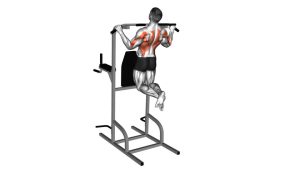
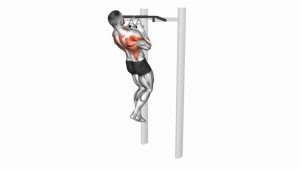
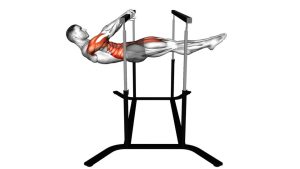
This movement is far more demanding than a standard pull-up because the lifted-leg position increases the load on your core and makes it harder to stay organized from shoulders to toes. Strong technique matters more than chasing reps. Each repetition should look controlled, quiet, and strict, with the legs held high and the torso steady from start to finish.
Quick Overview
| Body Part | Back |
|---|---|
| Primary Muscle | Latissimus dorsi |
| Secondary Muscle | Biceps, rhomboids, middle/lower traps, rear delts, rectus abdominis, hip flexors, forearms |
| Equipment | Pull-up bar or sturdy overhead bar |
| Difficulty | Advanced |
Sets & Reps (By Goal)
- Strength: 3–5 sets × 3–6 reps, resting 90–150 seconds between sets
- Skill + control: 3–4 sets × 2–5 clean reps, focusing on strict tempo and zero swing
- Advanced bodyweight hypertrophy: 3–4 sets × 5–8 reps if you can keep the L-sit position solid
- Progression work: 3–4 sets of assisted reps, negatives, or alternating L-sit holds + pull-ups
Progression rule: Add reps only when you can keep your legs straight and parallel to the floor without losing height, kipping, or shortening the range of motion.
Setup / Starting Position
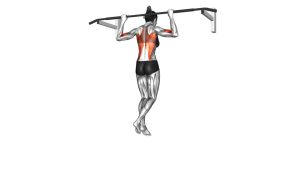
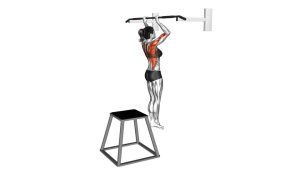
- Grip the bar: Use a shoulder-width or slightly wider overhand grip on a stable pull-up bar.
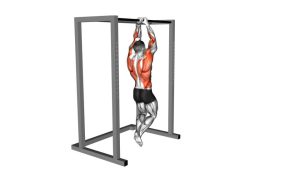
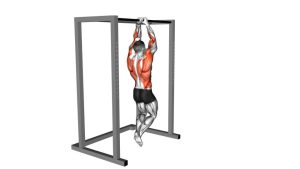
- Set the shoulders: Hang tall with active shoulders, keeping the shoulder blades slightly engaged instead of collapsing into a loose dead hang.
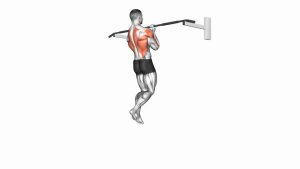
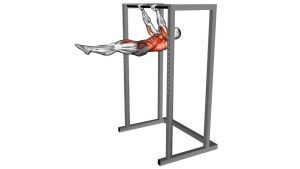
- Lift into the L-sit: Raise both legs straight out in front until they are roughly parallel to the floor.
- Lock in body tension: Squeeze the abs, brace the core, keep the knees straight, and point the toes forward.
- Start under control: Before the first pull, eliminate swinging and make sure your ribs stay down and your neck stays neutral.
Tip: If full straight-leg L-sit height is too difficult, build up with tucked-leg pull-ups, one-leg-extended variations, or separate L-sit holds.
Execution (Step-by-Step)
- Hold the L-sit: Keep both legs extended in front of you and maintain steady tension through the abs and hip flexors.
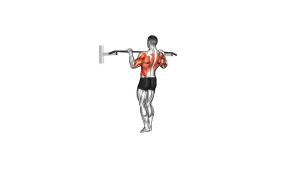
- Initiate the pull: Drive the elbows down and back while pulling the chest upward toward the bar.
- Control the torso: Avoid excessive leaning, kicking, or arching. Keep the body tight and the legs lifted.
- Reach the top: Pull until your chin clears the bar or reaches bar height with clean, strict mechanics.
- Pause briefly: Hold the top for a moment without dropping the legs.
- Lower slowly: Descend under control until the arms are fully extended again while preserving the L-sit position.
- Reset and repeat: Stabilize any movement before beginning the next repetition.
Pro Tips & Common Mistakes
- Keep the legs active: Don’t let the feet drift downward as fatigue builds.
- Pull with the back, not just the arms: Think elbows to ribs rather than curling yourself up.
- Use a strict tempo: A controlled ascent and descent builds more strength than rushed reps.
- Avoid kipping: Swinging may help you finish the rep, but it removes the strict training effect.
- Don’t shorten the range: Start from full extension and finish with a clear top position.
- Protect your lower back: Keep the core braced so the lumbar spine does not overarch when the legs are raised.
- Build prerequisites first: Strong normal pull-ups and solid L-sit holds make this movement safer and more productive.
FAQ
What muscles does the L-sit pull-up work the most?
The primary mover is the latissimus dorsi. It also heavily involves the biceps, rhomboids, traps, rear delts, abs, hip flexors, and forearms because you are pulling and stabilizing at the same time.
Is the L-sit pull-up harder than a regular pull-up?
Yes. Holding the legs straight out in front adds a major core and hip-flexor demand, reduces your ability to use momentum, and makes the pull noticeably more difficult.
What if I cannot keep my legs fully straight?
Start with a tucked variation, bent-knee version, or alternating L-sit holds and pull-ups. Build the position gradually rather than forcing a weak full variation.
Should I use this for strength or muscle building?
It can work for both, but it is most valuable as an advanced strength and skill exercise. Use lower reps for strength and only push higher reps if your form stays strict.
How do I know my form is good?
Good reps have straight legs, minimal swing, full arm extension at the bottom, a clear top position, and steady body tension throughout the entire set.
Recommended Equipment
- Doorway Pull-Up Bar — practical home setup for pull-up training when you do not have a rack
- Wall-Mounted Pull-Up Bar — a sturdier option for serious bodyweight pulling work
- Pull-Up Assistance Bands — useful for building strength, controlling negatives, and learning advanced progressions
- Hanging Ab Straps — helpful for strengthening the core and hip flexors used in the L-sit position
- Gymnastics Rings — great for building shoulder stability, pulling strength, and advanced bodyweight control
Tip: Choose stable equipment first. Advanced pulling exercises become much safer and more effective when the bar, grip, and setup feel secure.