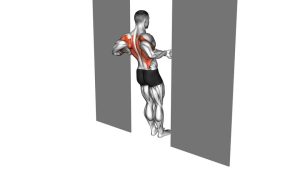
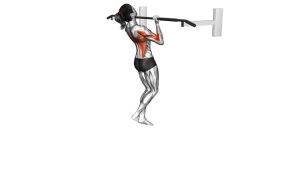
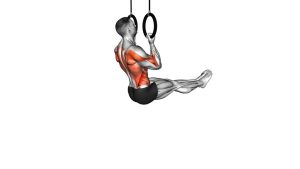
Uneven Pull-Up: Proper Form, Muscles Worked, Sets, Tips & FAQ
Learn how to perform the Uneven Pull-Up with proper form to build unilateral back strength, improve pull-up power, and fix side-to-side imbalances. Includes setup, execution, sets by goal, mistakes, FAQ, and recommended equipment.
Uneven Pull-Up
This exercise is best used by lifters who already own strict pull-ups and want more one-sided strength development. Because the load is not shared evenly between both arms, the working side must produce more force through the lats, upper back, biceps, and forearm. Clean reps matter more than chasing numbers. A smooth pull, stable torso, and controlled descent will train the pattern better than rushing through uneven repetitions with momentum.
Quick Overview
| Body Part | Back |
|---|---|
| Primary Muscle | Latissimus dorsi |
| Secondary Muscle | Biceps, teres major, rhomboids, mid traps, rear delts, forearms, and core stabilizers |
| Equipment | Pull-up bar; optional towel, assistance band, chalk, or weighted belt for progression |
| Difficulty | Advanced |
Sets & Reps (By Goal)
- Strength development: 3–5 sets × 3–6 reps per side, 90–150 sec rest
- One-arm pull-up progression: 3–4 sets × 2–5 controlled reps per side, 2–3 min rest
- Hypertrophy / back bias: 3–4 sets × 6–8 reps per side, 60–90 sec rest
- Skill practice: 2–3 sets × 2–4 crisp reps per side, long rest, no grinding
Progression rule: First improve control, range, and side-to-side symmetry. Then increase reps, reduce assistance, slow the eccentric, or add load only when the pattern stays strict.
Setup / Starting Position
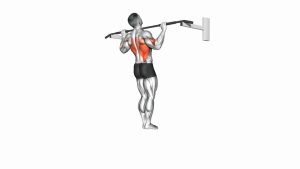
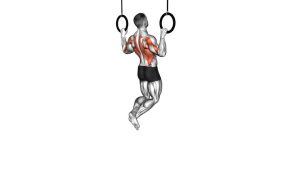
- Grip the bar unevenly: Place one hand in the stronger primary pulling position. Set the other hand lower or in an assisting position, depending on the variation you use.
- Start from a dead hang or active hang: Let the arms fully extend while keeping the shoulders organized and the ribcage down.
- Brace the torso: Tighten your abs and glutes to reduce swinging and unwanted rotation.
- Set the shoulder blades: Think about lightly pulling the shoulders down before the main pull begins.
- Choose the working side: Know which arm is meant to do more of the work before each rep starts.
Tip: Many athletes learn this exercise more cleanly by using a towel or gripping the wrist/forearm area with the assisting hand, which makes the uneven load more obvious.
Execution (Step-by-Step)
- Initiate with the back: Depress the shoulder blade of the working side and begin pulling the elbow down toward your ribs.
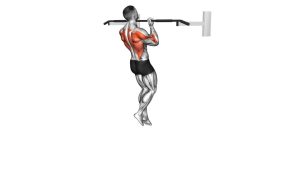
- Drive upward under control: Let the primary arm do most of the work while the assisting arm provides only as much help as needed.
- Keep the body tight: Avoid kicking, excessive leg movement, or twisting hard toward the stronger side.
- Reach the top cleanly: Bring the chin over the bar or as high as your strict form allows.
- Lower with intent: Descend slowly to full extension while resisting rotation and keeping tension through the lats and core.
Pro Tips & Common Mistakes
- Pull the elbow down and back: This helps the lat stay involved instead of turning the rep into an arm-only effort.
- Use the assisting side wisely: The support hand should help just enough to keep the rep smooth.
- Control torso rotation: A slight shift is normal, but too much twisting reduces quality.
- Own the eccentric: The lowering phase is one of the best parts of this exercise for building unilateral strength.
- Do not rush the setup: Uneven grip positioning should feel deliberate and repeatable on every set.
- Avoid these mistakes: kipping, shrugging up toward the ears, shortening the range, yanking with the assisting hand, or letting the weaker side collapse.
FAQ
What muscles does the uneven pull-up work the most?
The main target is the latissimus dorsi on the working side. The exercise also trains the biceps, upper back, rear delts, forearms, and core stabilizers because your body must fight rotation while pulling unevenly.
Is the uneven pull-up a good progression for the one-arm pull-up?
Yes. It is one of the most useful bridge exercises between standard pull-ups and one-arm pull-up training because it teaches one side to carry more of the load while the other side gives limited assistance.
How much assistance should the secondary arm provide?
Only enough to keep the rep controlled. If both arms are doing nearly equal work, the movement becomes too similar to a normal pull-up. The goal is a clear workload bias toward the primary side.
Should I train both sides evenly?
Yes. Perform the same number of high-quality sets and reps on both sides, even if one side feels stronger. This helps reduce imbalances and improves overall pulling symmetry.
Who should avoid uneven pull-ups?
Beginners who cannot yet perform solid strict pull-ups should first build a stronger foundation. Anyone with current elbow, shoulder, or wrist irritation should also be cautious and regress the movement until pain-free control returns.
Recommended Equipment (Optional)
- Gymnastics Hand Grips — useful for protecting the hands during high-volume pull-up work
- Dip Belt — ideal once bodyweight uneven pull-ups become too easy
- Pull-Up Assistance Bands — great for regressions, extra volume, or skill practice with less strain
- Liquid Chalk or Grip Aid — helps reduce grip slip during hard unilateral pulling sessions
- Interlocking Exercise Floor Mat — adds traction and protects the training area under your pull-up station
Tip: For this exercise, the most useful upgrades are usually better grip, controlled assistance, and progressive overload rather than lots of extra accessories.