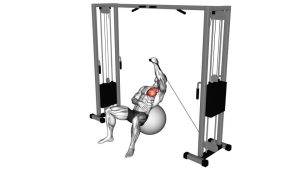
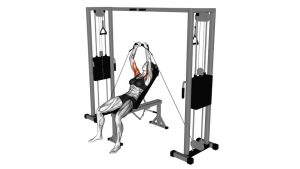
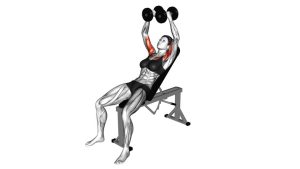
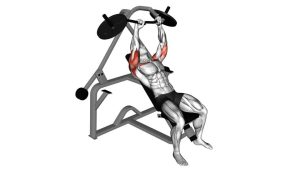
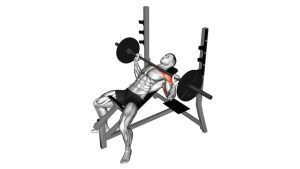
Barbell Guillotine Bench Press: Safe Form, Sets, Tips & FAQ (Upper Chest Focus)
Learn the barbell guillotine bench press to emphasize the upper chest with a wide grip and higher bar path. Step-by-step form, sets by goal, common mistakes, FAQs, and recommended equipment.
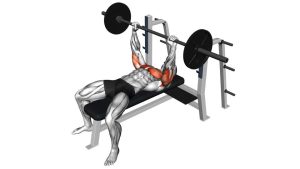
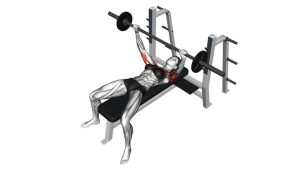
Barbell Guillotine Bench Press
This variation is best used as a hypertrophy accessory, not a 1RM lift. You should feel strong work in the upper chest and a manageable stretch at the shoulders—never sharp pain or unstable “pinching.” Start light, keep your reps smooth, and stop each set with 1–3 reps in reserve.
Quick Overview
| Body Part | Chest |
|---|---|
| Primary Muscle | Upper pectoralis major (clavicular head) |
| Secondary Muscle | Anterior deltoids, triceps (reduced), serratus anterior & scapular stabilizers |
| Equipment | Barbell, flat bench, rack (optional: collars, wrist wraps, safety arms) |
| Difficulty | Intermediate–Advanced (shoulder position requires control and good technique) |
Sets & Reps (By Goal)
- Upper-chest hypertrophy: 3–5 sets × 6–12 reps (90–150 sec rest)
- Controlled strength (moderate load): 3–5 sets × 4–8 reps (2–3 min rest)
- Pump/volume finisher: 2–4 sets × 10–15 reps (60–90 sec rest)
- Technique & shoulder-friendly practice: 2–3 sets × 6–10 reps (light, perfect form)
Progression rule: Add reps first (within the target range), then add small weight. If form changes—bar drifts to the throat, shoulders feel unstable, or you lose control—reduce load and tighten technique.
Setup / Starting Position
- Rack height: Set J-hooks so you can unrack without protracting (reaching) your shoulders.
- Grip width: Use a wide grip (often outside standard bench width). Forearms should be close to vertical at the bottom.
- Scapula position: Pull shoulder blades down and back (stable, not exaggerated). Keep the chest “proud.”
- Body position: Feet planted, glutes on the bench, slight natural arch, head neutral.
- Brace: Inhale, brace your torso, and keep wrists stacked over the bar (avoid bent wrists).
Tip: If your shoulders feel stressed, narrow the grip slightly and reduce range. This should feel like a chest-focused press—never like a shoulder gamble.
Execution (Step-by-Step)
- Unrack with control: Keep shoulders packed. Move the bar over the upper chest, not mid-chest.
- Lower to the upper chest line: Descend slowly toward the clavicle/upper pecs. Elbows will be more flared than a standard bench.
- Pause briefly: Stop just above contact (or lightly touch) while staying tight—no bouncing.
- Press up smoothly: Drive the bar back to the start position over the upper chest. Keep the ribcage stable and wrists stacked.
- Repeat with consistent tempo: Think controlled down, powerful up, without losing shoulder position.
Pro Tips & Common Mistakes
- Use moderate weight: This is not a max-effort bench press. Stay in a controlled hypertrophy zone.
- Keep shoulders “packed”: Don’t let the shoulders roll forward at the bottom.
- Don’t lower to the throat: Aim for the upper chest/clavicle line, and stop where control is strong.
- Avoid bouncing: Rebound stress can irritate shoulders quickly in this position.
- Wrist stacking matters: Keep wrists neutral—excess bend reduces power and stability.
- Use safety setup: Spotter or safety arms = smarter training and better confidence on reps.
- Scale the range: If mobility is limited, use a slightly higher touch point or a controlled “hover” above the chest.
FAQ
Where should I lower the bar on a guillotine press?
Lower the bar toward the upper chest/clavicle area, not the mid-chest. Avoid drifting to the throat. Choose a depth that feels stable at the shoulders and keeps tension on the chest.
Is the guillotine bench press safe?
It can be safe when done with moderate loads, a controlled tempo, and a smart range of motion. It is not ideal if you have shoulder pain, instability, or poor pressing control. Use a spotter or safety arms whenever possible.
Why does this hit the upper chest more than regular bench?
The higher bar path and wider grip can increase the shoulder horizontal abduction angle, placing more emphasis on the clavicular (upper) pec fibers. It also tends to reduce triceps dominance compared to a standard bench.
Should I use a thumbless (suicide) grip?
No. Use a full grip with your thumb wrapped around the bar. This improves security and reduces the risk of the bar slipping.
What’s a safer alternative if my shoulders don’t like this?
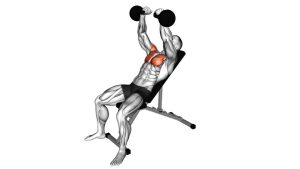
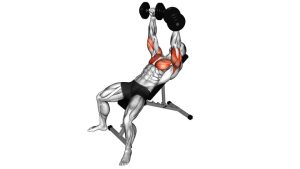
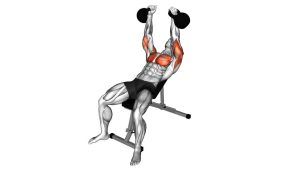
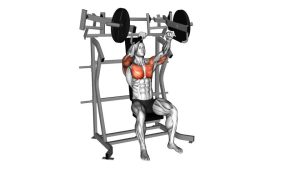
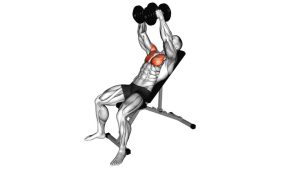
Try incline dumbbell press, incline barbell press, or a neutral-grip dumbbell press. You can also narrow your grip slightly and limit range to stay pain-free.
Recommended Equipment (Optional)
- Bench Press Safety Spotter Arms — adds safety for solo training and confident reps
- Olympic Barbell Collars (2-inch) — keeps plates locked in place for stable bar path
- Wrist Wraps for Lifting — supports neutral wrists during wide-grip pressing
- Sturdy Flat Weight Bench — a stable bench improves control and shoulder positioning
- Mini Resistance Bands (Shoulder Warm-Up) — great for cuff/upper-back activation before pressing
Tip: Warm up the shoulders with light band work and start with an empty bar. The guillotine press rewards control and consistency more than heavy loading.