Standing Scapular Rotation: Form, Muscles Worked, Benefits & Tips
Learn how to do the Standing Scapular Rotation with proper form. Discover muscles worked, setup, step-by-step execution, sets by goal, common mistakes, FAQs, and recommended equipment.
Standing Scapular Rotation
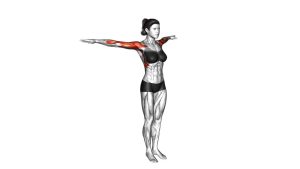
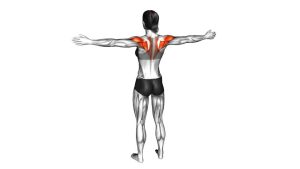
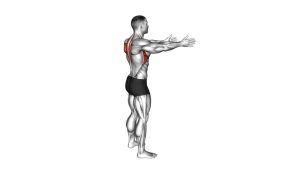
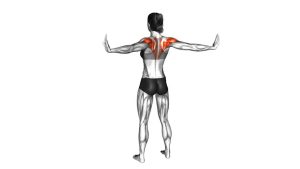
This exercise works best when the movement stays small, smooth, and deliberate. Instead of lifting the arms or shrugging aggressively, focus on guiding the shoulder blades through a controlled rotation pattern. You should feel light muscular activity in the upper and mid-back, not neck strain or lower-back tension.
Quick Overview
| Body Part | Upper Back |
|---|---|
| Primary Muscle | Trapezius (upper, middle, and lower fibers) |
| Secondary Muscle | Rhomboids, rear deltoids, serratus anterior, rotator cuff stabilizers |
| Equipment | None |
| Difficulty | Beginner (requires coordination and body awareness more than strength) |
Sets & Reps (By Goal)
- Warm-up / activation: 2–3 sets × 8–12 slow reps
- Mobility practice: 2–4 sets × 10–15 reps with full control
- Posture awareness: 2–3 sets × 8–10 reps with a 1–2 second pause in each phase
- Recovery / light movement day: 1–2 easy sets × 10–12 reps
Progression rule: First improve movement quality, smoothness, and scapular control. Add reps or tempo only after you can rotate the shoulder blades without shrugging, swinging, or arching the back.
Setup / Starting Position
- Stand tall: Keep your feet about hip-width apart with your knees soft and your spine neutral.
- Let the arms relax: Allow your arms to hang naturally by your sides without tension.
- Set your posture: Keep the chest gently lifted, ribs stacked, and head in a neutral position.
- Relax the neck: Avoid jutting the chin forward or tightening the upper traps before the movement starts.
- Think shoulder blades: Your goal is to move the scapulae, not to turn the drill into an arm swing or shrug.
Tip: Practicing in front of a mirror or filming yourself from the back can make scapular movement easier to learn.
Execution (Step-by-Step)
- Start in neutral: Stand upright with the arms relaxed and the shoulders in a natural position.
- Elevate slightly: Begin by gently lifting the shoulder blades upward without turning it into a hard shrug.
- Rotate and glide: Let the shoulder blades move through a smooth circular pattern, shifting from elevation into retraction and then controlled depression.
- Keep the arms quiet: The arms should stay mostly passive while the shoulder blades do the work.
- Return to neutral: Finish the circle slowly and smoothly, then repeat without jerking or rushing.
Pro Tips & Common Mistakes
- Keep the movement subtle: Bigger is not better. Small, accurate circles usually train scapular control more effectively.
- Do not shrug aggressively: Excessive upper-trap dominance turns the drill into a shrug instead of a rotation pattern.
- Avoid arm swinging: The more the arms move, the less targeted the scapular work becomes.
- Stay tall through the torso: Do not lean backward or flare the ribs to create fake range.
- Move slowly: A controlled tempo improves awareness and helps you feel the upper back working.
- Use it before pull days: This drill pairs well with rows, pull-aparts, face pulls, and pull-ups.
FAQ
What muscles does the Standing Scapular Rotation work?
It mainly trains the trapezius and rhomboids while also involving the rear deltoids, serratus anterior, and smaller shoulder stabilizers.
Is this a strength exercise or a mobility drill?
It is primarily a mobility and control drill. The goal is to improve scapular movement quality, not to create heavy muscular fatigue.
Should my arms move during the exercise?
Only a little. The arms should stay mostly relaxed while the shoulder blades create the movement. If the arms start lifting a lot, you are probably compensating.
Can beginners use this exercise in a warm-up?
Yes. It is beginner-friendly and works very well before upper-body sessions, especially before back, shoulder, or posture-focused training.
What should I avoid while doing scapular rotations?
Avoid hard shrugging, fast circles, neck tension, excessive rib flare, and turning the drill into a full-arm movement. Clean scapular motion matters more than range.
Recommended Equipment (Optional)
- Shoulder Resistance Bands — useful for adding light resistance to shoulder activation and mobility drills
- Posture Exercise Bands — good for pairing with pull-aparts, scapular retraction work, and postural training
- Figure-8 Resistance Band — helpful for light upper-back activation and shoulder-blade control practice
- Peanut Massage Ball — useful for relieving tightness around the upper back and thoracic area between sessions
- Mobility Bands — versatile for warm-ups, shoulder prep, and upper-body movement work
Tip: Keep resistance light for scapular drills. The best tools for this exercise support cleaner movement and awareness, not heavy loading.