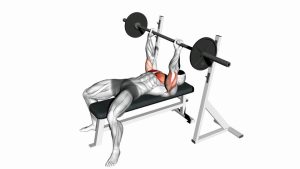
Barbell Wide Grip Bench Press: Safe Form, Sets, Tips & FAQ (Chest Builder)
Learn the barbell wide grip bench press to maximize chest activation with a shorter range of motion. Step-by-step form, sets by goal, common mistakes, FAQs, and recommended equipment.
Barbell Wide Grip Bench Press
The wide-grip bench press rewards tight setup and consistent bar control. You should feel strong tension across the mid-to-outer chest with minimal shoulder irritation. Because a wider grip increases shoulder abduction, avoid going “as wide as possible”—use a grip that lets you keep your shoulder blades retracted and your wrists stacked.
Quick Overview
| Body Part | Chest |
|---|---|
| Primary Muscle | Pectoralis major (sternal + clavicular fibers) |
| Secondary Muscle | Anterior deltoids, triceps brachii, serratus/anterior shoulder stabilizers (control) |
| Equipment | Barbell, flat bench, rack (safeties recommended) |
| Difficulty | Intermediate (requires good shoulder control and bar path discipline) |
Sets & Reps (By Goal)
- Hypertrophy (chest focus): 3–5 sets × 6–12 reps (1–2 reps in reserve, 90–150 sec rest)
- Strength: 4–6 sets × 3–6 reps (2–3 min rest, crisp bar speed)
- Technique / volume day: 3–4 sets × 8–10 reps (controlled tempo, clean touch)
- Accessory after heavy bench: 2–4 sets × 10–15 reps (moderate load, full control)
Progression rule: Add reps before adding weight. When you can hit the top of your rep range for all sets with stable shoulders, increase load by the smallest plate jump and repeat.
Setup / Starting Position
- Bench position: Set the bench so your eyes are roughly under the bar. Use rack safeties if available.
- Grip width: Go slightly wider than standard (often index finger on/near the ring). Avoid “max-wide” grips.
- Shoulder blades: Pull the shoulder blades back and down and keep them pinned to the bench.
- Feet & body tension: Plant feet firmly, squeeze glutes lightly, brace the core, and keep your chest “proud.”
- Wrist & bar position: Wrists stacked over forearms. Bar sits low in the palm (not in the fingers).
- Unrack: Take a breath, unrack to a stable position over the shoulder line, then settle before the first rep.
Tip: If your shoulders feel cranky, narrow the grip slightly and reduce flare—your chest will still work hard with a stable setup.
Execution (Step-by-Step)
- Start stacked: Bar steady above your chest/shoulder line. Inhale and brace.
- Lower with control: Bring the bar down to the mid-to-lower chest with a smooth 2–3 second descent.
- Elbow position: Elbows track out, but don’t force them to 90°. Keep a “strong” shoulder position (no anterior roll).
- Light touch: Touch the chest gently—no bouncing. Maintain tension in upper back and lats.
- Press up and slightly back: Drive the bar up in a slight arc toward the rack, keeping wrists stacked and shoulders packed.
- Lockout with control: Finish with elbows extended without losing shoulder blade position (don’t shrug or over-protract).
Pro Tips & Common Mistakes
- Don’t go “max wide”: Slightly wide is enough. Too wide increases shoulder stress and reduces control.
- Keep shoulder blades pinned: Losing retraction is the #1 reason wide grip becomes shoulder-dominant.
- Touch lower chest: Touching too high often increases shoulder strain and turns it into a front-delt press.
- Stack wrists over elbows: Bent-back wrists leak power and irritate the wrists/elbows over time.
- No bouncing: Bounce reps load the shoulder and sternum badly—pause lightly and press clean.
- Use safeties: Wide grip can fail fast. Set pins just below chest level for safety.
Optional technique booster: Use a 1-second pause on the chest for cleaner reps and better pec tension.
FAQ
What does a wide grip change compared to a normal bench press?
A wider grip can increase chest emphasis by reducing elbow extension demand and shortening the range of motion. It may feel more “pec-driven,” but it can also increase shoulder stress if the grip is too wide or your shoulders aren’t stable.
How wide should my grip be?
Start slightly wider than your standard bench grip—often with your index finger near the power rings. You should still be able to keep your shoulder blades pinned and your wrists stacked without pain or pinching.
Where should the bar touch my chest?
For most lifters, the bar touches the mid-to-lower chest. Touching too high often increases shoulder stress. Your exact touch point depends on arm length and grip width, so prioritize a smooth, repeatable path.
Is wide-grip bench press safe for shoulders?
It can be, if your grip isn’t extreme, your shoulder blades stay retracted, and you control the descent. If you feel front-shoulder pinching, narrow the grip, reduce flare, lower the load, and consider dumbbell or neutral-grip pressing.
Should I use this as my main bench press for strength?
Many lifters keep a standard grip for primary strength work and use wide grip as a chest-focused accessory. If your goal is max pec growth, wide grip can be a strong secondary movement when done pain-free.
Recommended Equipment (Optional)
- Bench Press Safety Spotter Arms / Rack Safeties — a safer setup for pressing without a spotter
- Wrist Wraps (Bench Press Support) — helps keep wrists stacked and stable under heavy loads
- Barbell Grip Pad / Barbell Cushion — optional comfort tool (avoid if it changes bar stability too much)
- Resistance Bands Set (Warm-Up & Upper-Back Work) — great for band pull-aparts, face pulls, and shoulder prep
- Bench Press Assist Band / Sling-Style Support — optional overload/support tool for advanced lifters (use responsibly)
Tip: Equipment should improve safety and consistency—not push you into painful ranges. If any tool increases shoulder symptoms, stop and reassess your setup.