Cable Bench Press: How to Do It Right (Sets, Form, Tips & FAQ)
Learn the Cable Bench Press to build chest size and pressing strength with constant cable tension. Step-by-step form, sets by goal, mistakes to avoid, FAQs, and recommended equipment.
Cable Bench Press
This movement rewards tight setup and a smooth tempo. Your goal is to feel the chest doing most of the work, while the shoulders stay stable and the wrists stay neutral. Because cables pull your arms outward, the lift also challenges your stabilizers—so start lighter than you would with a barbell press and earn load with perfect reps.
Quick Overview
| Body Part | Chest |
|---|---|
| Primary Muscle | Pectoralis major (sternal/mid fibers; strong overall chest stimulus) |
| Secondary Muscle | Triceps, anterior deltoids, serratus anterior & shoulder stabilizers (scapular control) |
| Equipment | Cable machine (dual adjustable pulleys), flat bench, D-handles |
| Difficulty | Intermediate (easy to learn, but demands stability and good shoulder positioning) |
Sets & Reps (By Goal)
- Muscle growth (hypertrophy): 3–5 sets × 8–12 reps (60–120 sec rest)
- Strength focus (controlled): 4–6 sets × 4–8 reps (2–3 min rest)
- Chest pump / finisher: 2–4 sets × 12–20 reps (45–75 sec rest)
- Technique / shoulder-friendly pressing: 2–3 sets × 10–15 reps (slow tempo, perfect form)
Progression rule: Add reps first (until you reach the top of the range), then increase the load slightly. Keep 1–3 reps in reserve and avoid chasing max weight if your shoulders drift forward.
Setup / Starting Position
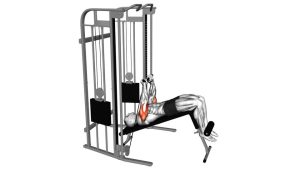
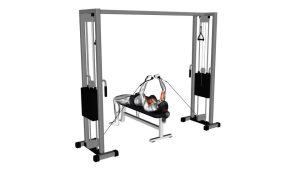
- Bench placement: Center a flat bench between the cable stacks. The bench should be square so both cables feel even.
- Pulley height: Set both pulleys around chest height (roughly in line with mid-chest when lying down).
- Handle position: Grab D-handles, sit on the bench, then lie back while keeping control of the cables.
- Upper-back base: Pull shoulder blades back and slightly down (proud chest, no shrugging).
- Lower-body brace: Feet planted, glutes lightly engaged, ribs stacked (avoid excessive arching).
- Start position: Elbows bent ~45–70° from your torso, wrists neutral, handles near the sides of your chest with tension on the cables.
Tip: If you feel the cables yanking your shoulders forward, lower the load and set the shoulder blades harder before you press.
Execution (Step-by-Step)
- Inhale and brace: Fill the ribs and lock the upper back into the bench.
- Press smoothly: Drive the handles upward and slightly inward (toward the midline) while keeping wrists stacked over elbows.
- Stay stable: Keep shoulders “packed” (no rolling forward) and keep the neck relaxed.
- Top position: Reach near-full extension without hard locking the elbows. Keep tension—don’t let the cables go slack.
- Controlled lower: Lower the handles back toward chest level over 2–3 seconds, stopping where you can maintain shoulder position (no bounce).
- Repeat: Each rep should look identical—clean path, steady tempo, constant tension.
Pro Tips & Common Mistakes
- Best cue: “Chest up, shoulder blades pinned, press up-and-in.”
- Keep wrists neutral: Don’t let wrists bend back—stack knuckles over forearms.
- Don’t flare too wide: Extreme elbow flare can irritate shoulders; aim for a comfortable ~45–70° elbow path.
- Don’t lose tension at the top: If the cables slack, you’re resting instead of training.
- Control the bottom: Avoid dropping into a deep stretch if you can’t keep shoulders set.
- Use tempo for growth: 2–3 sec down, 1 sec up, brief squeeze at the top works great for hypertrophy.
- Match both sides: If one arm drifts, lower the weight and press symmetrically.
FAQ
What should I feel during the cable bench press?
You should feel the chest doing most of the work, with triceps assisting. A stable upper back is normal, but you should not feel sharp front-shoulder pain. Keep constant tension and a controlled range.
Is cable bench press better than barbell bench press for hypertrophy?
It can be excellent for hypertrophy because cables keep tension through the full rep and let you dial in a smooth, joint-friendly path. Barbell pressing is great too—many lifters use barbell for strength and cables for controlled volume.
Where should the pulleys be set?
A strong starting point is chest height. If you feel the press drifting toward shoulders, lower the pulleys slightly. If you feel it too low (more triceps), raise them slightly. Small adjustments make a big difference.
Can I do this if my shoulders get irritated when benching?
Often yes—if you keep your shoulder blades set and avoid an overly deep bottom position. Use lighter loads, a controlled tempo, and stop the range where you can maintain a stable shoulder position. If pain persists, consult a professional.
How do I make it more chest-focused and less triceps?
Use a slightly wider but still comfortable elbow path, keep the chest lifted, slow the eccentric, and think about bringing the biceps closer together as you press (a subtle “hug” cue) without turning it into a fly.
Recommended Equipment (Optional)
- Adjustable Weight Bench (Stable Frame) — helps you set up securely and keep consistent pressing mechanics
- Cable Machine D-Handles (Pair) — smoother grip, better control, and easier wrist stacking
- Lifting Straps (Optional) — useful if grip fatigue limits your chest work on higher-rep sets
- Liquid Chalk (Grip Support) — improves handle control and reduces slipping during long sets
- Resistance Bands Set (Warm-Up / Pull-Aparts) — great for shoulder prep (band pull-aparts, external rotations) before pressing
Tip: Keep equipment simple—your best “upgrade” is a stable bench position, consistent setup, and clean, repeatable reps.