Ring Archer Pull-Up: Form, Muscles Worked, Sets, Tips & FAQ
Learn how to perform the Ring Archer Pull-Up with proper form. Discover muscles worked, setup, execution steps, sets and reps by goal, common mistakes, FAQs, and recommended equipment.
Ring Archer Pull-Up
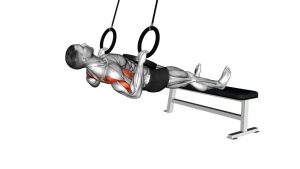
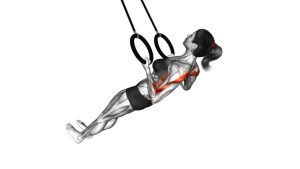
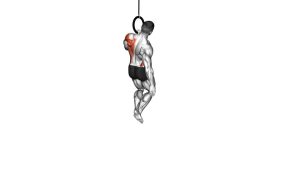
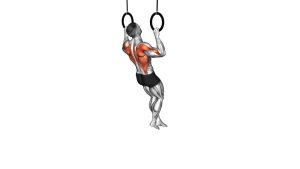
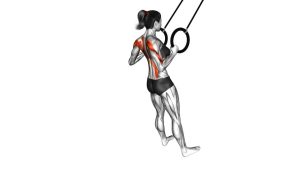
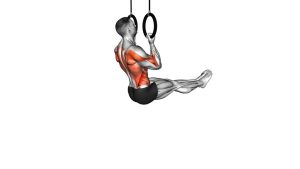
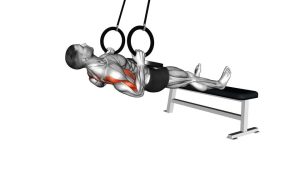
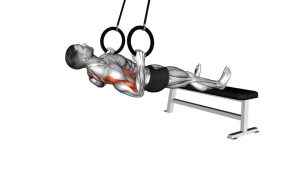
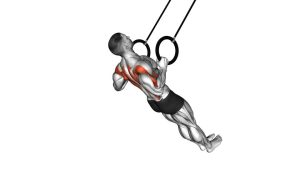
This exercise rewards clean mechanics more than aggressive effort. Start from a stable dead hang, depress the shoulders, and pull your chest toward one ring while the other arm straightens to the side. The goal is not to twist wildly or yank yourself upward. The goal is to create a controlled lateral shift, keep the ribs braced, and move through each rep with smooth ring control.
Quick Overview
| Body Part | Back |
|---|---|
| Primary Muscle | Latissimus dorsi |
| Secondary Muscle | Rhomboids, middle trapezius, rear deltoids, biceps, forearms, core stabilizers |
| Equipment | Gymnastic rings with adjustable straps |
| Difficulty | Advanced |
Sets & Reps (By Goal)
- Strength focus: 3-5 sets × 3-5 reps per side, 90-150 seconds rest
- Muscle building: 3-4 sets × 5-8 reps per side, 75-120 seconds rest
- Skill and control: 2-4 sets × 2-4 slow reps per side, full control on each eccentric
- Progression work: 3-4 sets × 4-6 assisted reps per side using a band or lighter angle
Progression rule: Add reps only when you can keep the pulling shoulder packed, the non-working arm long, and the body from twisting excessively. Increase control before increasing volume.
Setup / Starting Position
- Set the rings: Hang a pair of rings securely at pull-up height with even strap length.
- Take your grip: Grab both rings with a neutral grip and allow the rings to move naturally.
- Start from a dead hang: Extend both arms fully while keeping your shoulders active rather than hanging passively.
- Brace the torso: Tighten your abs and glutes to reduce swinging. Cross the ankles if that helps control the lower body.
- Prepare to shift: Before pulling, decide which side will work first and keep your eyes forward.
Tip: Most athletes perform better when they first master strict ring pull-ups, ring top control, and uneven ring pulling variations.
Execution (Step-by-Step)
- Engage the shoulders: Pull the shoulder blades slightly down and back to create a stable starting position.
- Pull toward one ring: Drive one elbow down and back as you shift your chest toward that ring.
- Extend the opposite arm: Let the non-working arm open outward and straighten as the body moves laterally.
- Reach the top under control: Bring your chest close to the working-side ring without shrugging the shoulder upward.
- Pause briefly: Hold the top for a short moment while keeping the core tight and the rings steady.
- Lower slowly: Return to the dead hang with a smooth eccentric and avoid dropping suddenly.
- Repeat on the other side: Alternate sides or complete all reps on one arm before switching.
Pro Tips & Common Mistakes
- Keep the working shoulder packed: Avoid shrugging toward the ear at the top.
- Do not rush the eccentric: Slow lowering builds control and makes the rings easier to stabilize.
- Limit torso twisting: A slight shift is normal, but excessive rotation turns the rep sloppy.
- Use full-body tension: Tight glutes and abs reduce swinging and make the pull cleaner.
- Let the rings rotate naturally: Do not fight the ring path if your wrists need a more comfortable angle.
- Avoid using both arms equally: The purpose of the movement is to bias one side at a time.
- Regress when needed: Band-assisted ring archer pull-ups or uneven ring rows can help build the pattern safely.
FAQ
What muscles does the Ring Archer Pull-Up work most?
It mainly targets the lats and upper back, while the biceps, rear delts, forearms, and core assist with pulling and stabilization.
Is the Ring Archer Pull-Up harder than a regular ring pull-up?
Yes. Because one arm does most of the work and the rings move independently, it is a much more demanding variation for unilateral strength and shoulder stability.
Who should use this exercise?
This exercise is best for intermediate-to-advanced calisthenics trainees who already have solid strict ring pull-up mechanics and want to progress toward stronger one-sided pulling capacity.
Can beginners do Ring Archer Pull-Ups?
Most beginners should start with standard ring rows, assisted pull-ups, and strict ring pull-ups first. Archer variations usually come later.
What is the best regression for this movement?
Good regressions include uneven ring pull-ups, band-assisted ring archer pull-ups, and feet-assisted ring rows with a side bias.
Recommended Equipment
- Wooden Gymnastic Rings with Adjustable Straps — the essential setup for ring pull-ups, rows, and archer variations
- Resistance Bands Set — useful for assisted archer pull-up progressions and extra warm-up work
- Liquid Chalk — helps maintain grip on rings during hard pulling sets
- Wrist Wraps — optional support for athletes who want extra wrist comfort during ring sessions
- Doorway Pull-Up Bar — useful as an anchor option when training at home, depending on your setup
Tip: Choose secure rings with clear strap markings and a dependable anchor point. Stable setup quality matters just as much as raw pulling strength.