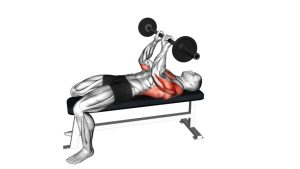
Barbell Bent-Arm Pullover: Proper Form, Muscles Worked, Sets, Tips & FAQ
Learn how to do the Barbell Bent-Arm Pullover with proper form. Discover muscles worked, setup, execution steps, sets and reps by goal, common mistakes, FAQs, and recommended equipment.
Barbell Bent-Arm Pullover
This exercise works best when you combine control, shoulder stability, and a manageable load. The motion should feel smooth and deliberate, with the elbows staying softly bent and the ribcage staying under control. You should notice tension through the lats and chest, especially during the stretched bottom position and the pull back to the top. If the rep feels loose, rushed, or overly stressful on the shoulders, reduce the weight and shorten the range.
Quick Overview
| Body Part | Back |
|---|---|
| Primary Muscle | Latissimus dorsi |
| Secondary Muscle | Pectoralis major, serratus anterior, triceps long head, rear delts, core stabilizers |
| Equipment | Barbell, flat bench, weight plates, collars |
| Difficulty | Intermediate |
Sets & Reps (By Goal)
- Muscle building: 3–4 sets × 8–12 reps with controlled tempo and 60–90 sec rest
- Strength-focused accessory work: 3–5 sets × 6–8 reps with moderate-to-heavy load and 90–120 sec rest
- Technique and stretch-focused training: 2–3 sets × 10–15 reps with lighter weight and smooth control
- Upper-body finisher: 2–3 sets × 12–15 reps with strict form and no momentum
Progression rule: Add load only when you can maintain the same elbow angle, keep the rep smooth, and control both the lowering phase and the return without shoulder discomfort.
Setup / Starting Position
- Lie flat on a bench: Position your upper back, head, and hips securely on the bench with both feet planted on the floor.
- Hold the bar above the chest: Use a shoulder-width or slightly narrower grip and keep the wrists stacked over the forearms.
- Bend the elbows slightly: Lock in a soft bend before starting and keep that angle fairly consistent throughout the set.
- Brace the torso: Keep your core lightly engaged and avoid excessive rib flare or lower-back arching.
- Set the shoulders: Keep them stable and packed down rather than shrugging toward the ears.
Tip: Start with a conservative weight. Pullovers can feel much heavier at the bottom than they do at the top.
Execution (Step-by-Step)
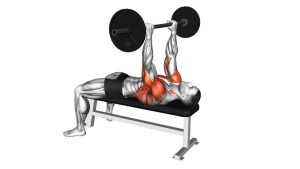
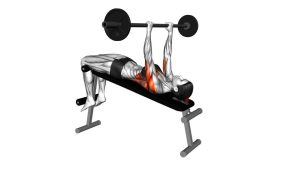
- Begin over the chest: Start with the bar held above your chest, elbows slightly bent, and shoulders stable.
- Lower in an arc: Move the bar backward and down behind your head in a controlled semicircle, keeping the elbows fixed.
- Feel the stretch: Stop when you reach a strong but comfortable stretch through the lats and chest without shoulder pinching.
- Pull the bar back up: Reverse the motion by driving through the lats and chest, bringing the bar back over your chest on the same path.
- Reset and repeat: Pause briefly at the top, keep tension, and begin the next rep without bouncing.
Pro Tips & Common Mistakes
- Keep the elbows softly bent: Don’t let the arms straighten too much or collapse deeper as fatigue builds.
- Use a manageable range: Going too far behind the head can irritate the shoulders and reduce control.
- Lower the weight slowly: The eccentric phase is where many lifters lose position.
- Do not turn it into a press: Maintain the same elbow bend instead of finishing the rep by pressing the bar upward.
- Avoid flaring the ribcage too much: Excessive arching often shifts tension away from the target muscles and stresses the lower back.
- Keep your grip secure: Always use collars so the plates stay fixed during the long arc of motion.
- Place it strategically: This exercise works well after rows, pulldowns, or chest work as a stretch-loaded accessory movement.
FAQ
What muscles does the Barbell Bent-Arm Pullover work most?
The movement mainly targets the lats, while also involving the chest, serratus anterior, and other upper-body stabilizers. The bent-arm setup usually makes the exercise feel more controlled than a straight-arm version.
Is this exercise for chest or back?
It is primarily used as a back-focused accessory exercise, but many lifters also feel meaningful chest involvement. The exact feel depends on your technique, shoulder structure, and how deep you lower the bar.
Should I use a heavy barbell for pullovers?
Usually, moderate loading works best. Because the exercise places the shoulders in a long stretched position, form and control matter more than chasing heavy weight.
How low should I bring the bar?
Lower the bar only as far as you can while keeping the motion smooth and pain-free. A strong stretch is good; shoulder pinching or loss of torso position is not.
Is the bent-arm version better than the straight-arm version?
Not necessarily better for everyone, but it is often easier to control and may feel more comfortable on the shoulders. It also tends to blend lat and chest involvement very well.
Recommended Equipment
- Adjustable Weight Bench — useful for stable setup, general pressing work, and other upper-body accessory exercises
- Flat Weight Bench — ideal if you want a simple bench dedicated to pullovers, presses, and rows
- Barbell Collars — helps keep plates locked in place during the long overhead arc of the movement
- Fractional Weight Plates — great for making small load jumps while preserving shoulder-friendly technique
- Thick Gym Flooring — adds protection and stability to your lifting space, especially in home-gym setups
Tip: Choose equipment that improves stability and control first. For pullovers, a secure bench and properly fixed plates matter more than simply adding weight.