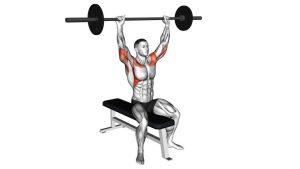
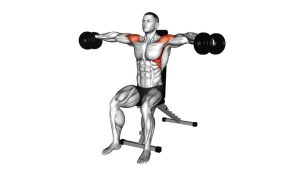
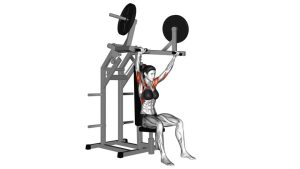
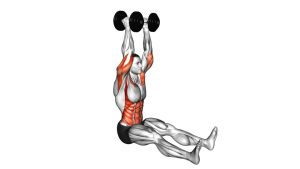
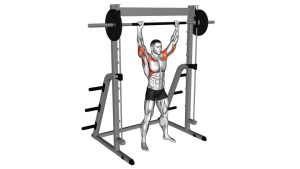
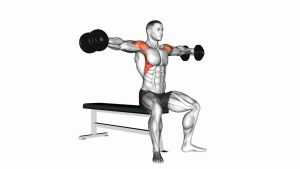
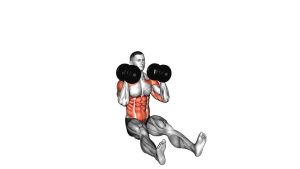
Seated Dumbbell Shoulder Press: Proper Form, Sets, Tips & FAQ
Learn how to do the Seated Dumbbell Shoulder Press with proper form. Discover muscles worked, setup tips, sets and reps by goal, common mistakes, FAQs, and recommended equipment.
Seated Dumbbell Shoulder Press
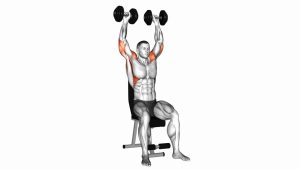
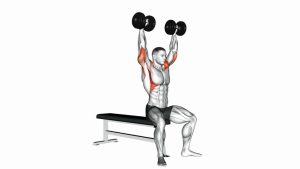
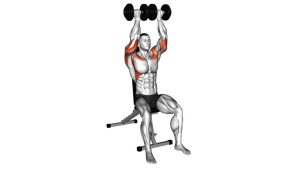
This exercise is highly effective for building shoulder size and pressing strength because each arm works independently, helping improve muscular balance and coordination. The seated setup also makes it easier to control the range of motion and maintain strict form. You should feel the work mainly in the anterior deltoids and lateral deltoids, with strong assistance from the triceps.
Quick Overview
| Body Part | Shoulders |
|---|---|
| Primary Muscle | Anterior deltoids and lateral deltoids |
| Secondary Muscle | Triceps, upper chest, upper traps, and shoulder stabilizers |
| Equipment | Dumbbells and a flat or upright bench |
| Difficulty | Beginner to Intermediate |
Sets & Reps (By Goal)
- Muscle growth: 3–4 sets × 8–12 reps with 60–90 seconds of rest
- Strength: 4–5 sets × 4–6 reps with 90–150 seconds of rest
- General fitness: 2–4 sets × 10–15 reps with 45–75 seconds of rest
- Shoulder endurance/pump work: 2–3 sets × 12–20 reps with lighter weight and strict control
Progression tip: Add reps before adding weight whenever possible. Once you can hit the top of your rep range with solid form across all sets, increase the dumbbells slightly and rebuild.
Setup / Starting Position
- Set the bench: Sit on a bench with back support if available, or sit tall on a flat bench with your core braced.
- Plant your feet: Keep both feet flat on the floor for balance and stability.
- Bring the dumbbells to shoulder level: Hold one dumbbell in each hand with palms facing forward or slightly turned in.
- Stack the joints: Keep wrists neutral and elbows under or slightly in front of the dumbbells.
- Brace your torso: Lift the chest, tighten the core, and avoid flaring the ribs or arching the lower back.
Tip: A slight natural arch in the upper back is fine, but the press should come from the shoulders and triceps—not from leaning back hard.
Execution (Step-by-Step)
- Start strong at shoulder height: Hold the dumbbells just outside the shoulders with elbows bent and under control.
- Press upward: Drive the dumbbells overhead in a smooth path while keeping the torso stable and the neck neutral.
- Move in a natural arc: Let the weights travel slightly inward as they rise, but do not force them to bang together at the top.
- Reach full overhead control: Finish with arms nearly straight and the dumbbells stacked over the shoulders.
- Lower with control: Bring the dumbbells back down to shoulder level without dropping them or losing posture.
- Repeat cleanly: Maintain the same range, tempo, and elbow path on every rep.
Pro Tips & Common Mistakes
- Keep your core braced: This prevents excessive spinal extension and helps transfer force efficiently.
- Press in the scapular plane: Let the elbows stay slightly in front of the body instead of forcing them straight out to the sides.
- Do not slam the dumbbells together: Finish each rep under control to keep tension on the shoulders.
- Avoid dropping too low: Lower only as far as your shoulder mobility allows without pain or instability.
- Control the eccentric: The lowering phase builds strength and stability, so do not rush it.
- Do not turn it into an incline press: Leaning back too much shifts more work toward the upper chest and reduces shoulder emphasis.
- Use manageable weight: Overloading too soon often leads to shortened range of motion and sloppy lockout.
FAQ
What muscles does the Seated Dumbbell Shoulder Press work?
It mainly targets the anterior deltoids and lateral deltoids. The triceps help extend the elbows, while the upper chest and shoulder stabilizers assist throughout the press.
Is the seated version better than the standing shoulder press?
The seated version is not automatically better, but it is often easier for isolating the shoulders and reducing momentum. The standing version challenges total-body stability more, while the seated version usually makes strict shoulder work easier.
How low should I bring the dumbbells?
Lower them to about shoulder level in most cases. If your mobility is excellent and pain-free, you may go slightly deeper, but there is no need to force extra range if it causes shoulder discomfort or changes your pressing position.
Should the dumbbells touch at the top?
No. They can come close, but they do not need to touch. Stopping just short of contact often helps maintain better shoulder tension and control.
Can beginners do this exercise?
Yes. Beginners can use light dumbbells and focus on posture, joint stacking, and a smooth range of motion. It is one of the most useful shoulder-building exercises when performed with proper control.
Recommended Equipment
- Adjustable Dumbbells — ideal for progressive overload without needing a full rack of weights
- Adjustable Weight Bench — gives you a stable seated setup and optional back support for stricter presses
- Weightlifting Gloves or Grip Pads — helpful if grip fatigue or sweaty hands affect control during pressing sets
- Resistance Bands Set — useful for shoulder warm-ups, activation drills, and accessory delt work
- Foam Roller — great for upper-back mobility work that can improve pressing position and shoulder comfort
Tip: Prioritize stable equipment and controlled loading. Better setup and better movement quality usually lead to better long-term shoulder progress.