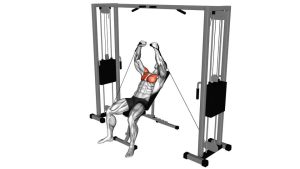
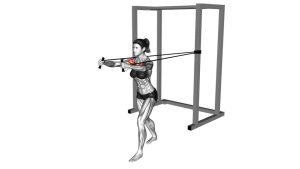
Cable Middle Fly: Proper Form, Sets & Reps, Tips, and FAQ (Chest-Height Cable Fly)
Learn the Cable Middle Fly (standing chest-height cable fly) to build mid-pec thickness with constant tension. Step-by-step form cues, sets & reps by goal, common mistakes, FAQs, and recommended equipment.
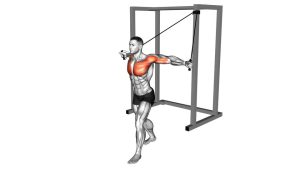
Cable Middle Fly (Chest-Height Standing Cable Fly)
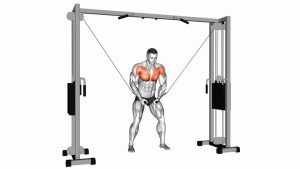
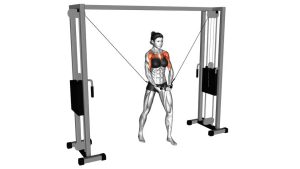
This movement is all about clean control. Your elbows should stay slightly bent and fixed, while the shoulders guide a wide arc inward. You should feel the chest doing the work—if your shoulders or traps take over, lighten the load and tighten your setup.
Quick Overview
| Body Part | Chest |
|---|---|
| Primary Muscle | Pectoralis major (sternal/mid fibers) |
| Secondary Muscle | Anterior deltoid (assist), serratus anterior (stability), biceps (elbow stabilization) |
| Equipment | Cable crossover / dual adjustable pulleys + D-handles |
| Difficulty | Intermediate (easy to learn, but form-sensitive for shoulder comfort) |
Sets & Reps (By Goal)
- Muscle growth (hypertrophy): 3–5 sets × 8–15 reps (60–90 sec rest)
- Chest pump / finisher: 2–4 sets × 15–25 reps (30–60 sec rest, strict form)
- Strength focus (controlled heavy): 3–5 sets × 6–10 reps (90–120 sec rest)
- Warm-up / activation: 2–3 sets × 12–20 reps (light load, slow tempo)
Progression rule: Add reps first (same form), then add a small amount of weight. If shoulder comfort drops or you lose the arc, regress the load and tighten technique.
Setup / Starting Position
- Set pulley height: Adjust both pulleys to about mid-chest height (roughly nipple line).
- Choose handles: Use single D-handles so each arm can move naturally.
- Step forward: Take a split stance (one foot forward) for stability and balance.
- Set the shoulders: Chest tall, shoulders down and back (no shrugging).
- Soft elbows: Keep a small elbow bend and hold it—avoid bending/straightening during reps.
- Start position: Arms open in a wide arc with tension already on the cables—don’t let the stack rest.
Tip: A small forward lean is okay, but keep the torso steady. The movement should come from the shoulders/chest—not from body sway.
Execution (Step-by-Step)
- Brace and align: Ribs down, glutes lightly tight, neck neutral. Keep the chest “proud.”
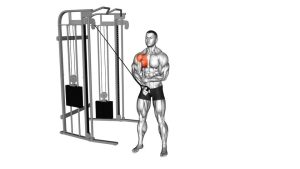
- Begin the arc: Sweep the handles inward in a wide “hugging” motion.
- Keep elbows fixed: Maintain the same elbow bend—don’t turn it into a press.
- Meet in front: Bring hands together (or close) in front of the sternum and squeeze the chest for 1 second.
- Controlled return: Open back out slowly until you feel a stretch across the chest—stop before shoulder discomfort.
- Repeat smoothly: No bouncing, no clanking. Keep continuous tension.
Pro Tips & Common Mistakes
Pro Tips
- Lead with the hands: Imagine your hands are wrapping around a barrel—smooth and rounded.
- Slightly “in” elbow line: Keep elbows a bit below shoulder level for comfort (avoid extreme flare).
- Use tempo: 2 seconds in, 1 second squeeze, 2–3 seconds out.
- Stop short of pain: Use a stretch you can control—pain-free reps beat forced range.
- Great pairing: Do these after presses (bench/incline) as a chest finisher.
Common Mistakes
- Turning it into a press: Elbows bending a lot and “punching” forward.
- Shrugging up: Traps take over—keep shoulders down.
- Overstretching: Going too far back and irritating the front shoulder.
- Using momentum: Swinging the body or bouncing out of the bottom.
- Letting the stack rest: Tension disappears—stay controlled and continuous.
FAQ
Where should I feel the Cable Middle Fly?
Mainly across the mid-chest with a strong contraction when the hands come together. You may feel light front-shoulder assistance, but the chest should dominate.
Should my hands touch at the top?
They can touch, but it’s not required. Focus on a strong chest squeeze and keeping the shoulders stable. If touching causes shoulders to roll forward, stop slightly short.
How do I keep it out of my shoulders?
Lower the load, keep the shoulders down and back, and maintain a fixed elbow bend. Also avoid opening too far back—control the stretch.
What pulley height is best for “mid chest”?
Set pulleys around mid-chest / nipple line. Higher tends to bias upper chest, lower tends to bias lower chest. Adjust slightly to match your comfort and feel.
Is this better than dumbbell flyes?
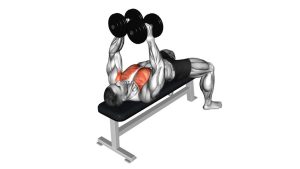
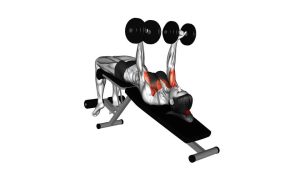
Neither is “better” for everyone. Cables often win for constant tension and smooth resistance, while dumbbells may provide a bigger stretch. Many lifters do both: press + cable fly is a classic combo.
Recommended Equipment (Amazon)
- D-Handle Cable Attachments (Pair) — comfortable single handles for clean cable fly mechanics
- Replacement Cable Machine Handles — great if your gym handles are worn or you want a better grip
- Rotating Cable Attachments (Grip-Friendly) — rotation can reduce wrist/shoulder stress for some lifters
- Home Gym Cable Pulley System — useful if you train at home and want fly options without a full cable machine
- Lifting Wrist Straps — helps maintain grip so the chest stays the limiter (especially in higher-rep sets)
Tip: Choose attachments with comfortable grips and smooth hardware. For flyes, control and comfort matter more than max load.