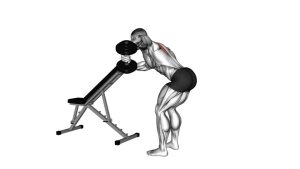
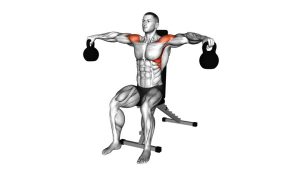
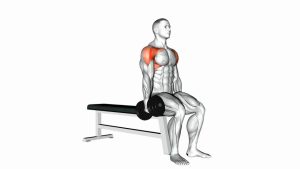
Dumbbell Lying Rear Lateral Raise: Form, Sets, Tips & FAQ
Learn how to perform the Dumbbell Lying Rear Lateral Raise with strict form to target the rear delts. Includes setup, execution, sets and reps by goal, mistakes to avoid, FAQs, and recommended equipment.
Dumbbell Lying Rear Lateral Raise
This variation is especially useful for lifters who want cleaner rear-delt training without excessive body swing. Because your torso is supported, the exercise encourages better control through the full range of motion and makes it easier to feel the rear shoulders working. It also helps reduce compensation from the hips, lower back, and momentum.
Quick Overview
| Body Part | Rear Shoulders |
|---|---|
| Primary Muscle | Posterior deltoids (rear delts) |
| Secondary Muscle | Rhomboids, middle trapezius, rotator cuff stabilizers |
| Equipment | Flat bench and a pair of dumbbells |
| Difficulty | Beginner to Intermediate |
Sets & Reps (By Goal)
- Muscle growth: 3-4 sets × 10-15 reps with controlled tempo and 45-75 sec rest
- Shoulder isolation / mind-muscle connection: 2-4 sets × 12-20 reps using light-to-moderate load
- Warm-up / activation: 2-3 sets × 12-15 reps with very light dumbbells and clean form
- Technique work: 2-3 sets × 8-12 reps with a 1-2 second pause near the top
Progression rule: First improve control, then add reps, and only after that increase weight. If the movement starts to look like a shrug or row, the load is too heavy.
Setup / Starting Position
- Set a flat bench: Place a pair of dumbbells on each side where you can grab them safely.
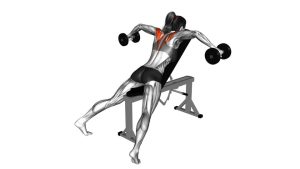
- Lie face down: Position your chest against the bench with your torso fully supported.
- Plant your feet: Keep both feet on the floor for balance and body stability.
- Let the arms hang: Hold a dumbbell in each hand and allow your arms to hang straight down under the shoulders.
- Use a neutral grip: Palms should generally face each other, with a slight bend in the elbows.
- Set your neck neutral: Keep your head in line with your spine instead of cranking the chin upward.
Tip: Before lifting, pull your shoulders away from your ears and brace lightly through the upper back so the rear delts can do the work.
Execution (Step-by-Step)
- Start from the bottom: Let the dumbbells hang directly below your shoulders with control.
- Raise both arms outward: Lift the dumbbells out to the sides in a wide arc, like a reverse fly.
- Lead with the elbows: Keep a soft elbow bend and think about moving the upper arms rather than curling the weight.
- Lift to shoulder level: Bring the arms up until they are roughly in line with the shoulders, forming a wide “T” shape.
- Pause briefly: Squeeze the rear delts at the top without aggressively shrugging the traps.
- Lower slowly: Return the dumbbells to the starting position under control and keep tension through the full descent.
- Repeat smoothly: Every rep should look the same—strict, steady, and free of swinging.
Pro Tips & Common Mistakes
- Use lighter weight: Rear delts respond better to clean reps than heavy cheating.
- Keep the path wide: Think “out to the sides,” not “pull back behind me.”
- Don’t shrug: Excessive trap involvement takes tension away from the rear delts.
- Keep the elbows softly bent: Too much elbow flexion changes the movement pattern.
- Control the lowering phase: The eccentric portion helps build better rear-delt tension.
- Avoid head lifting: Keep the neck neutral and relaxed against the bench position.
- Stop at shoulder height: Going much higher can reduce tension quality and encourage compensation.
- Use pauses for better activation: A short pause at the top can improve mind-muscle connection.
FAQ
What muscles does the Dumbbell Lying Rear Lateral Raise work?
It primarily targets the rear delts. The rhomboids, middle traps, and small shoulder stabilizers also assist, but the setup is designed to keep the focus on the posterior shoulders.
Is this better than a standing rear delt raise?
It can be better for isolation because the bench support reduces momentum and lower-back involvement. Many lifters find it easier to feel the rear delts working in this chest-supported version.
How heavy should I go on this exercise?
Start lighter than you would for rows or presses. This is a small isolation movement, and strict form matters much more than heavy weight.
Should I squeeze my shoulder blades together hard?
Only slightly. A small natural retraction is fine, but over-squeezing the shoulder blades can shift too much work into the upper back and away from the rear delts.
Can beginners use this exercise?
Yes. It is beginner-friendly as long as the weight stays manageable and the movement is performed with control. It is also useful for improving rear-delt awareness and shoulder balance.
Recommended Equipment
- Adjustable Dumbbells — ideal for gradually progressing rear-delt work without needing many separate pairs
- Flat Weight Bench — provides the chest support needed to keep this variation strict and stable
- Light Dumbbell Set — useful for strict isolation work, warm-ups, and higher-rep shoulder training
- Lifting Straps — optional for lifters whose grip fatigue limits clean rear-delt reps
- Resistance Bands Set — helpful for pairing with shoulder warm-ups, band pull-aparts, and posture work
Tip: For this exercise, prioritize a stable bench and lighter dumbbells over heavy loading. Clean movement quality will usually give better results than chasing big numbers.