Chest Dip (Chest Focus): Proper Form, Sets & Reps, Tips, and FAQ
Learn how to do chest-focused dips to build lower and mid chest safely. Step-by-step form cues, sets & reps by goal, common mistakes, FAQs, and recommended dip equipment.
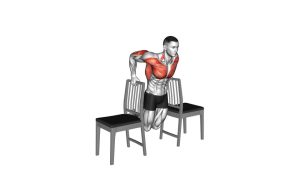
Chest Dip (Chest Focus)
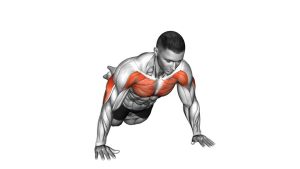
Chest-focused dips work best when you prioritize smooth reps, a stable shoulder position, and a comfortable depth. You should feel strong tension in the chest—especially the lower portion—without sharp pinching in the front of the shoulder.
Quick Overview
| Body Part | Chest |
|---|---|
| Primary Muscle | Pectoralis major (lower & mid fibers) |
| Secondary Muscle | Triceps, anterior deltoids, serratus anterior (stabilization) |
| Equipment | Dip station / parallel bars (or assisted dip machine) |
| Difficulty | Intermediate (Beginner with assistance or reduced ROM) |
Sets & Reps (By Goal)
- Muscle growth (hypertrophy): 3–5 sets × 6–12 reps (60–120 sec rest)
- Strength focus: 4–6 sets × 3–6 reps (2–3 min rest, add weight if strong and pain-free)
- Endurance / pump: 2–4 sets × 12–20 reps (45–75 sec rest, controlled tempo)
- Beginner / assisted progression: 2–4 sets × 8–12 reps (assisted dip machine or bands)
Progression rule: First add reps (or reduce assistance), then add sets. Only add external weight when your reps are smooth, shoulders feel good, and you can own the bottom position.
Setup / Starting Position
- Grip & support: Hold the parallel bars firmly and “push the bars down” to lift your body into support.
- Shoulders set: Keep shoulders down and slightly back (avoid shrugging up).
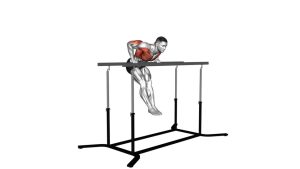
- Chest emphasis posture: Lean the torso slightly forward and let the legs trail behind (knees bent is fine).
- Neutral neck: Look forward/down slightly—avoid cranking the head up.
- Brace: Light core tension so you don’t swing between reps.
Tip: If your shoulders feel sensitive, start with an assisted dip machine or limit depth to the range you can control pain-free.
Execution (Step-by-Step)
- Begin in support: Arms nearly straight, shoulders down, torso slightly leaned forward.
- Lower with control: Bend elbows and descend slowly. Keep the chest angled slightly down/forward.
- Elbow path: Let elbows move outward moderately (not extreme flaring, not fully tucked).
- Bottom position: Stop at a depth where you feel a strong chest stretch without shoulder pain or pinching.
- Press up: Drive through the palms and think “chest up and through,” returning to the top smoothly.
Pro Tips & Common Mistakes
Pro Tips
- Use a slight forward lean: This shifts emphasis toward the chest (especially lower fibers).
- Control the eccentric: Lower 2–3 seconds for more chest tension and safer shoulders.
- Own the bottom: Stop at your strongest, pain-free depth—quality beats range.
- Think “push the bars down”: Helps keep shoulders stable and reduces shrugging.
- Progress intelligently: Reduce assistance first, then add reps, then consider weight.
Common Mistakes
- Too upright: Turns the movement into a more triceps-dominant dip.
- Dropping too deep: Can irritate the front of the shoulder—especially if you’re not stable.
- Shrugging shoulders: Elevating shoulders increases stress and reduces chest tension.
- Bouncing at the bottom: Uses momentum and can strain the shoulder joint.
- Swinging legs: Makes reps inconsistent—brace lightly and keep reps tight.
FAQ
How do I make dips hit my chest more than my triceps?
Use a slight forward torso lean, allow a moderate elbow flare, and focus on a controlled descent. If you stay very upright and tuck elbows hard, dips become more triceps-dominant.
How deep should I go on chest dips?
Go as deep as you can while maintaining control and staying pain-free. A strong chest stretch is normal; sharp shoulder pinching is not. Reduce depth if your shoulders complain.
Are chest dips safe for shoulders?
They can be, if you keep shoulders down, control the lowering phase, and avoid forcing depth. If you have a history of shoulder pain, start with assisted dips and a smaller range of motion.
Should I add weight to dips?
Add weight only after you can perform clean reps with consistent control and no shoulder irritation. A common benchmark is 8–12 smooth bodyweight reps before loading heavier.
What’s a good dip alternative if I don’t have dip bars?
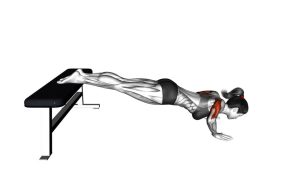
Use an assisted dip machine at a gym, or build similar chest emphasis with decline push-ups and cable high-to-low fly variations.
Recommended Equipment
- Dip Station / Parallel Dip Bars — sturdy bars for home dips and progressive overload
- Weighted Dip Belt — add plates safely once bodyweight reps are solid
- Resistance Bands (Assistance) — great for assisted dips and smooth progression
- Gymnastic Rings — optional progression for advanced stability and strength
- Gym Chalk / Liquid Chalk — improves grip and reduces slipping on bars
Tip: If you feel shoulder discomfort, prioritize assistance, control, and a pain-free depth over adding load.