Kettlebell One-Arm Military Press to the Side: Form, Muscles Worked, Sets, Tips & FAQ
Learn how to perform the Kettlebell One-Arm Military Press to the Side with proper form. Discover muscles worked, setup, execution steps, sets and reps by goal, common mistakes, FAQs, and recommended equipment.
Kettlebell One-Arm Military Press to the Side
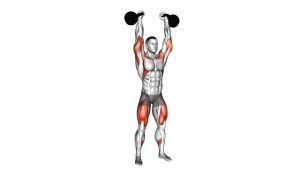
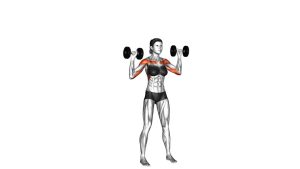
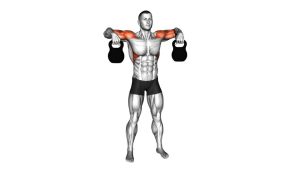
This exercise works best when you move with control, keep the ribs down, and press through a clean shoulder path. You should feel the load centered mostly in the deltoids, with assistance from the triceps and upper-body stabilizers. Because the kettlebell sits off-center, it also demands more grip strength and shoulder stabilization than many dumbbell press variations.
Quick Overview
| Body Part | Shoulders |
|---|---|
| Primary Muscle | Deltoids (anterior deltoid and lateral deltoid) |
| Secondary Muscle | Triceps, upper traps, rotator cuff, forearms, and core stabilizers |
| Equipment | Kettlebell |
| Difficulty | Intermediate (best for lifters with basic overhead press control and shoulder stability) |
Sets & Reps (By Goal)
- Shoulder muscle building: 3–4 sets × 8–12 reps per arm, 60–90 sec rest
- Strength and overhead control: 4–5 sets × 4–6 reps per arm, 90–120 sec rest
- Shoulder endurance / conditioning: 2–4 sets × 12–15 reps per arm, 45–75 sec rest
- Warm-up or skill practice: 2–3 sets × 5–8 clean reps per arm with light weight
Progression rule: Add reps before adding load. Only move up in weight when you can keep the wrist stacked, torso upright, and lockout steady on every rep.
Setup / Starting Position
- Place the kettlebell on the floor: Set it slightly in front of you or centered between your feet, depending on your preferred pickup style.
- Assume a strong base: Stand with feet about hip- to shoulder-width apart and brace your core.
- Hinge to grip the bell: Push your hips back, keep your spine neutral, and grip the handle firmly with one hand.
- Lift under control: Bring the kettlebell up smoothly and guide it into a secure rack position at shoulder height.
- Set the press position: Keep the wrist neutral, elbow slightly in front of the body, shoulder packed, and free hand relaxed for balance.
Tip: Before pressing, make sure your glutes and abs are engaged so you do not arch the lower back to force the weight overhead.
Execution (Step-by-Step)
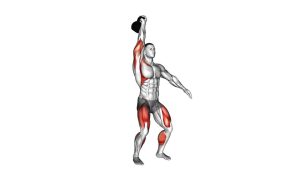
- Brace and align: Stand tall with the kettlebell in the rack position, forearm vertical, and wrist stacked over the elbow.
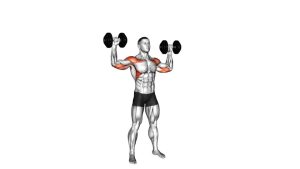
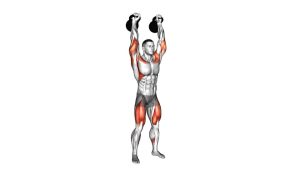
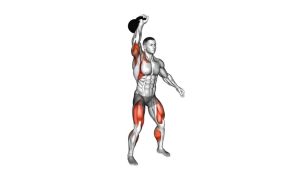
- Press upward: Drive the kettlebell overhead in a smooth line while keeping the ribs down and torso stable.
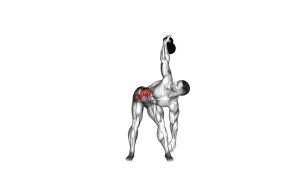
- Finish slightly to the side: Near the top, allow the arm path to move subtly outward so the shoulder finishes in a strong, controlled side-biased lockout.
- Pause briefly: Hold the top for a moment while keeping the shoulder packed and the core tight.
- Lower with control: Bring the kettlebell back down to the rack position without letting the elbow collapse or the wrist bend backward.
- Reset and repeat: Perform all reps on one side, then switch arms and match the same quality of movement.
Pro Tips & Common Mistakes
- Keep the wrist stacked: Do not let the kettlebell fold the hand backward.
- Brace before every rep: A tight core improves overhead stability and protects the lower back.
- Use a controlled side finish: The arm can move slightly outward, but it should never turn into a sloppy lateral raise.
- Avoid excessive lean: Stay tall instead of shifting your body away from the load.
- Don’t rush the lowering phase: The eccentric portion builds control and keeps the shoulder position clean.
- Start lighter than you think: Offset loading makes kettlebells feel less predictable than dumbbells.
- Keep the shoulder packed: Do not shrug aggressively at the top unless the movement is designed that way.
FAQ
What muscles does the Kettlebell One-Arm Military Press to the Side work?
It mainly targets the anterior and lateral deltoids. The triceps, upper traps, rotator cuff, forearms, and core stabilizers also help support and control the movement.
Is this exercise better for strength or hypertrophy?
It can work well for both. Lower reps with heavier weight emphasize strength and stability, while moderate reps with controlled tempo are excellent for shoulder hypertrophy.
Why use a kettlebell instead of a dumbbell for this press?
The kettlebell’s offset center of mass creates a greater stability challenge for the wrist, shoulder, and core. That makes it useful for improving control as well as pressing strength.
Should the arm move far out to the side at the top?
No. The outward path should be slight and controlled. Too much sideways drift can reduce pressing efficiency and place unnecessary stress on the shoulder.
Who should be cautious with this exercise?
Anyone with current shoulder pain, poor overhead mobility, or difficulty stabilizing kettlebells should start with lighter loads or simpler press variations first.
Recommended Equipment
- Adjustable Kettlebell — practical for progressive overload without buying multiple kettlebells
- Standard Cast-Iron Kettlebell — a solid choice for consistent pressing practice and unilateral shoulder work
- Wrist Wraps — helpful for lifters who want extra wrist support during heavy overhead pressing
- Resistance Bands Set — useful for shoulder warm-ups, activation drills, and accessory stability work
- Exercise Mat — protects flooring and gives you a more comfortable setup area for home training
Tip: Choose a kettlebell weight you can press with clean control. Good shoulder training comes from stable reps, not from fighting every lockout.