Smith Machine Bent-Over Row: Proper Form, Sets, Tips & FAQ
Learn how to perform the Smith Machine Bent-Over Row with proper form to build lats, rhomboids, and mid-back thickness. Includes setup, execution, sets by goal, common mistakes, FAQ, and recommended equipment.
Smith Machine Bent-Over Row
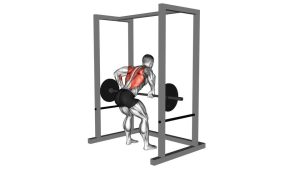
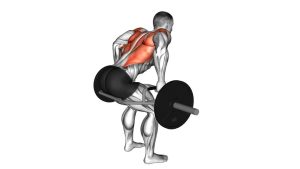
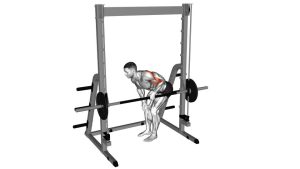
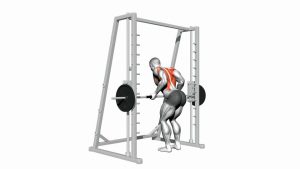
This exercise works best when you treat each rep like a strict back-building movement, not a full-body yank. Your torso should stay stable, your elbows should drive back with purpose, and the bar should move under control from the bottom to the top of each rep. When done well, the Smith Machine Bent-Over Row can be a great option for lifters who want to train their back hard while reducing unnecessary bar-path variability.
Quick Overview
| Body Part | Back |
|---|---|
| Primary Muscle | Latissimus dorsi, rhomboids, middle trapezius |
| Secondary Muscle | Rear delts, biceps, lower traps, spinal erectors, forearms |
| Equipment | Smith machine |
| Difficulty | Beginner to intermediate |
Sets & Reps (By Goal)
- Muscle growth: 3–4 sets × 8–12 reps with controlled form and 60–90 seconds of rest
- Strength focus: 4–5 sets × 5–8 reps with heavier loading and 90–150 seconds of rest
- Technique practice: 2–3 sets × 10–15 reps using moderate weight and slower tempo
- Back finisher: 2–3 sets × 12–15 reps with a squeeze at the top of each rep
Progression rule: First improve rep quality, range consistency, and top-position control. Then add small increases in load while keeping the torso angle and bar path stable.
Setup / Starting Position
- Set the bar height: Position the Smith bar around mid-thigh level so it is easy to unrack and hinge into place.
- Take your grip: Use a pronated grip slightly wider than shoulder width, or at shoulder width if that feels stronger and more comfortable.
- Set your stance: Place your feet about hip-width to shoulder-width apart for balance and stability.
- Hinge at the hips: Push your hips back and lean your torso forward until you reach roughly a 30–45 degree torso angle.
- Brace the trunk: Keep your chest open, core tight, knees softly bent, and spine neutral before starting the row.
- Let the arms extend: Start with the bar hanging below you and your shoulders set, not excessively rounded forward.
Tip: A stable hip hinge is the foundation of the exercise. If the hinge position feels weak, lighten the load and spend time learning to lock the torso in place.
Execution (Step-by-Step)
- Start from a strong hinge: Hold the bent-over position with your core braced and your head in a neutral line with the spine.
- Initiate the pull: Drive your elbows backward and pull the bar toward your lower abdomen or navel area.
- Keep the elbows close: Let the elbows travel behind the torso without flaring too far out to the sides.
- Squeeze at the top: Briefly contract the lats, rhomboids, and middle back as the bar reaches the torso.
- Lower with control: Extend the arms slowly and return the bar to the starting position without losing posture.
- Repeat cleanly: Maintain the same torso angle and rep path from start to finish on every repetition.
Pro Tips & Common Mistakes
- Keep your spine neutral: Do not let the lower back round as the set gets harder.
- Row with the elbows, not the hands: Think about driving the elbows back to improve back engagement.
- Do not stand up during the rep: Changing torso angle turns the movement into a cheat row.
- Avoid bouncing the weight: Use a smooth lift and controlled lowering phase.
- Do not shrug at the top: Keep the shoulders from taking over the movement.
- Use a manageable load: Too much weight often reduces range of motion and shifts tension into the lower back.
- Pause briefly at peak contraction: A short squeeze at the top can improve mind-muscle connection.
FAQ
What muscles does the Smith Machine Bent-Over Row work the most?
It mainly targets the lats, rhomboids, and middle traps. The rear delts, biceps, forearms, and spinal erectors also help during the movement.
Is this better than a free-weight barbell row?
Not necessarily better, just different. The Smith machine gives you a fixed path, which can make the exercise easier to control and useful for focused hypertrophy work. Free-weight rows usually demand more stabilization.
Where should I pull the bar?
In most cases, pulling toward the lower abdomen or navel area works best for keeping the emphasis on the lats and mid-back while maintaining good mechanics.
Why do I feel this mostly in my lower back?
That usually happens when the weight is too heavy, the torso angle is unstable, or the core is not braced well enough. Reduce the load and focus on a stronger hinge and cleaner rep control.
Can beginners use the Smith Machine Bent-Over Row?
Yes. It can be a beginner-friendly rowing variation because the fixed bar path makes it easier to practice body position and pulling mechanics compared with fully free barbell rows.
Recommended Equipment (Optional)
- Weightlifting Belt — useful for lifters who want extra trunk bracing support on heavier row sets
- Lifting Straps — helpful when grip fatigue limits back training before the target muscles are fully challenged
- Flat Weightlifting Shoes — improve balance and foot stability during bent-over pulling movements
- Workout Gloves or Grip Pads — can improve hand comfort and bar security during higher-volume back work
- Resistance Bands Set — useful for warm-ups, activation drills, and extra upper-back work alongside rows
Tip: Accessories should support strong technique, not replace it. Good posture, a stable hinge, and controlled reps matter more than extra gear.