Decline Push-Up (Chest Focus): Form, Sets & Reps, Tips, Mistakes & FAQ
Learn the Decline Push-Up to target the upper chest with perfect form. Step-by-step technique, sets & reps by goal, pro tips, common mistakes, FAQs, and recommended equipment.
Decline Push-Up (Chest Focus)
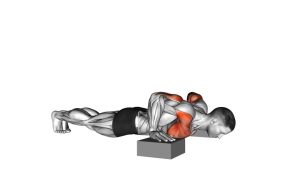
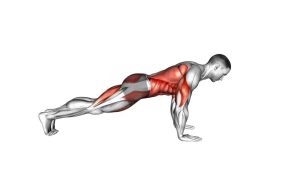
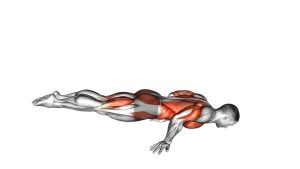
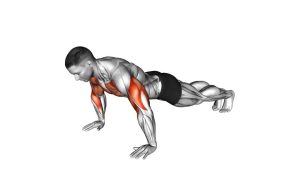
This is a high-quality bodyweight chest builder when your reps stay clean. The goal is a controlled descent with a stable torso, then a strong press without losing alignment. Choose a decline height that lets you keep the same form on every rep.
Quick Overview
| Body Part | Chest |
|---|---|
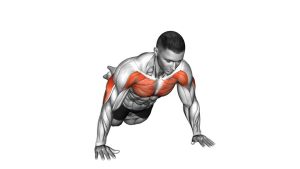
| Primary Muscle | Pectoralis major (upper chest emphasis with decline) |
| Secondary Muscle | Anterior deltoids, triceps, serratus anterior, core (anti-extension) |
| Equipment | Elevated surface for feet (bench/box/step) + floor (optional: push-up handles) |
| Difficulty | Intermediate (scale with elevation height and rep tempo) |
Sets & Reps (By Goal)
- Strength focus: 4–6 sets × 4–8 reps (2–3 min rest, slower lowering)
- Muscle growth (hypertrophy): 3–5 sets × 8–15 reps (60–90 sec rest)
- Endurance / conditioning: 2–4 sets × 12–25 reps (45–75 sec rest)
- Skill + form practice: 2–3 sets × 6–10 reps (perfect reps, long pauses)
Progression rule: Add reps first (same elevation). Then increase decline height or slow the eccentric (3–5 seconds down). If form breaks (hips sag, elbows flare, shoulder pain), regress immediately.
Setup / Starting Position
- Pick your elevation: Start low (step/low box). Higher elevation increases difficulty and shoulder demand.
- Hands placement: Hands slightly wider than shoulder-width. Wrists stacked under (or slightly behind) shoulders.
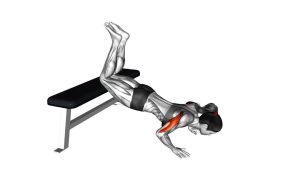
- Feet elevated: Place toes on the bench/box. Keep feet hip-width for stability.
- Lock the plank: Squeeze glutes, brace abs, ribs “down” so your lower back doesn’t arch.
- Neck neutral: Eyes slightly forward/down; don’t crane the neck.
Tip: If wrists feel stressed, use push-up handles or dumbbells to keep a more neutral wrist angle.
Execution (Step-by-Step)
- Inhale and brace: Create full-body tension—glutes tight, abs on, shoulders stable.
- Lower under control: Bend elbows and lower chest toward the floor. Keep elbows at ~30–60° from your torso (not fully flared).
- Maintain alignment: Body moves as one unit—no sagging hips or piking up.
- Reach your depth: Aim for chest close to the floor while keeping shoulders comfortable and stable.
- Press up smoothly: Exhale as you push the floor away, returning to full lockout without losing the plank.
Pro Tips & Common Mistakes
- Use the right decline height: Start low; increase only when you can keep a rigid plank.
- Control the eccentric: 2–4 seconds down builds strength and keeps joints happier.
- Elbows not “wings”: Avoid extreme flare; keep elbows angled to protect shoulders.
- Don’t sag your hips: Sagging shifts stress to the lower back and reduces chest tension.
- Don’t pike up: Hips rising turns it into a shoulder-dominant press and shortens chest range.
- Hands + shoulder blades: Think “push the floor away” and keep shoulder blades controlled (no collapsing).
Bonus: Pair decline push-ups with rows or face pulls to balance shoulder health and posture.
FAQ
What does the decline push-up target most?
It primarily trains the chest with a stronger emphasis on the upper chest, while also heavily involving the front delts, triceps, and core. The higher your feet, the more shoulder involvement you’ll feel.
How high should I elevate my feet?
Start with a low elevation (step/low box). If you can do all reps with a rigid plank and no shoulder discomfort, you can gradually go higher. If your hips sag or shoulders pinch, lower the decline.
Why do my wrists hurt during decline push-ups?
Wrist extension can be uncomfortable for some people. Try push-up handles, gripping dumbbells, or performing reps on a slightly elevated surface for your hands. Also ensure your weight is distributed through the whole hand (not just the heel of the palm).
How can I make this harder without raising the bench?
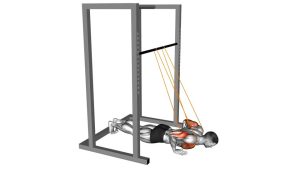
Slow the lowering phase (3–5 seconds), add a pause at the bottom (1–2 seconds), or use a resistance band around your back and under your hands for extra load.
Is it okay if I feel this mostly in my shoulders?
A decline variation naturally involves the shoulders, but if your shoulders dominate, reduce the decline height, bring elbows slightly closer to the torso, and focus on a chest-driven press. You can also add more standard push-ups or incline dumbbell presses to balance stimulus.
Recommended Equipment (Optional)
- Push-Up Handles (Parallettes Style) — reduces wrist strain and increases range of motion
- Adjustable Plyometric Box — easy way to change decline height safely and consistently
- Flat Weight Bench — stable foot elevation option for decline push-ups and other training
- Heavy Resistance Bands — add progressive overload (banded decline push-ups)
- Non-Slip Exercise Mat — improves hand comfort and grip, especially on smooth floors
Tip: Prioritize stability over height. A sturdy bench/box prevents slipping and keeps your reps safe and consistent.