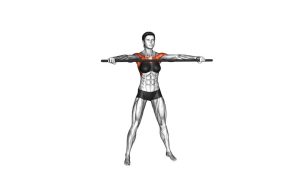
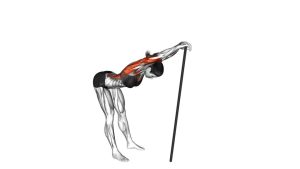
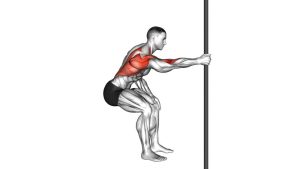
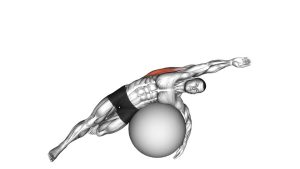
Shoulder Stretch Behind the Back: Form, Benefits, Tips & FAQ
Learn how to perform the Shoulder Stretch Behind the Back with proper form. Discover benefits, setup, step-by-step execution, common mistakes, FAQs, and recommended equipment for better shoulder mobility.
Shoulder Stretch Behind the Back
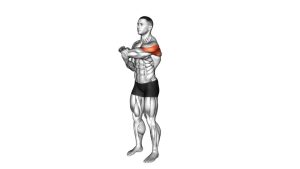
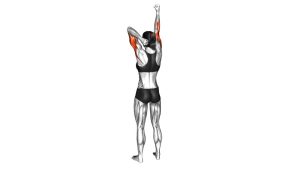
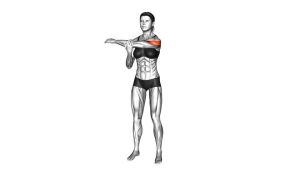
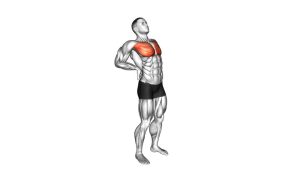
This stretch works best when performed with relaxed shoulders, steady breathing, and careful control. You should feel mild to moderate tension across the front shoulder and chest, not pinching in the joint or sharp pain. Keep your torso tall, avoid twisting, and use the assisting hand only to guide the arm into a comfortable end range.
Quick Overview
| Body Part | Shoulders |
|---|---|
| Primary Muscle | Anterior deltoid |
| Secondary Muscle | Pectoralis major, biceps long head, front shoulder connective tissues |
| Equipment | None required; optional stretching strap, shoulder pulley, or massage tool |
| Difficulty | Beginner |
Sets & Reps (By Goal)
- Warm-up mobility: 1–2 sets × 20–30 second hold per side
- Post-workout stretching: 2–3 sets × 30–45 second hold per side
- General flexibility: 2–4 sets × 30–60 second hold per side
- Posture-focused recovery: 2–3 sets × 20–40 second hold per side with easy tension
Progression rule: Increase hold time gradually before increasing stretch intensity. Better mobility comes from consistency and control, not from forcing a deeper position.
Setup / Starting Position
- Stand tall: Keep your chest lifted, ribs stacked, and shoulders relaxed.
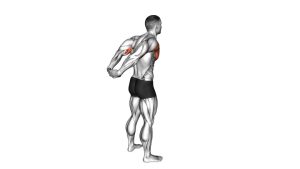
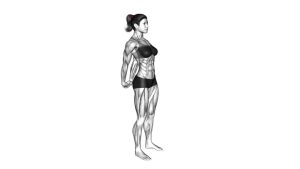
- Place one arm behind your back: Bend the elbow and position the hand around the lower back or waist area.
- Use the opposite hand for assistance: Reach behind and lightly hold the wrist or forearm of the stretching arm.
- Keep the torso neutral: Do not lean, twist, or arch excessively to fake more range.
- Set the shoulder down: Avoid shrugging as you begin the stretch.
Tip: A tall posture helps keep the stretch focused on the shoulder and chest instead of shifting tension into the neck or lower back.
Execution (Step-by-Step)
- Brace gently and relax: Stand upright with calm breathing and a neutral neck position.
- Secure the assisting grip: Hold the wrist or forearm of the arm that is behind your back.
- Guide the arm carefully: Pull the stretching arm slightly upward and across the back until you feel a stretch in the front shoulder and chest.
- Hold the position: Maintain the stretch for the desired time without bouncing or forcing deeper range.
- Release slowly: Ease the tension gradually and return to the starting position under control.
- Repeat on the other side: Perform the same sequence evenly to maintain balanced shoulder mobility.
Pro Tips & Common Mistakes
- Keep the movement gentle: A shoulder stretch should create tension, not pain.
- Don’t yank the arm upward: Aggressive pulling can irritate the front shoulder.
- Avoid excessive torso rotation: Twisting the body reduces the quality of the stretch.
- Keep the shoulder depressed: Do not shrug toward the ear during the hold.
- Breathe normally: Slow breathing helps the muscles relax and improves stretch tolerance.
- Use it after pressing or chest work: This stretch pairs well with shoulder and chest training days.
- Stay consistent: Short, regular sessions usually work better than occasional aggressive stretching.
FAQ
Where should I feel this stretch?
You should mainly feel it across the front of the shoulder and sometimes into the upper chest. You should not feel sharp pain deep in the shoulder joint.
Is this a warm-up stretch or a cooldown stretch?
It can be used for both. Use shorter, lighter holds before training and longer, more relaxed holds after workouts.
Can this help with rounded shoulders?
It can support mobility around the chest and front shoulder, especially when paired with upper-back strengthening and better daily posture habits.
How hard should I pull the arm?
Only hard enough to feel a controlled stretch. This is not meant to be a painful or maximum-intensity movement.
Who should be cautious with this stretch?
Anyone with a recent shoulder injury, instability, labrum issues, or pain during shoulder extension should be cautious and avoid forcing the position.
Recommended Equipment (Optional)
- Shoulder Pulley for Physical Therapy — useful for gentle assisted shoulder mobility and range-of-motion work
- Stretching Strap with Loops — helps guide controlled shoulder and upper-body stretches
- Myofascial Release Balls — useful for reducing tightness around the chest, shoulder, and upper back
- Resistance Bands Set — great for pairing mobility work with light shoulder activation and posture drills
- Light Posture Corrector — can serve as a temporary awareness tool alongside mobility and strengthening work
Tip: Use mobility tools as support, not as a substitute for controlled stretching and strength work.